
.png)


Key takeaways
- Saltbox is the best Red Stag Fulfillment alternative in 2026 for ecommerce brands that want their own private warehouse suite, discounted shipping, and on-demand labor without locking into a 3PL contract.
- If you want flat monthly pricing and hands-on inventory control, WareSpace, Portal Warehousing, and Loloft are the strongest co-warehousing picks.
- Flowspace, FedEx Fulfillment, and Flexe sit closest to Red Stag in the 3PL camp, each with a different approach to distribution.
- Cubework, ReadySpaces, and FlexHQ work for teams that need real square footage without committing to a multi-year industrial lease.
In this article, I'll go over ten alternatives to Red Stag Fulfillment in 2026, sorted by category, so you can find the right fit, whether that means a different 3PL or finally taking back control with co-warehousing.
What are the best alternatives to Red Stag Fulfillment in 2026?
The best alternative to Red Stag Fulfillment in 2026 is Saltbox with its co-warehousing solution.
If you're set on a 3PL like Red Stag, Flowspace is the closest match for tech-driven fulfillment.
If you'd rather skip the 3PL model entirely but still want industrial warehouse space at scale, then you should look into Cubework.
Here's the full list of alternatives that ecommerce brands compare against Red Stag Fulfillment:
Best co-warehousing alternatives to Red Stag Fulfillment
If the idea of shipping your inventory to a Tennessee warehouse you'll never set foot in doesn't sit right, co-warehousing is the structural alternative.
You get your own warehouse suite, on-site operations support, and shared amenities, without the multi-year industrial lease.
Here are the four best co-warehousing alternatives to Red Stag Fulfillment:
#1: Saltbox
Saltbox offers the best alternative to Red Stag Fulfillment for growth-stage ecommerce brands that want to keep control of their inventory while also getting support when they need it.
Where Red Stag holds your inventory at one of two centers and ships orders on your behalf, Saltbox gives you a private warehouse suite you can walk into, with operations services running in the same building.
You pick the suite size, you keep eyes on your inventory, and our on-site crew handles whatever you don't want to (or can't) do yourself.
Memberships start at $349/month with the Access plan, which includes physical access to our facilities, loading docks, packing stations, meeting rooms, and an on-site content studio (no warehouse suite required to get going).

Disclosure: Saltbox is our solution. I'll keep this honest about what it does and doesn't do better than a 3PL like Red Stag.
Here’s how brands like PURioLABS, Shinery, and GOLDN The Brand have used Saltbox to scale: 👇
Warehousing and offices that move with your business
Saltbox runs private warehouse and office suites across 12 U.S. cities, with sizes from 70 sq. ft. all the way up to 5,000+ sq. ft.
You can pay monthly without a year-long lease, and you can size up or down whenever your business shifts without explaining yourself or trying to get out of a contract.

Not ready to move into a warehouse space, yet?
Saltbox Access Plans will provide you with a mailing address, receiving services, discounted rates, on-site labor, and an entrepreneurial network.
Explore Access PlansHere are the four warehouse sizes you can choose from:
- Small (70 to 250 sq. ft., 4 to 15 pallets): Sized for solo founders or a 1 to 2 person operation.
- Medium (250 to 500 sq. ft., 16 to 31 pallets): Built for teams of 1 to 4 that have grown past the kitchen-table phase.
- Large (500 to 1,000 sq. ft., 32 to 62 pallets): Fits 1 to 10 employees with serious pallet volume to manage.
- Extra Large (1,000 to 5,000+ sq. ft., 63 to 125 pallets): For brands with up to 50 employees and a real warehouse-floor operation.
➡️ You can take a quiz after selecting your location to figure out the right fit, or book a tour and have our team figure out the right amount of space for your use case.
Shipping, fulfillment, and on-demand support
You decide how hands-on you want to be.
- Some Saltbox members ship every order themselves.
- Others bring in our team only during peak seasons.
- Some hand fulfillment over completely.
This level of control and freedom is exactly what separates Saltbox from 3PL providers like Red Stag.
And if you’re worried about FBA prep, you can hire our team to ensure everything is prepared properly since we know Amazon’s strict requirements.
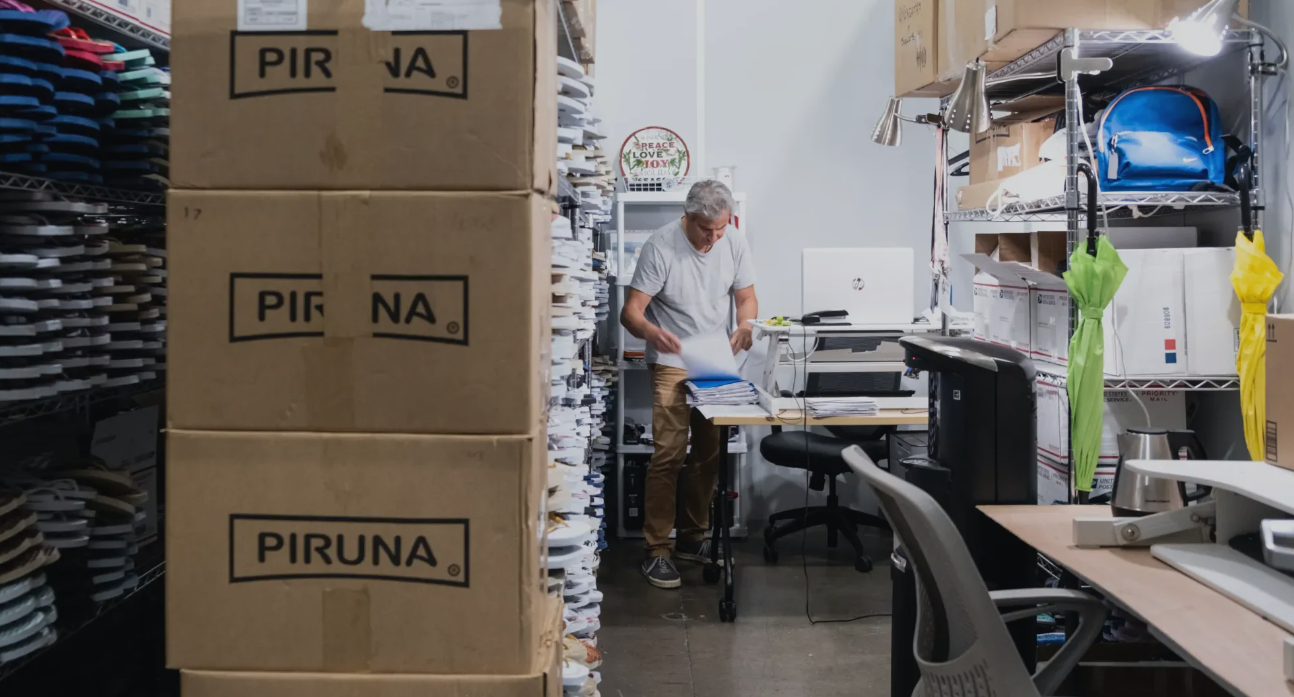
Here are the benefits you get either way:
- Daily carrier pickups: Drop packages in the sorting area on your way out. FedEx, UPS, and USPS clear them every weekday morning.
- Discounted shipping through Parsel: Saltbox members ship with carrier rates that usually take enterprise volume to negotiate.
- On-demand labor: Hire help by the hour for packing, inbounding, kitting, or inventory tasks, billed in 15-minute blocks at $45/hour.
- Free inventory inbounding: Pallets and packages get received and stored by our team even when nobody from your business is in the building.
- 24/7 security: Cameras, secured entry, and on-site staff watch over your inventory around the clock.
- Content studio: You can shoot photos and video on-site for product launches, no separate studio booking required.
Want to see how it works for growth-stage brands? 👇
Cut shipping costs with Parsel
You’ll get access to Parsel, our shipping app partner that unlocks carrier rates and labels most early-stage brands can't get on their own.
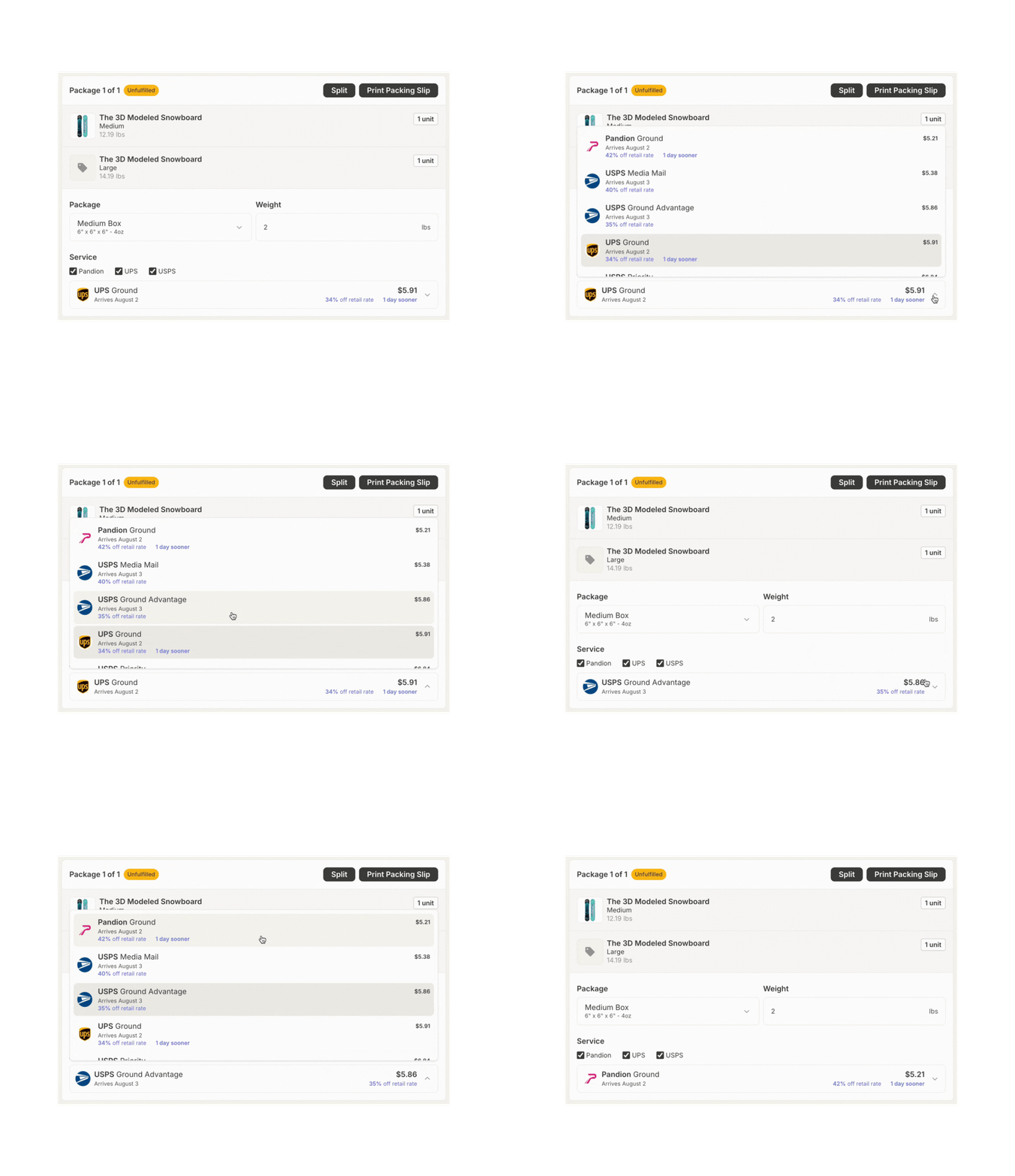
The shipping app works with USPS, UPS, FedEx, and a mix of regional and emerging carriers.
Your team can ship orders as late as 4:30 PM and compare carrier rates in-app to pick the best option for each shipment.
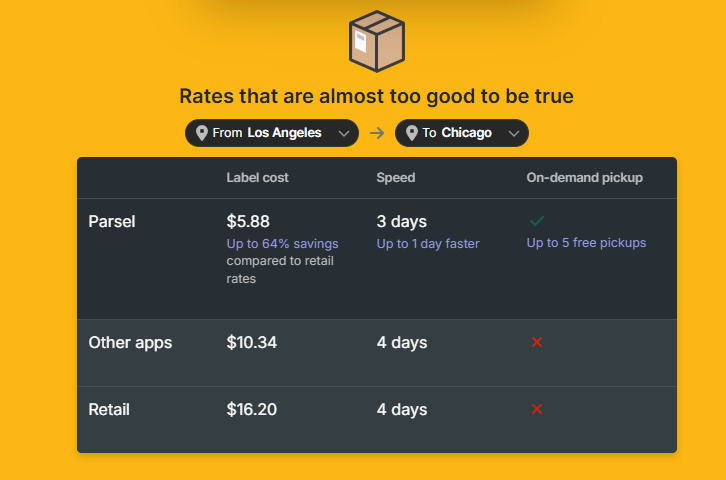
Want to try Parsel? You can sign up to Parsel here.
Saltbox locations across the U.S.
Saltbox operates 12 locations across the West Coast, East Coast, and Central U.S.:
- Los Angeles, San Gabriel Valley.
- Los Angeles, Torrance.
- Phoenix, Tempe.
- Seattle, SoDo Row.
- Denver, Park Hill.
- Dallas, Carrollton.
- Dallas, Farmers Branch.
- Atlanta, Upper Westside.
- Atlanta, Westside Park.
- Atlanta, Chamblee.
- Washington D.C., Alexandria.
- Miami, Doral.

Interested in one of our locations across the U.S.?
You can book a tour to see it alongside our operations experts. Available Mon-Fri, 8:30 AM-4:30 PM Central Time.
Book a TourHow is Saltbox different from Red Stag Fulfillment?
The cleanest way to put it: Red Stag is a 3PL (i.e., you outsource supply chain and operations functions), while Saltbox operates in a co-warehousing model (you get all-inclusive operations infrastructure that you share with other entrepreneurs).
That gap creates five real differences worth knowing.
- Order minimums: Red Stag won't onboard you below 50 orders per month, and the pricing model is built around heavy or oversized goods. Saltbox has no order floor and no product-type restriction.
- Carrier flexibility: Red Stag's negotiated rates skew toward FedEx (although they still use multiple carriers). Saltbox pulls live rates across USPS, UPS, FedEx, and regional carriers through Parsel, so you pick per shipment.
- Inventory access: Red Stag holds your goods in Tennessee or Utah. With Saltbox, you rent the suite, you walk in whenever you want, and you choose how much of the operation to hand off.
- Footprint: Red Stag's two-location model keeps things lean for them but stretches shipping zones for coastal customers. Saltbox operates a co-warehousing model with facilities positioned across 12 distinct metro areas, which lets you place inventory closer to where your orders ship to.
- Community: With Saltbox, you’ll get access to the Upstream Entrepreneurs Club community, which is a community of fellow ecommerce founders struggling with the same problems that you are.
Saltbox's membership, warehouse, and office plans
Pricing at Saltbox works in layers. The way it works is that you pick a membership tier first, and from there, you can add a warehouse suite and an office if you need them.
Here are the 3 membership tiers:
- Virtual: $99/month, a fully virtual membership for businesses that need a professional mailing address (mail only, no packages) and access to the Upstream Entrepreneurs Club community.
- Access: Starting from $349/month, which includes physical access to our locations, loading dock, packing stations, meeting rooms, and a content creation studio, without requiring a warehouse suite.
- Warehouse: Custom pricing, which includes flexible warehouse and office suites built for ecommerce entrepreneurs, with shipping technology, onsite operations support, and modern amenities.
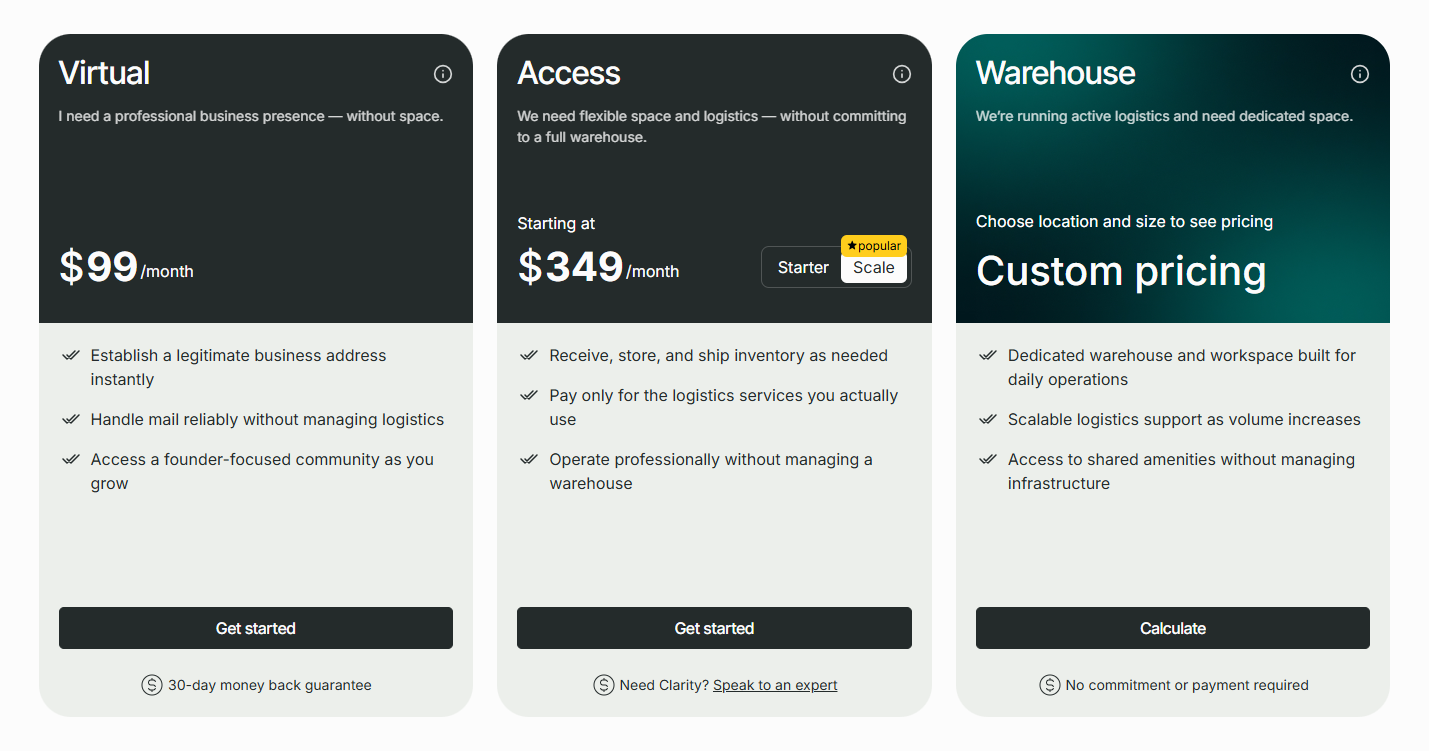
Warehouse rates depend on your city and suite size. To give you a sense of what it looks like, here's the pricing for Atlanta's Upper West location:
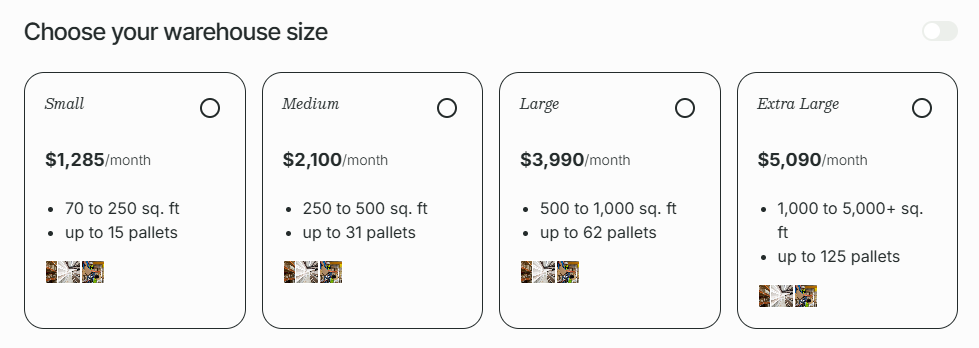
- Small Warehouse: Starting at $1,285/month for 1 to 2 employees, 70 to 250 sq. ft., and can accommodate 4 to 15 pallets.
- Medium Warehouse: Starting at $2,100/month for 1 to 4 employees, 250 to 500 sq. ft., and can accommodate 16 to 31 pallets.
- Large Warehouse: Starting at $3,990/month for 1 to 10 employees, 500 to 1,000 sq. ft., and can accommodate 32 to 62 pallets.
- Extra Large Warehouse: Starting at $5,090/month for 1 to 50 employees, 1,000 to 5,000+ sq. ft., and can accommodate 63 to 125 pallets.
Lastly, you can select your office size, which is optional. Here’s the pricing of our Atlanta's Upper West location:
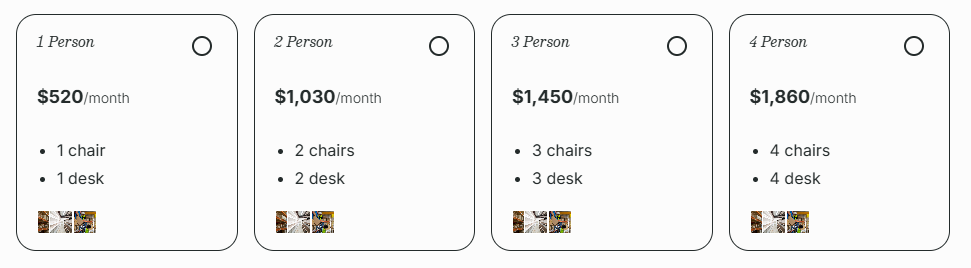
- 1-person office: $520/month for 1 chair and 1 desk.
- 2-person office: $1,030/month for 2 chairs and 2 desks.
- 3-person office: $1,450/month for 3 chairs and 3 desks.
- 4-person office: $1,860/month for 4 chairs and 4 desks.
➡️ It’s possible to pay monthly, which means that you won't be locked into an annual contract. However, you can save 10% by paying annually, or save 5% when paying biannually.
Saltbox pros and cons
✅ Warehousing, shipping infrastructure, and an office in one building across 12 U.S. metros.
✅ Access plans starting at $349/month, which is a low-commitment way in for brands not ready for a full suite.
✅ Monthly billing with no long-term lease.
✅ Discounted carrier rates through Parsel, covering USPS, UPS, FedEx, and regional carriers.
❌ Not available in Canada, though our Phoenix location can handle cross-border operations.
#2: WareSpace
Best for: Brands that want flat-monthly small warehouse space with shared business amenities baked in.
Locations: 20 U.S. cities.
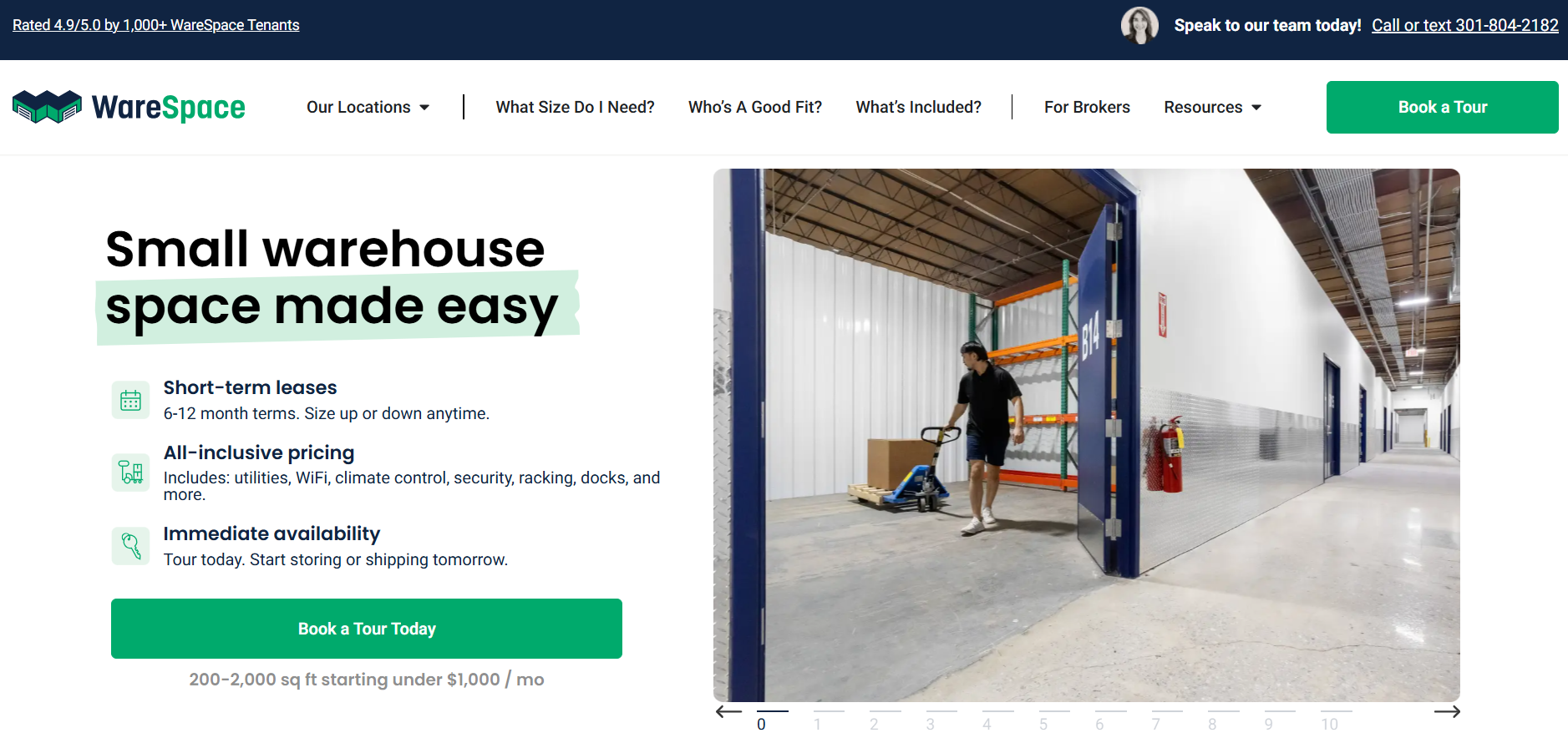
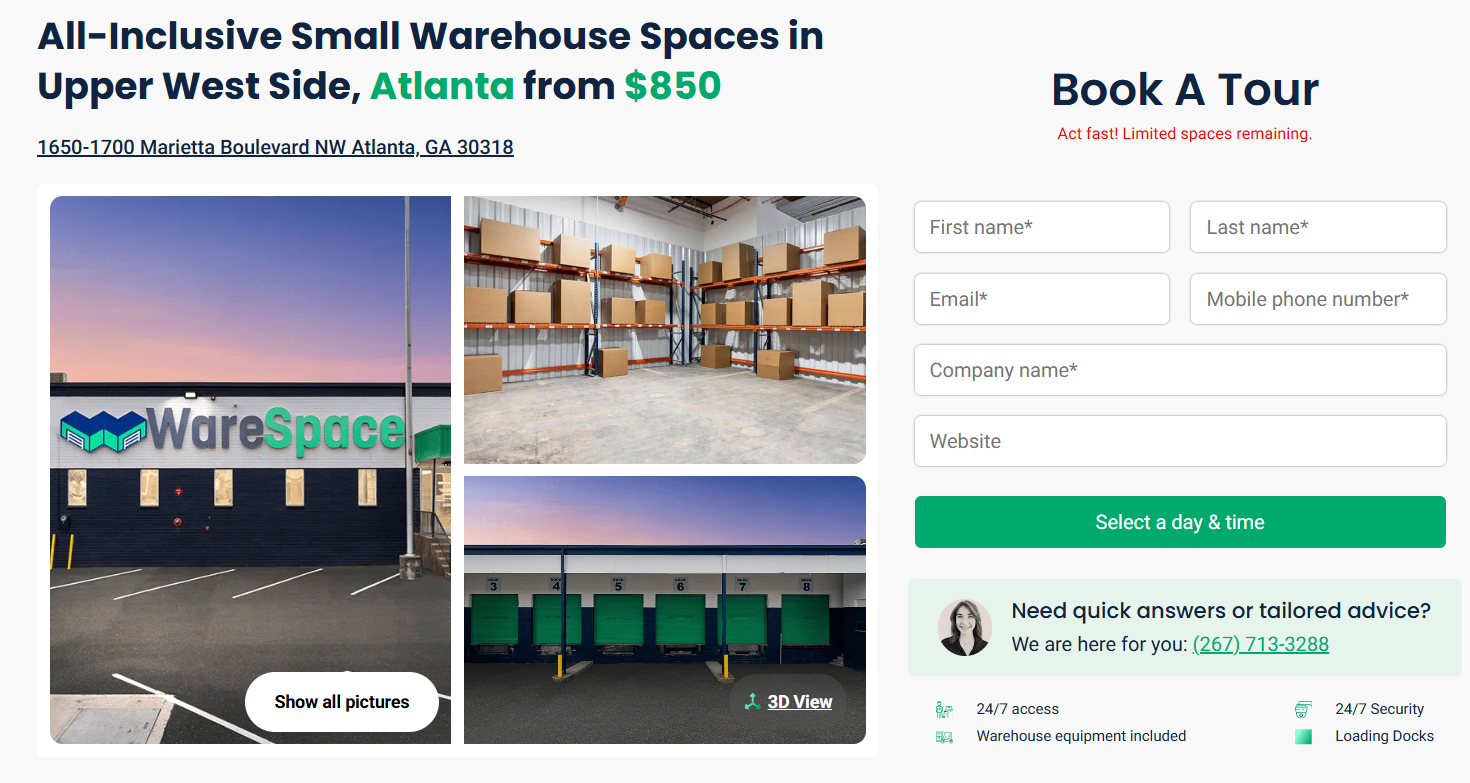
WareSpace is the closest thing to an all-inclusive apartment for your inventory, with utilities, Wi-Fi, racking, pallet jacks, loading docks, and climate control bundled into one flat monthly rate.
It works as a Red Stag alternative for brands that want their own small warehouse unit (200 to 2,000 sq. ft.) without the line-item surcharges of a 3PL.
Amenities and benefits
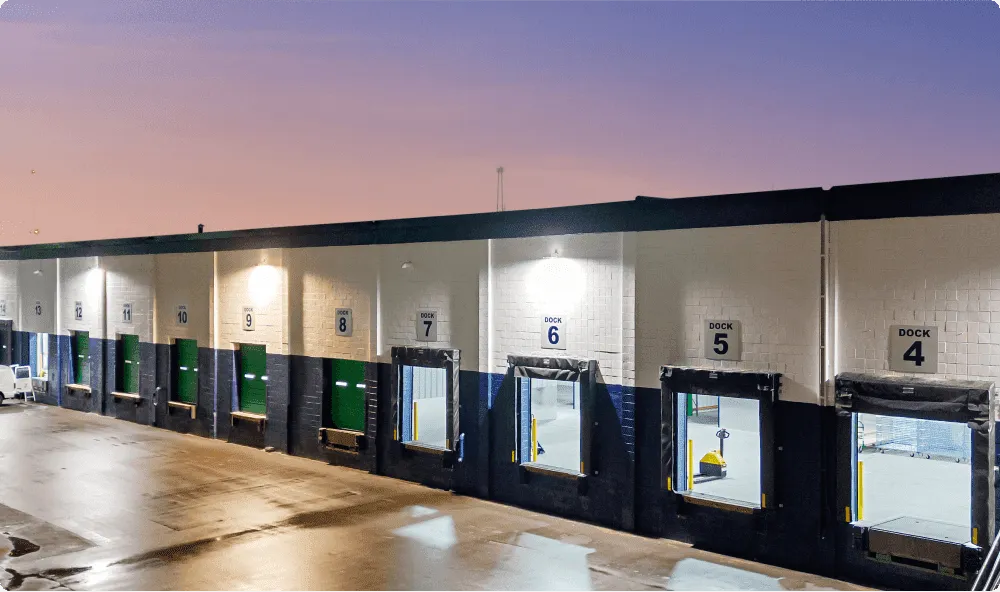
- Pallet jacks, racking, and warehouse equipment are pre-installed at every unit, with no rental fee on top.
- Wi-Fi, electricity, security monitoring, and year-round climate control are baked into the rate.
- Each facility has a shared kitchen, lounge, and conference room, plus regular cleaning service.
- Access runs 24/7, and the lobbies are sized to handle peak-hour traffic flow.
Pricing
WareSpace's all-in rate runs around $1,000/month for 200 to 2,000 sq. ft. in most markets, with Atlanta sitting closer to $850/month.
Nothing's tacked on later for racking, utilities, or Wi-Fi.
You'll need to tour a location to lock in the final number.
Pros and cons
✅ One flat rate covers everything, so the budget line is predictable.
✅ Unit sizes from 200 to 2,000 sq. ft. across 20 cities.
✅ Dock counts are scaled to the building, which keeps the morning queue short.
❌ Standard contracts run 6 to 12 months, not month-to-month, unlike some WareSpace alternatives.
#3: Portal Warehousing
Best for: Ecommerce teams that need a small warehouse close to dense customer bases.
Locations: 7 U.S. cities (Salt Lake City, Phoenix, Orlando, Minneapolis, Manhattan, Los Angeles, Brooklyn).
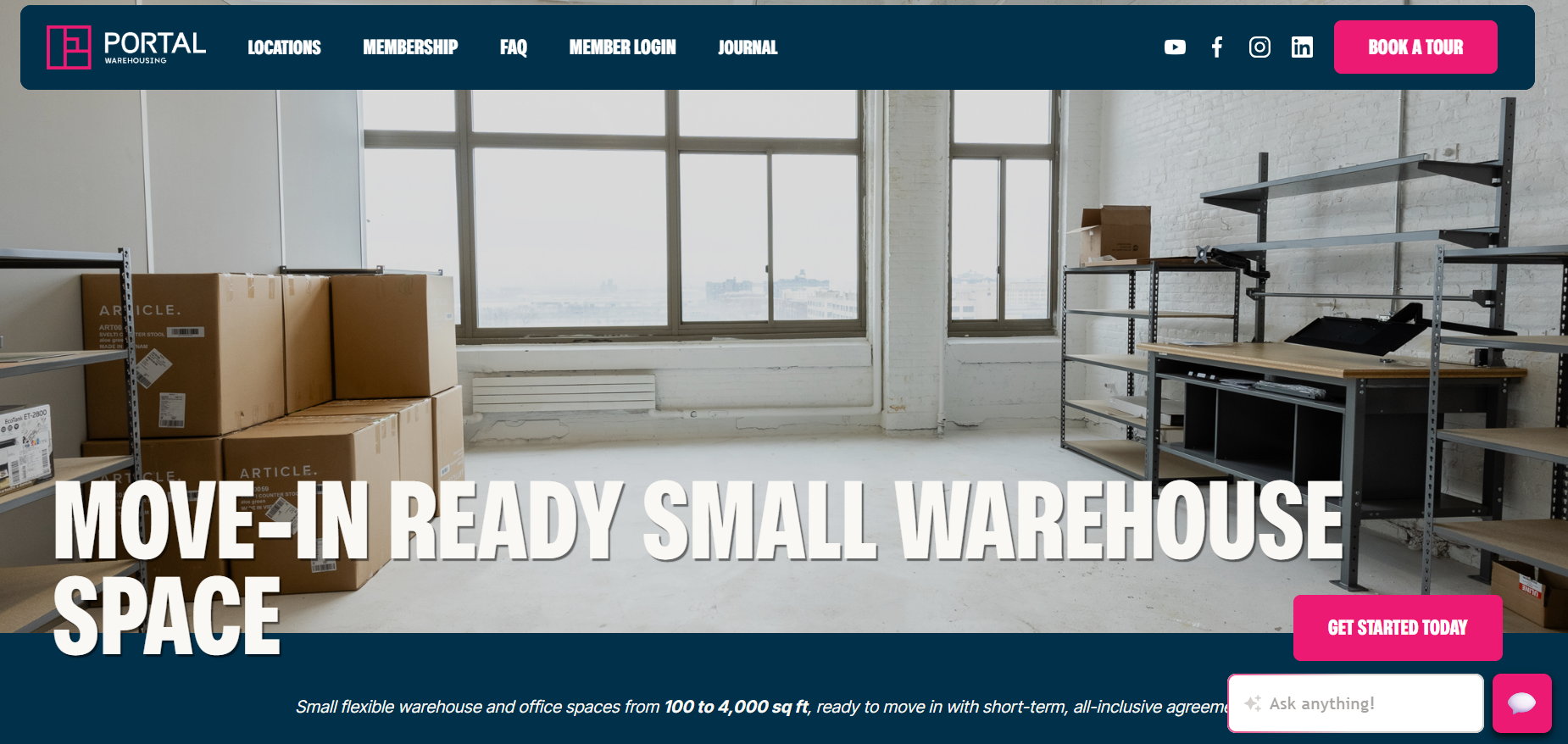
Portal Warehousing parks itself in dense urban metros, where finding warehouse space usually means signing your life away on a long lease.
For brands evaluating Red Stag, it's an alternative that keeps inventory in the same city as the customer base, with units from 100 to 4,000 sq. ft. on month-to-month terms.
Amenities and benefits
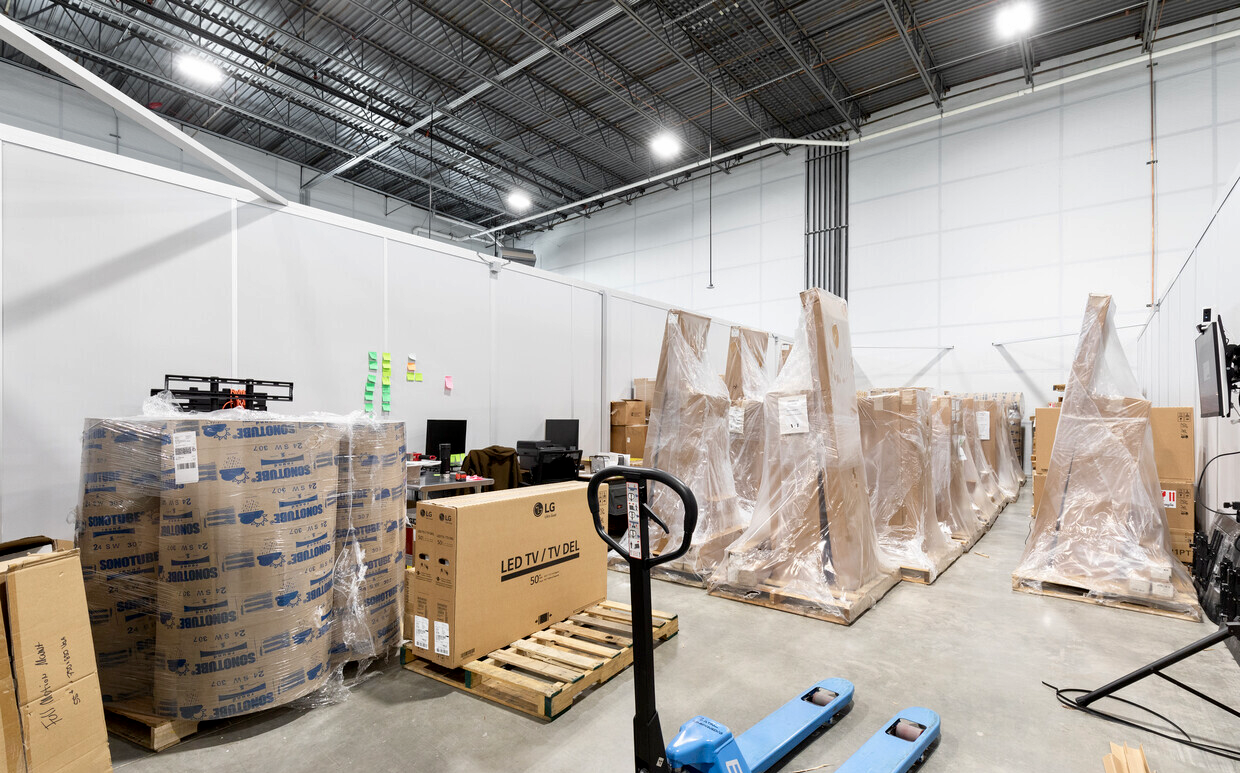
- Wi-Fi, security, racking, and weekday carrier pickups are part of the monthly rate.
- A reception desk, private office add-ons, and shared lounges sit at every site.
- Units come move-in ready, with locations chosen for proximity to interstates and labor pools.
- Founder events run regularly, and Portal members tend to swap notes on carriers, suppliers, and what's working that month.
Pricing
Portal Warehousing pricing scales with unit size:
- The Small tier ($995/month and up) covers 250 to 500 sq. ft.
- Medium ($1,795/month and up) lands between 500 and 1,000 sq. ft.
- Large ($2,995/month and up) starts at 1,000 sq. ft. and goes up from there.
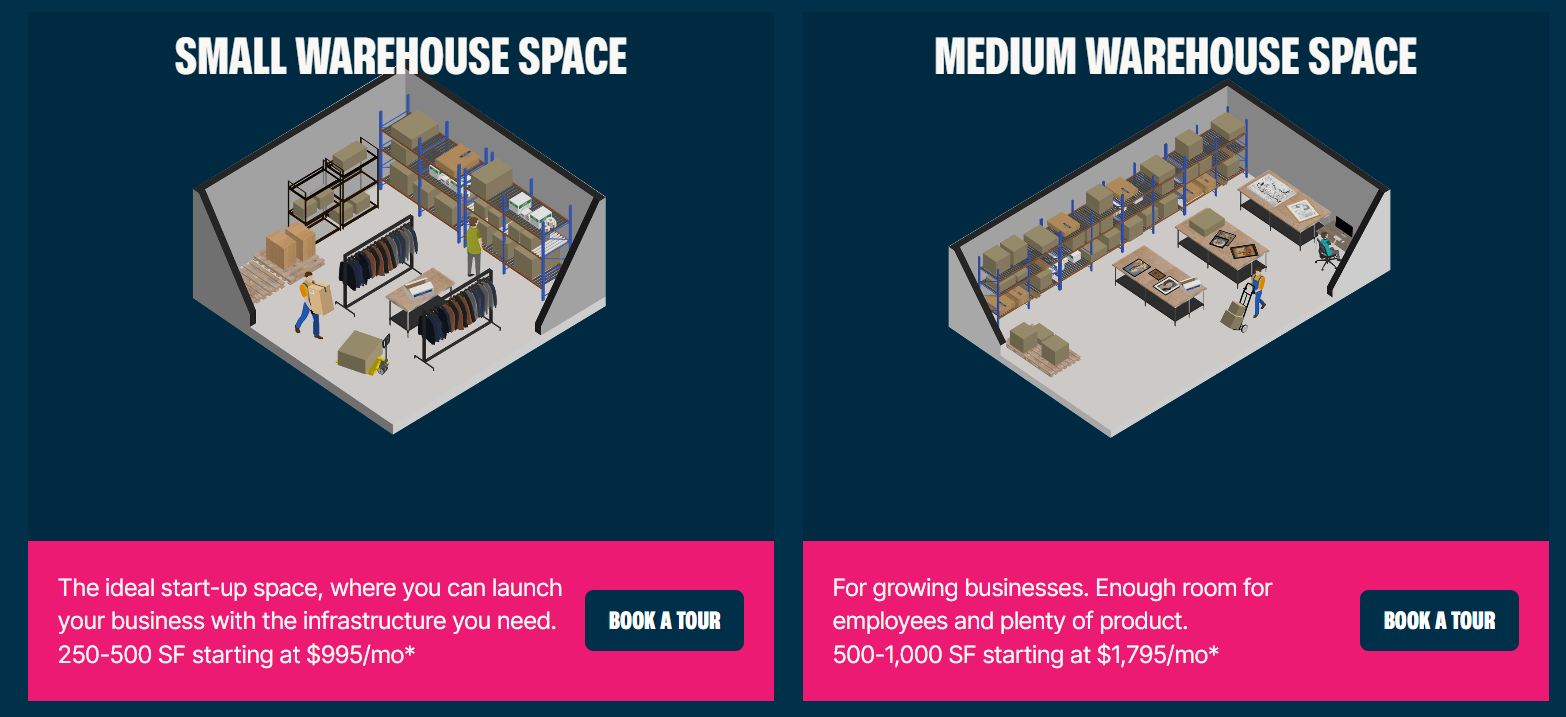
➡️ Pricing varies by location and availability.
Pros and cons
✅ No annual lease commitment, so you can adjust as orders change.
✅ Sites sit near interstates, which keeps drive times reasonable.
✅ Spaces from 100 to 4,000 sq. ft. that you can ship from on day one.
❌ Seven-city footprint can leave you boxed out of certain regions.
#4: Loloft
Best for: Founders who want an office and a small warehouse in one place, without leasing two separate spaces.
Locations: 2 (Phoenix, AZ and Rogers, AR).
Loloft is the smallest network on this list, packing coworking, dedicated desks, private offices, classrooms, and warehouse space into a single building.
For brands that want a Red Stag alternative without the 3PL handoff, it works as a budget-friendly entry point with month-to-month terms across every space type.
Amenities and benefits
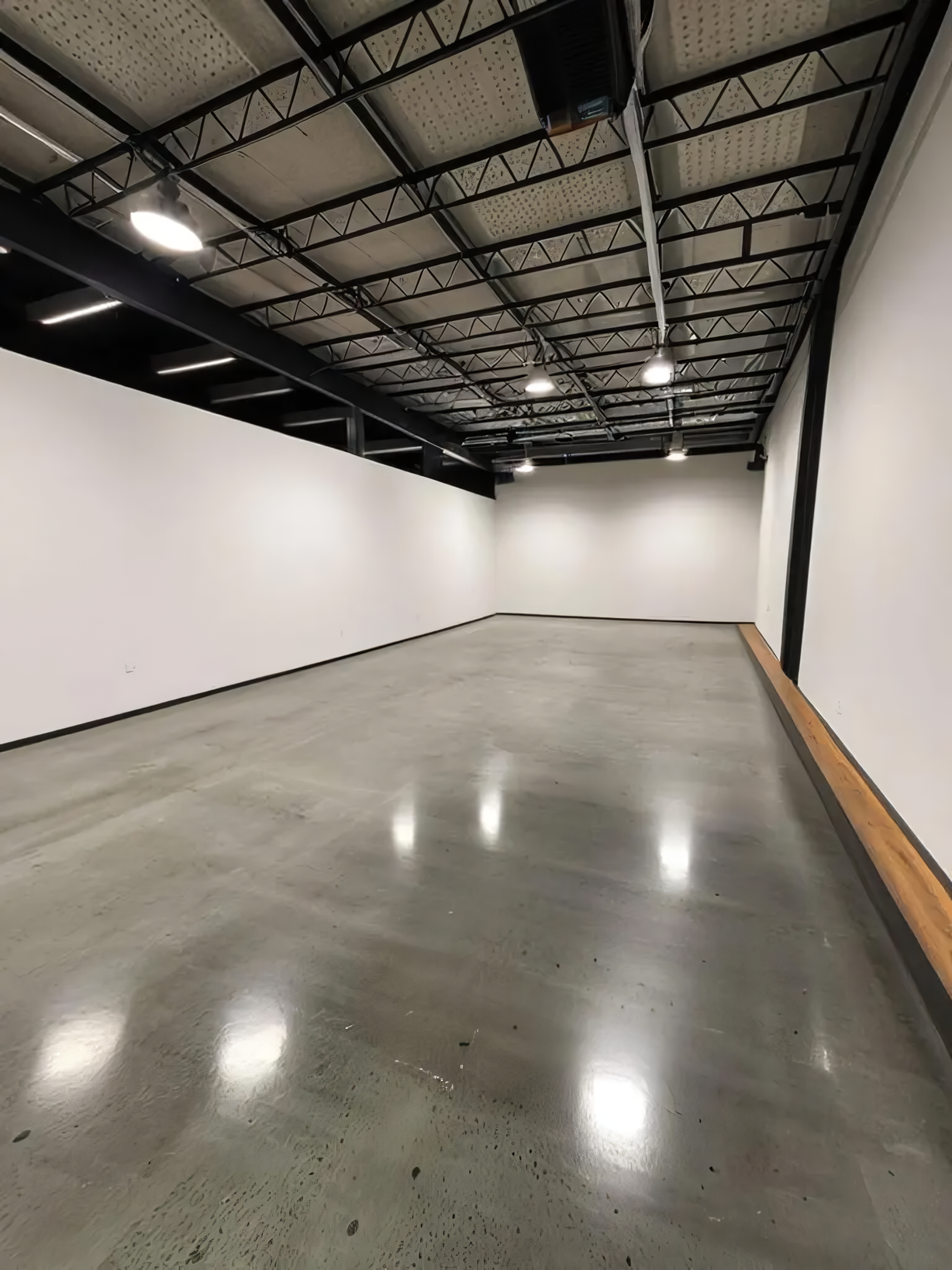
- The building combines coworking, private offices, dedicated desks, and warehouse units in one place.
- High-speed internet, kitchens, and lounges are shared between members.
- Conference rooms and classrooms are bookable on demand.
- Building access runs around the clock, with warehouse equipment shared between tenants.
Pricing
Loloft pricing varies by space type and size, with month-to-month terms across all categories.
Here's how it breaks down in Rogers:
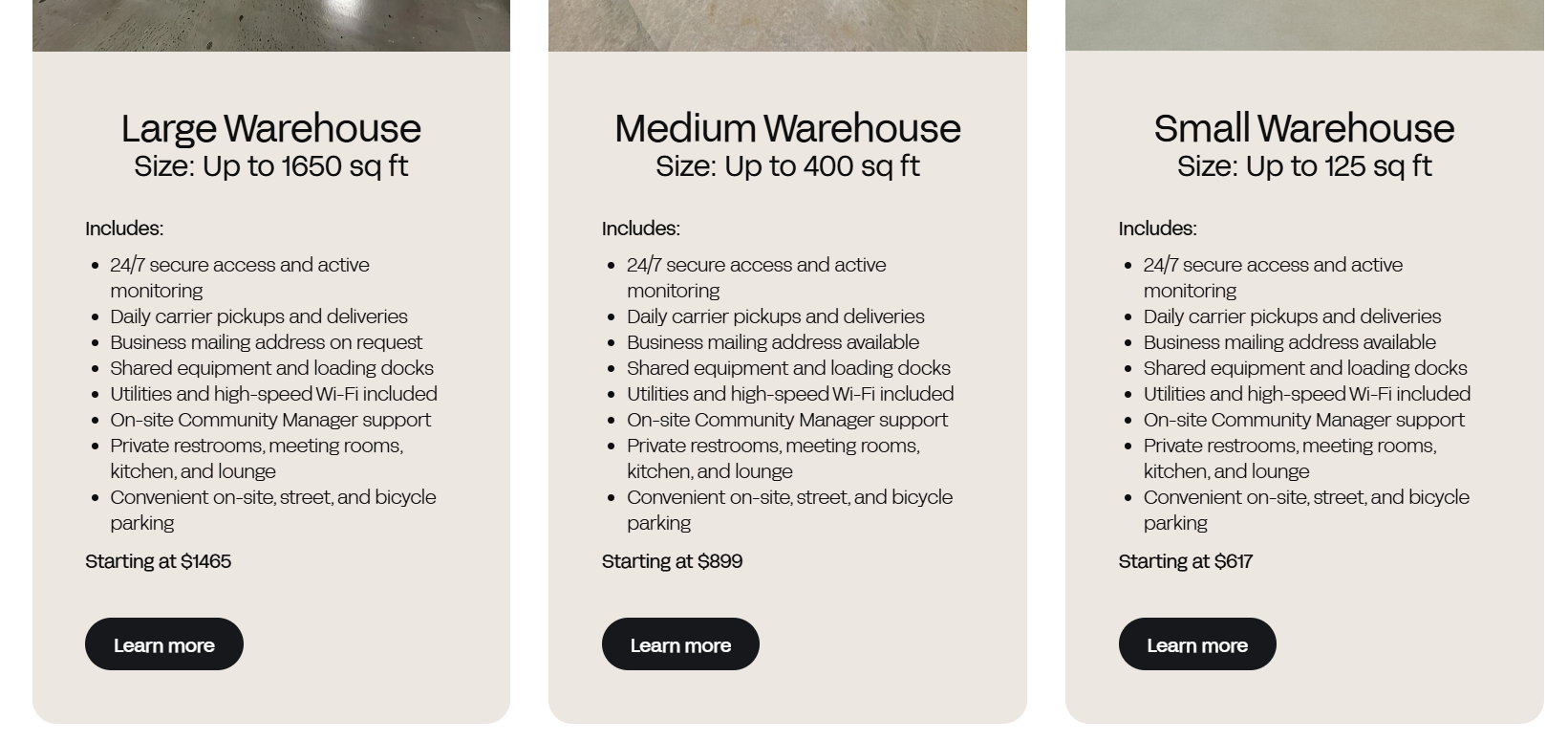
- The smallest warehouse runs $617/month for 125 sq. ft., with the largest hitting $1,465/month for 1,650 sq. ft.
- A dedicated small desk costs $425/month, while a 182 sq. ft. private office costs $1,299/month.
- Hot desks come in at $195/month, or you can drop in for $15 a day.
Pros and cons
✅ Entry-level pricing is low compared to most networks on this list.
✅ Mail handling is built into the membership.
✅ Parking is included at no extra cost.
❌ Two locations mean coverage is geographically tight.
Best 3PL alternatives to Red Stag Fulfillment
If you're committed to outsourcing fulfillment, these are the closest matches in model.
Just remember: switching from Red Stag to another 3PL solves a vendor problem, not a structural one. You're still handing over your inventory.
#1: Flowspace
Best for: Brands ready to fully outsource fulfillment to a tech-driven national network.
Locations: 150+ fulfillment centers across the U.S. and parts of Canada.
Out of every option in this group, Flowspace is the most genuinely software-driven, running orders through a network of 150+ partner fulfillment centers with software that picks the closest one to each customer.
It's a Red Stag alternative for brands that want shorter shipping zones and broader U.S. coverage, but it's still a 3PL, so the inventory access trade-off doesn't change.
Amenities and benefits
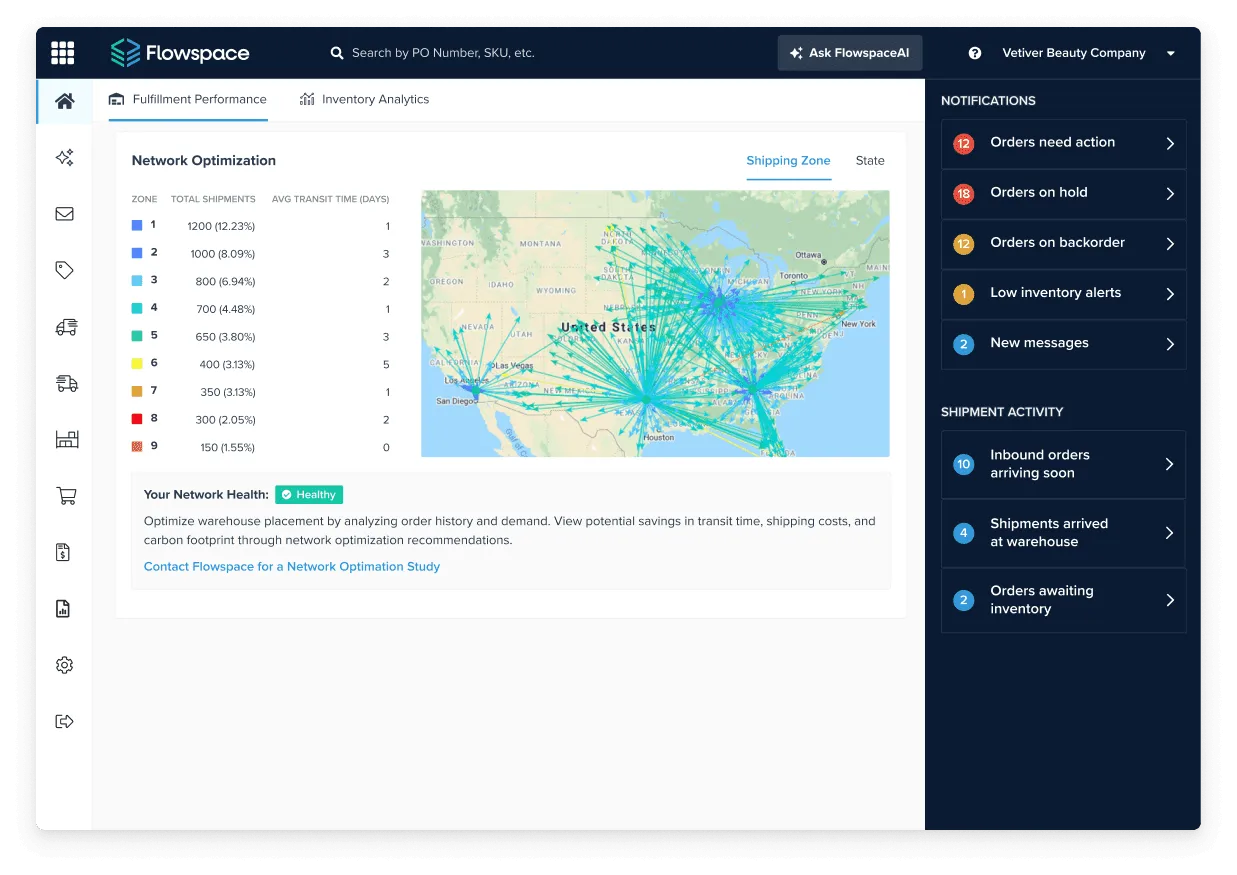
- Software routes each order to the partner facility closest to your customer to cut transit time and zone surcharges.
- Returns processing, kitting, labeling, and pick-pack-ship operations are bundled into the service.
- The dashboard shows inventory levels and order status across every node in real time.
- Connections into Shopify, Amazon, TikTok Shop, Walmart, and EDI for retail are built into the platform.
Pricing
Flowspace pricing is custom, based on SKU count, order volume, storage needs, and fulfillment complexity.
You'll need to talk to their sales team for numbers.
Pros and cons
✅ National coverage that gets you closer to customers without committing to physical space.
✅ Tech-first 3PL with strong ecommerce platform integrations.
✅ Pick, pack, ship, kitting, and returns all bundled.
❌ Custom pricing makes apples-to-apples comparison hard.
#2: FedEx Fulfillment
Best for: Established brands moving thousands of orders monthly, especially in CPG, apparel, beauty, and footwear segments.
Locations: 3 active centers (California, Texas, New Jersey), with 2 more planned in Georgia and Indiana.
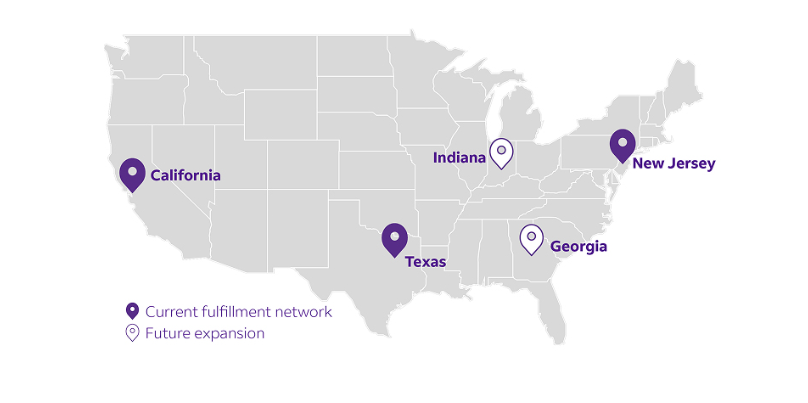
FedEx Fulfillment is the "stay in the family" play if your brand already runs on FedEx shipping, plugging your inventory into FedEx-operated facilities and using their operationsbackbone for storage and order processing.
The two-day reach to 96% of the U.S. matches Red Stag's coverage claim, making it a credible 3PL alternative for higher-volume brands willing to lock in with a major carrier.
Amenities and benefits

- Inventory is processed inside FedEx's own fulfillment facilities, with returns handled in-network.
- You can ship with FedEx or compare rates across other carriers per order, depending on cost and speed needs.
- The warehouses lean heavily on automation and warehouse robotics for throughput.
- Out of the box, the platform plugs into WooCommerce, Shopify, and Magento.
💡 Interested in how Flowpsace compares to FedEx Fulfillment? Check out our comprehensive Flowspace vs. FedEx Fulfillment guide.
Pricing
There's no rate card on the FedEx Fulfillment site, although you can use their site to calculate your shipping rates.
Pros and cons
✅ Backed by one of the largest shipping companies in the world, with strong infrastructure.
✅ Two-day reach to 96% of the U.S. population.
✅ Returns processing and custom packaging available.
❌ You’re going to give up control of your inventory.
#3: Flexe
Best for: Mid-to-large enterprise brands managing complex distribution networks who want fractional warehousing with one integration.
Locations: 800+ warehouse operator partners across the U.S. and Canada.

Flexe sits adjacent to the 3PL category, operating as a tech layer that connects brands to 800+ warehouse operators across North America through a single integration.
For brands considering Red Stag at the enterprise end, it's an alternative that scales capacity transactionally instead of locking you into a fixed warehouse footprint.
Amenities and benefits
- A combined platform handles warehousing, order, and inventory management with cross-network visibility.
- Each account gets a operations analyst who acts as the day-to-day point of contact.
- Services span fulfillment, retail distribution, and overflow capacity, all billed transactionally.
- Integration runs through API, EDI, or XML, picking whichever your tech stack supports.
💡 Interested in how Flowpsace compares to Flexe? You can read our Flowspace vs. Flexe guide.
Pricing
Flexe pricing is custom and built per account.
The model is transactional, meaning you pay for the space and services you use, without long-term leases.
Pros and cons
✅ Massive nationwide network with no upfront capital required.
✅ Strong fit for enterprise brands managing peaks, overflow, or new market entry.
✅ Single integration covers planning, fulfillment, and reporting.
❌ Built for enterprise scale, which makes it overkill for most growth-stage DTC brands.
Best flexible warehouse alternatives to Red Stag Fulfillment
These are the middle-ground options.
You get warehouse space without signing a multi-year industrial lease, and you handle most of the operations yourself, without 3PL pricing layered on top.
#1: Cubework
Best for: Brands past the early-stage threshold that need real square footage in multiple U.S. markets.
Locations: 77+ across the U.S.
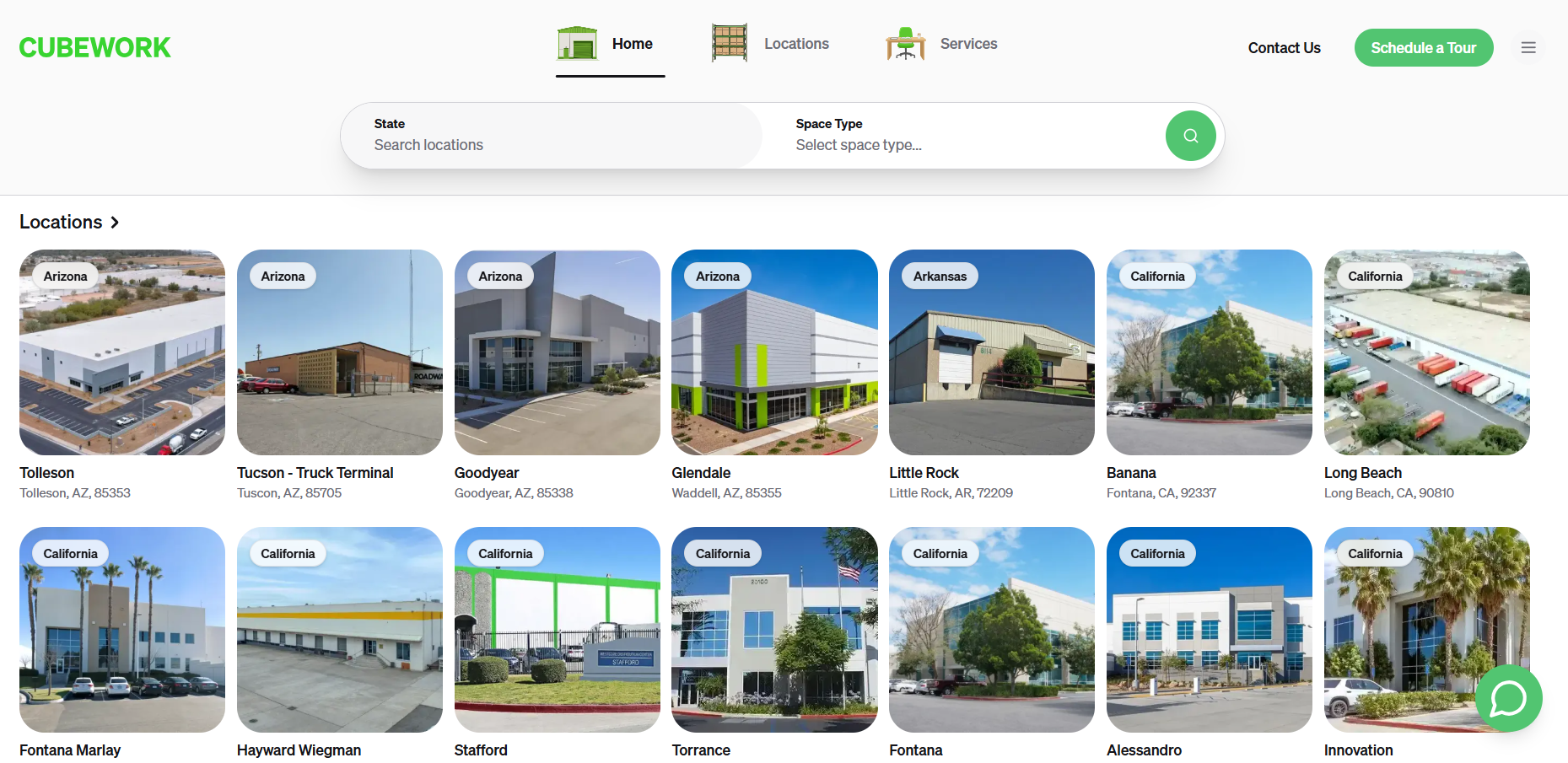
Cubework is what you reach for when 1,000 sq. ft. starts to feel cramped, with units that scale from small storage rooms up to 150,000 sq. ft. distribution facilities.
Lease terms can start at three months, making it a Red Stag alternative for brands that want their own industrial footprint without the multi-year commitment of a traditional lease.
Amenities and benefits
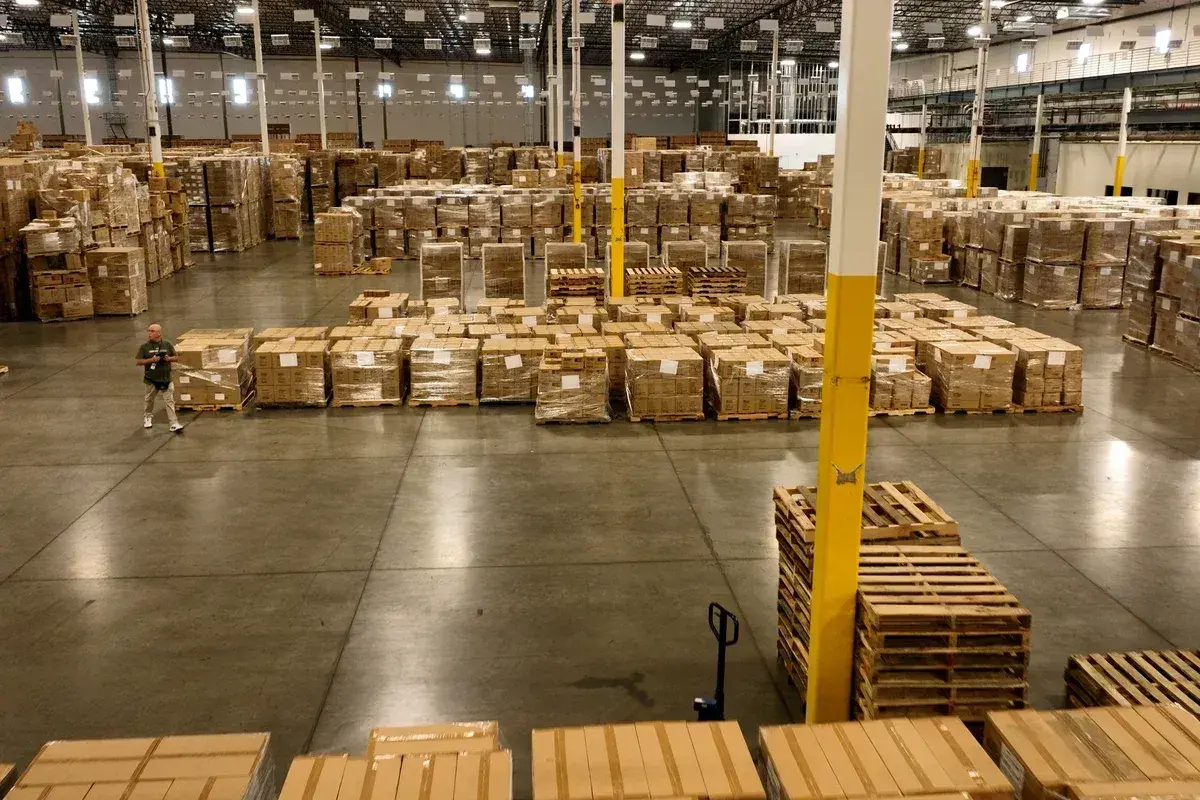
- Units stretch from small storage rooms up to 150,000 sq. ft. distribution facilities.
- Members get extras you don't usually see in industrial space: catered breakfasts, BBQs, trade show passes, and concierge services.
- Buildings are monitored 24/7 with secure access protocols.
- High ceilings and industrial zoning make the spaces fit for fulfillment, distribution, and light manufacturing.
Pricing
Cubework keeps its pricing off the website.
Quotes are tied to location, unit size, and lease length, which means a conversation is the only way to get numbers.
Pros and cons
✅ Sites cluster around interstates and freight corridors.
✅ Loading docks are sized for industrial-volume operations.
✅ Lease terms can start as short as 3 months.
#2: ReadySpaces
Best for: Small and mid-size operations that prioritize quick move-in over polished extras.
Locations: Multiple U.S. locations across major metros.
ReadySpaces keeps the model simple: lease a unit between 100 and 5,000 sq. ft. on a flat rate that covers utilities, security, and equipment access, and you're operating by next week.
Forklifts, loading docks, and pallet jacks come with the lease, making it a Red Stag alternative for brands that want to ship their own orders out of a real warehouse without the 3PL overhead.
Amenities and benefits
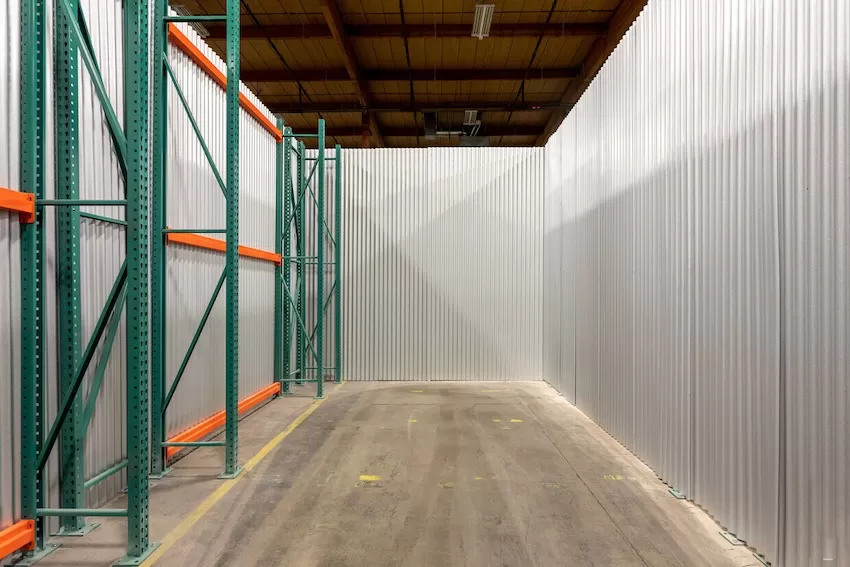
- Units run from 100 to 5,000 sq. ft. and come ready to operate the day you sign.
- Building access runs 24/7 with video surveillance throughout the property.
- Most facilities have shared kitchens, lounges, and a coworking corner.
- Forklifts, pallet jacks, and loading docks come with the lease.
Pricing
There's no published rate card on the ReadySpaces site.
Pricing depends on the city and the unit size, so getting actual numbers means filling out a contact form.

Pros and cons
✅ Flat all-in lease pricing keeps the line items predictable.
✅ Spaces are usable from day one, with industrial equipment already in place.
✅ Unit range covers everything from small storage to a real warehouse footprint.
❌ No public pricing makes side-by-side comparison harder, which is why some members have been looking for ReadySpaces alternatives.
#3: FlexHQ
Best for: Teams that prefer a designed coworking and warehouse setup over an industrial lease.
Locations: 6 U.S. locations (Los Angeles, Denver, Plano, Salt Lake City, Nashville, Charlotte).
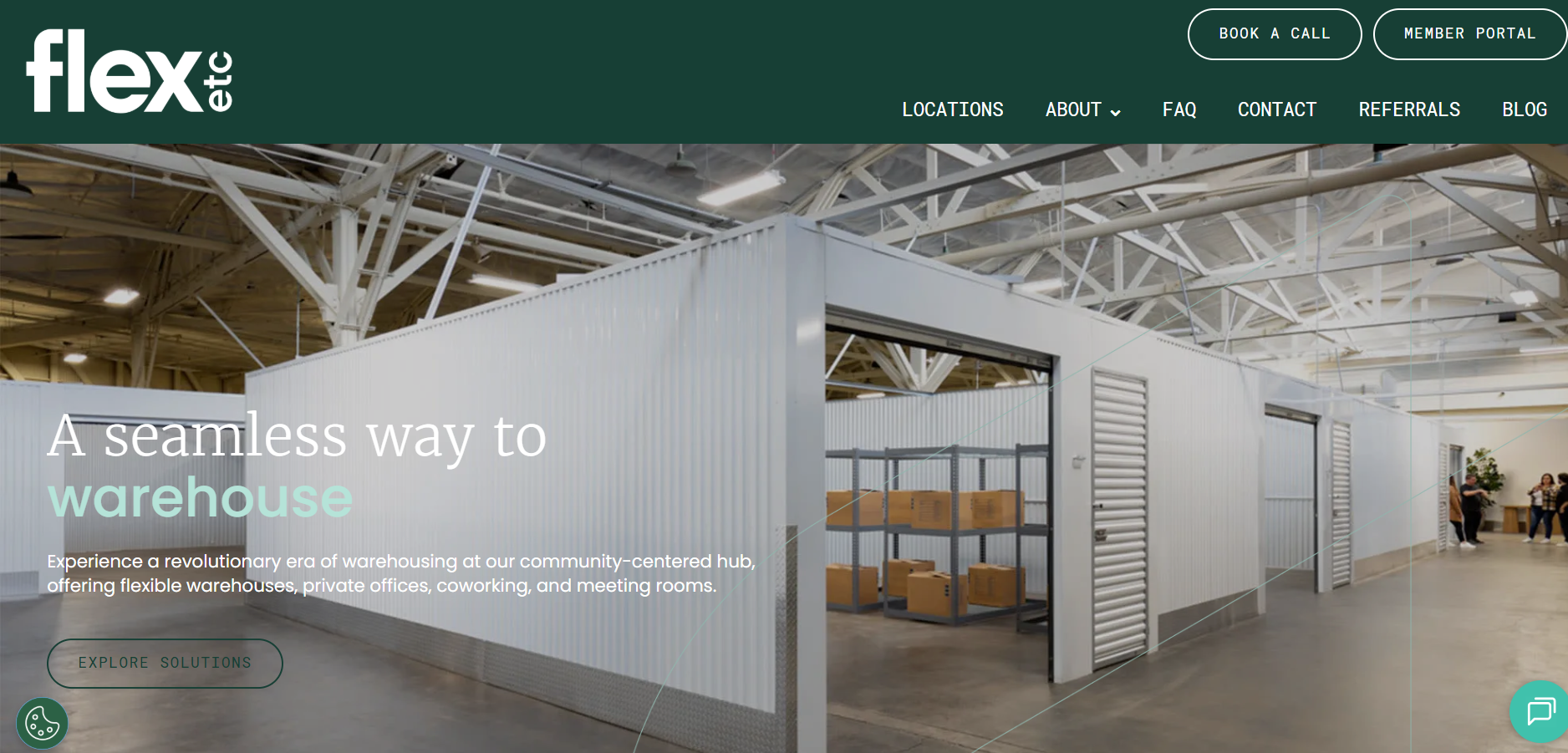
FlexHQ (now FlexEtc) takes the bones of an industrial warehouse and runs them through a designer's lens, turning large industrial buildings into curated environments with smaller warehouse units, offices, and studios.
For brands evaluating Red Stag, it's an alternative that lets you keep the inventory in your own space, with month-to-month plans and immediate move-in instead of a long industrial lease.
Amenities and benefits
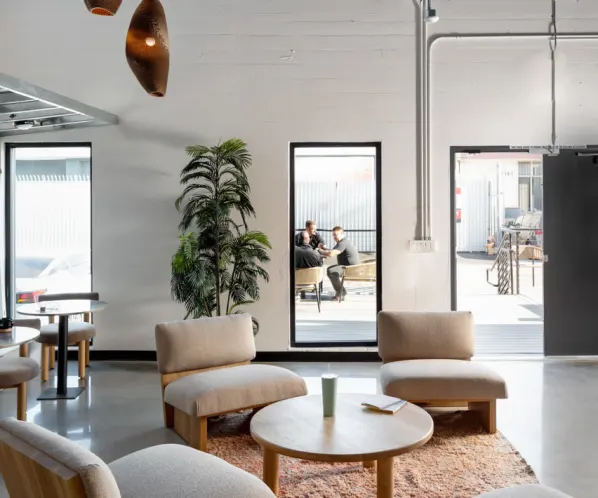
- Coworking access and private offices are folded into the membership tiers.
- The interiors lean toward designed and polished, more office than industrial bay.
- On-site staff manages building access, deliveries, and the secure entry system.
- Plans are billed by the month with no annual commitment tied to them.
Pricing
FlexHQ requires a conversation to get a number. Quotes are built around the city you're in and the size of space you need.
Pros and cons
✅ Move-in is immediate and there's no long lease tied to it.
✅ Interiors are designed to look like a workspace, not a warehouse floor.
✅ Monthly billing makes it easy to scale or exit.
❌ Six U.S. cities won't cut it if your customer base is spread coast-to-coast.
Get started with Saltbox today
Red Stag Fulfillment built a strong reputation in one corner of the 3PL world: heavy, oversized, and high-value products handled with accuracy guarantees from two warehouses in Tennessee and Utah.
That model works if your business fits the profile.
But for most growth-stage ecommerce brands, the 3PL trade-off looks the same regardless of which logo's on the invoice:
- You stop seeing your inventory.
- You can't audit the surcharges.
- Your operation shrinks down to a dashboard.
Saltbox is built for the founders who want to keep their hands on the operation.
- You walk into your own warehouse suite.
- You ship through Parsel with carrier rates that most small brands can't access on their own.
- You bring in on-demand labor by the hour when peak hits, and you scale up or down month-to-month without a 3PL contract or a multi-year industrial lease.
If you're considering a Red Stag alternative because the 3PL model itself isn't working for you, book a tour at one of our facilities or talk to our team about which plan fits.
⚠️ Disclaimer: This article was last updated on 1st of May, 2026, and if there's any misinterpretation of the information, please contact us, and we will fact-check it.
Frequently asked questions
The right time is usually six months before most founders actually do it. If your error rate is consistently above 1–2%, your costs are scaling faster than your volume, or you're spending meaningful time every week managing your provider relationship, those are signals worth acting on sooner rather than later.
Traditional 3PLs give you access to shared fulfillment infrastructure on their terms. Saltbox is a co-warehousing model, which means members get private warehouse suites they control, an on-site team that's physically present, and access to Parsel, Saltbox's shipping platform partner, for discounted shipping and real-time tracking.
The model is built for founders who want the support of a fulfillment partner without giving up visibility and control. Read more here about how Saltbox compares to traditional third-party logistics providers.
Co-warehousing differs from a traditional 3PL in that it gives small businesses direct access to their inventory, flexible terms, and on-site resources.
Co-warehousing is the best 3PL alternative for small businesses looking for flexible space, hands-on support, and scalability.
For Her
For Him
For Pets
For Anyone



Related posts
Learn from businesses improving their operational efficiency. Explore how Saltbox’s expert support and flexible spaces drive their growth.


2026 peak season shipping surcharges: what FedEx, UPS, USPS, and Amazon are charging
Additional handling went up about 6%. The fee on every single order went up 25%. Here’s the full 2026 surcharge picture, and what it costs you per order.
10 best 3PL companies in Atlanta, GA (2026)
Ten Atlanta 3PL providers compared on buildings and certifications, plus the case for keeping fulfillment in a suite you control.
10 best 3PL companies in Tempe, AZ (2026)
Ten 3PL providers serving Tempe, what each one is built to handle, and the case for keeping your pallets somewhere you can walk in.
Related terms
Learn from businesses improving their operational efficiency. Explore how Saltbox’s expert support and flexible spaces drive their growth.