.webp)


Key takeaways
When your ecommerce business starts to grow, logistics can feel like an overwhelming challenge. That’s where solutions like third-party logistics (3PL) come into play.
But what exactly is 3PL warehousing, and is it the right fit for your business? This article will explain 3PL warehousing in depth while also exploring alternatives like co-warehousing that might better meet your needs.
What is third-party logistics warehousing?
Third-party logistics (3PL) warehousing refers to outsourcing your inventory storage and fulfillment processes to a specialized provider. These companies manage the physical aspects of order fulfillment, including storing your products, picking and packing orders, and shipping them to customers.
For ecommerce businesses, 3PL warehousing offers a hands-off solution that lets you focus on growing your brand rather than dealing with the day-to-day logistics.
How does 3PL warehousing work?
When you partner with a 3PL provider, the process typically looks like this:
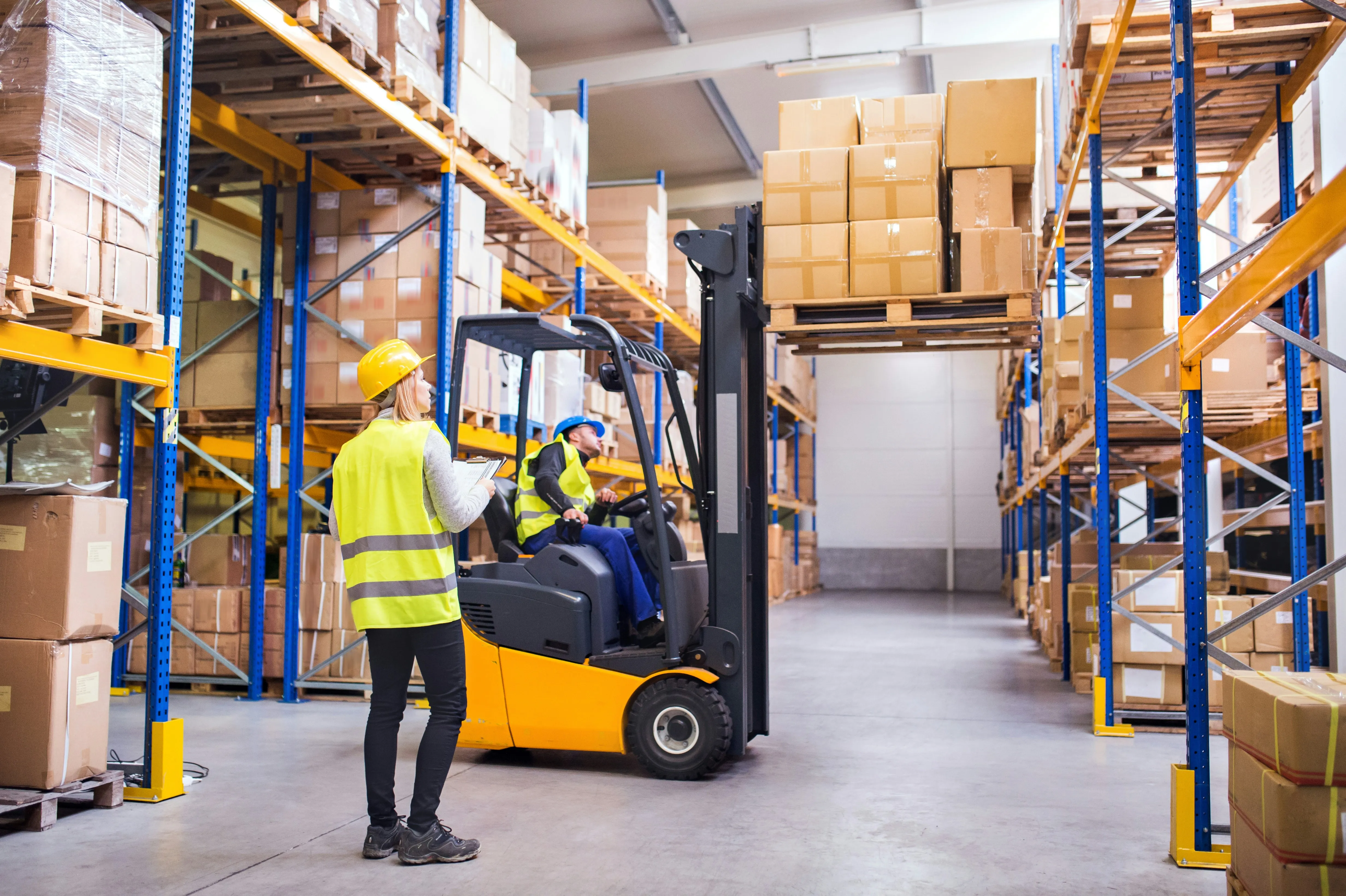
- Inventory storage: You send your products to the 3PL’s warehouse, where they are stored on a pallet rack until needed
- Order fulfillment: When a customer places an order, the 3PL picks the items from the pallet rack, packages them, and prepares them for shipment
- Shipping: The 3PL manages shipping logistics using its carrier network
- Returns management: Many 3PLs also handle customer returns and restocking

This streamlined process can save businesses significant time and resources, especially when managing high order volumes.
Benefits and challenges of third-party logistics warehousing
Partnering with a 3PL provider can provide advantages for large enterprise businesses aiming to streamline their solutions:
- Not having to own an entire warehouse space
- Robust warehouse management systems
- A hands-off approach to fulfillment
However, third-party logistics warehousing can have significant drawbacks for small businesses such as:
- Handing off your operations and products, which can be difficult if you prefer a hands-on approach
- Hidden fees or minimum order volume requirements
- Errors in order fulfillment or delays in shipping can hurt your customer satisfaction and brand reputation
Understanding these challenges is critical before committing to a 3PL solution.
Alternatives to third-party logistics: co-warehousing
While 3PL warehousing works well for large enterprise businesses, it’s not the best option for small- to medium-sized businesses. Alternative 3PL solutions like co-warehousing, for example, offer a more flexible and collaborative approach to logistics.

In a co-warehousing model, businesses rent space in a shared warehouse, where they maintain control of their operations. It’s a hybrid solution that combines the scalability of 3PLs with the autonomy of self-fulfillment. At Saltbox, our co-warehousing spaces are designed to meet the needs of modern ecommerce businesses. Members get access to workspaces, shipping services, and support, all while staying close to their inventory.
Comparing third-party logistics to co-warehousing
Here’s a quick comparison of 3PL warehousing and co-warehousing:
- Control: Third-party logistics providers take the reins, while co-warehousing keeps you in charge
- Flexibility: 3PLs often require long-term contracts, while co-warehousing typically operates on a month-to-month basis
- Involvement: 3PL warehousing is a hands-off approach, whereas co-warehousing fosters collaboration and allows for hands-on involvement
Check out the below chart for a deeper dive into how a co-warehousing solution like Saltbox compares to traditional 3PLs.

Co-warehousing might be a better fit for businesses that want to keep a closer eye on their logistics or need a more dynamic, flexible solution.
How to decide between 3PL and co-warehousing
Choosing the right logistics solution depends on your business’s unique needs. Consider the following questions:
- Do you want to retain control over your inventory and order fulfillment?
- Are you looking for a highly scalable solution with minimal involvement?
- What is your budget for logistics, and can you commit to long-term contracts?
If you value control, flexibility, and collaboration, co-warehousing could be the right choice.
Saltbox: A flexible alternative to 3PLs
Third-party logistics warehousing can be useful for businesses that want to hand off fulfillment entirely, but it's not the only path forward.

For growth-stage DTC brands, the choice between a traditional 3PL and Saltbox usually comes down to one question:
How much control do you want to keep over your inventory, your packaging, and your customer experience?
With a traditional 3PL, you hand over your products and pay per order, per pallet, and per ancillary service like kitting, returns processing, or special projects.
Many require minimum monthly volumes or annual commitments before you can even get onboarded.
You don't see your inventory day-to-day, and shifting your strategy mid-contract often means renegotiating terms or paying early-exit penalties.
Saltbox flips that model.
You get your own private warehouse suite ranging from 70 sq. ft. to over 5,000 sq. ft., with 24/7 app access available and daily carrier pickups from UPS, USPS, and FedEx.
The shared infrastructure (loading docks, packing stations, forklifts, climate-controlled options, conference rooms, content studios) is the kind of setup most small brands can't afford on their own.
Control stays with you, but the heavy operational lift doesn't have to.
- If you want hands-off support, you can hire on-demand labor through Saltbox Fulfillment at $45/hour in 15-minute increments.
- If you want to scale further, assisted fulfillment starts at $3 per unit, so Saltbox staff handles pick-and-pack inside your suite during your busiest weeks.
- If you want to do it yourself, the space and infrastructure are yours to run as you see fit.
Either way, you're not signing an annual lease.
You also get discounted shipping rates through Parsel that most small brands can't access on their own, plus a built-in community of fellow ecommerce founders through the Upstream Entrepreneurs Club.
Across 12 U.S. locations, Saltbox gives DTC brands a logistics setup that grows with them instead of locking them in.
You can book a tour at the location closest to you to see how Saltbox stacks up against your current 3PL, or talk to an expert if you want help mapping out which membership tier fits your order volume.
Frequently asked questions
The right time is usually six months before most founders actually do it. If your error rate is consistently above 1–2%, your costs are scaling faster than your volume, or you're spending meaningful time every week managing your provider relationship, those are signals worth acting on sooner rather than later.
Prioritize pricing transparency, space flexibility, real-time inventory visibility, and on-site support. Also evaluate tech stack compatibility; your new provider should integrate cleanly with your existing sales channels and shipping tools without requiring a custom build on your end.
Most 3PL transitions take between 30 and 90 days, depending on your order volume, SKU complexity, and contract notice requirements. A 60-day timeline using the parallel-run method is the most common approach for mid-volume operators.
Traditional 3PLs give you access to shared fulfillment infrastructure on their terms. Saltbox is a co-warehousing model, which means members get private warehouse suites they control, an on-site team that's physically present, and access to Parsel, Saltbox's shipping platform partner, for discounted shipping and real-time tracking.
The model is built for founders who want the support of a fulfillment partner without giving up visibility and control. Read more here about how Saltbox compares to traditional third-party logistics providers.