.webp)


Key takeaways
- Saltbox is the best Amazon FBA alternative in 2026 for ecommerce brands looking for flexible co-warehousing with private suites, on-demand labor, shipping discounts, and month-to-month flexibility without minimum volume requirements.
- Room2Work covers the other co-warehousing slot, with a single Roswell, GA footprint and a membership model aimed at founders still splitting time between kitchen-table ops and real warehouse needs.
- Flowspace, FedEx Fulfillment, FlexSpace Logistics, and BOXIE24 are the closest 3PL-style swaps for FBA.
- WorkHub, TradeSpace, Workspace USA, and Crate Warehouse cover the flexible warehouse and storage bucket for brands that mainly want square footage on their own terms.
There's a moment many Amazon FBA sellers can pinpoint when the math stopped working.
Maybe it was the third storage fee increase, the customer who got the wrong SKU because of inventory commingling, or the day Amazon Basics dropped a near-identical version of your bestseller for half the price.
In this article, I'll cover 10 Amazon FBA alternatives and competitors in 2026 across co-warehousing, 3PLs, and flexible warehouse options, so you can pick the setup that actually matches how your brand runs.
What are the best alternatives to Amazon FBA in 2026?
The best alternative to Amazon FBA in 2026 is Saltbox with its flexible co-warehousing solution, discounted shipping, and month-to-month billing.
If you'd rather stay inside a 3PL model, Flowspace is the closest swap for FBA, while WorkHub handles the flexible warehouse side for brands that mainly need space.
Here's the full breakdown of 10 alternatives for ecommerce brands moving off FBA:
What are the best co-warehousing alternatives to Amazon FBA?
Whatever the trigger behind looking for Amazon FBA alternatives, you’ll discover that swapping FBA for another 3PL just rearranges the same set of trade-offs.
This is because the real shift happens when you change the model entirely, not just the vendor.
Co-warehousing is the only category on this list that fundamentally changes the FBA model.
Instead of shipping your inventory into someone else's system and paying per order to get it back out, you’ll have the option to keep a private suite and physical control of your operation.
These are two co-warehousing solutions that are worth a serious look:
#1: Saltbox
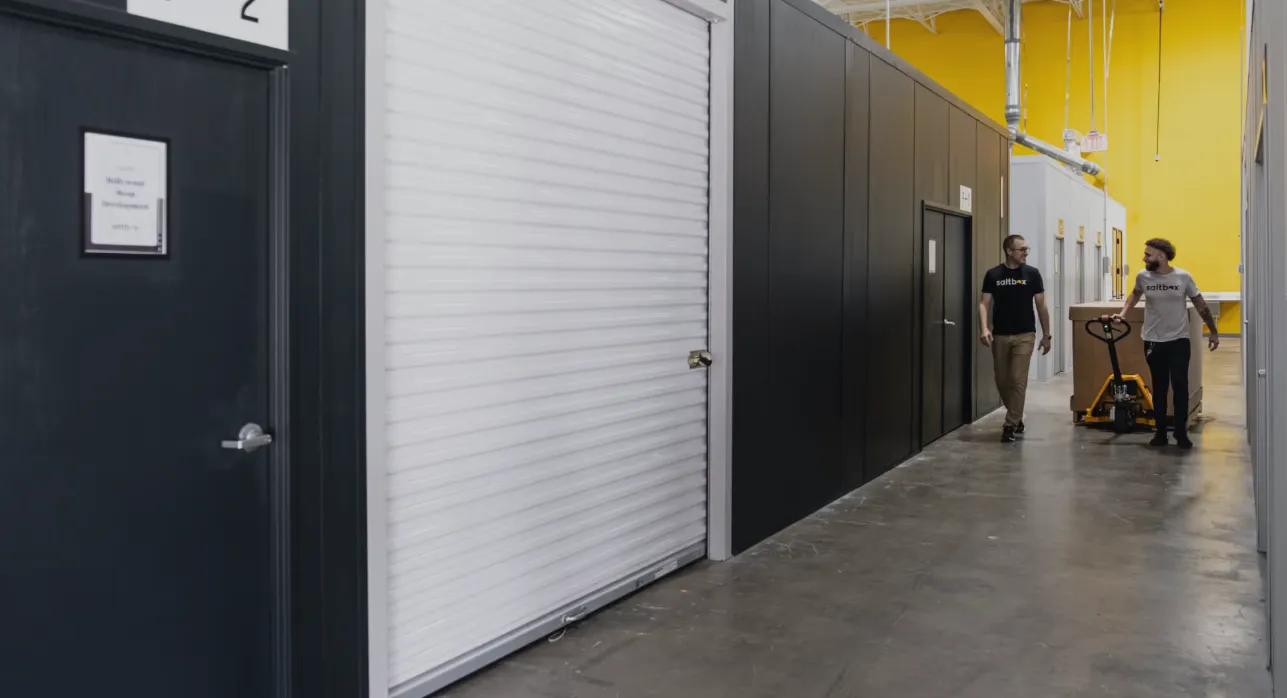
Saltbox is the best Amazon FBA alternative in 2026 for ecommerce brands that want to keep their hands on their inventory while still getting professional warehouse infrastructure underneath them.
You’ll be able to get a private suite from as little as 70 sq. ft. if you’re just starting out and looking to scale, be billed monthly, and get access to on-demand labor when you need an extra hand.
On top of that, you’ll also get access to a community of other entrepreneurs and access to discounted shipping rates that Amazon won't quietly inflate next quarter.
Picture the setup as a warehouse, an office, and a fulfillment crew that are here to help you all sharing the same building, except you actually control the post-purchase experience.
Disclosure: Even though Saltbox is our co-warehousing solution, I’ll break down what makes our co-warehousing solution the best alternative to Amazon FBA.
Here are the amenities and benefits that have helped brands like PURioLABS, Shinery, and GOLDN The Brand grow off the back of this model: 👇
Warehousing and workspaces sized to your stage
The smallest Saltbox suite is 70 sq. ft. and the largest tops 5,000 sq. ft., spread across 11+ U.S. locations.
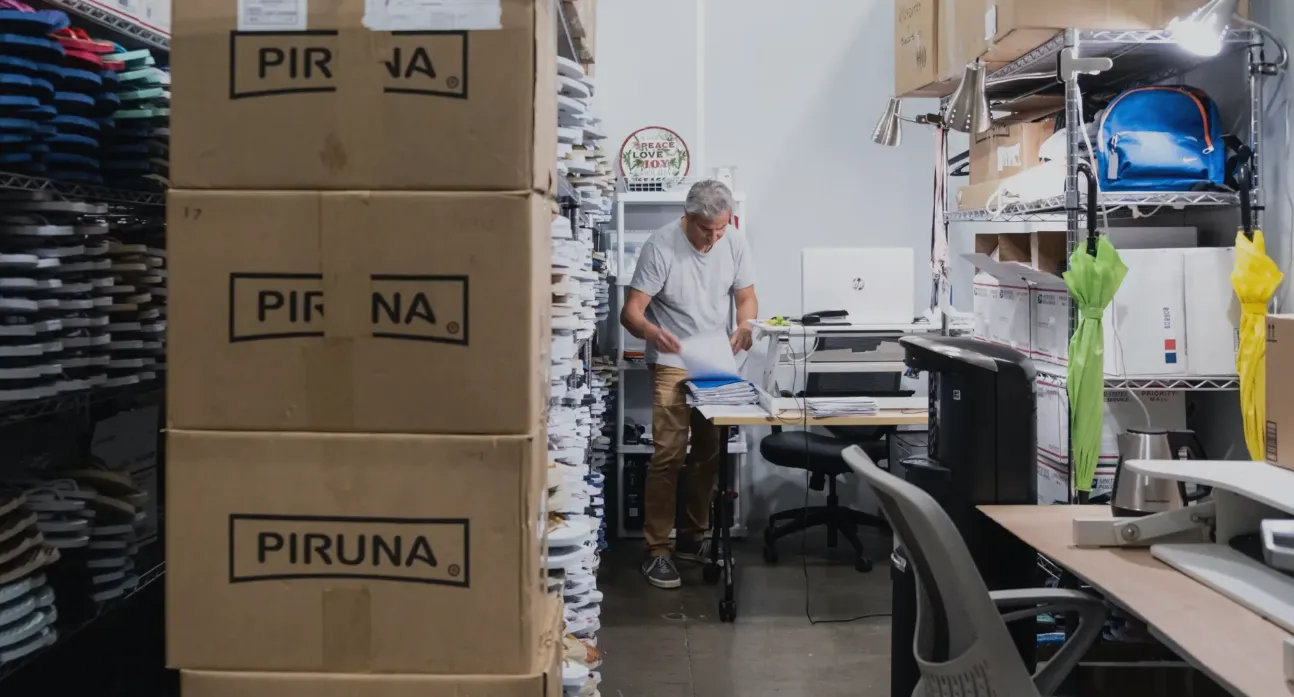
However, the warehouse you start with isn’t going to be the commitment you’d think.
You can pay monthly and move to a bigger or smaller warehouse in the same building when your SKU count changes.
There’ll be no need to renegotiate, because you won’t be stuck in a 12+ month contract that you’ll have to fulfill.

Not ready to move into a warehouse space, yet?
Saltbox Access Plans will provide you with a mailing address, receiving services, discounted rates, on-site labor, and an entrepreneurial network.
Explore Access PlansWe've broken the warehouse options into four tiers:
- Small suites cover 70 to 250 sq. ft., fit 1 to 2 people, and hold 4 to 15 pallets. This is where most solo founders start.
- Medium suites run 250 to 500 sq. ft., support up to 4 people, and store 16 to 31 pallets. A common move when wholesale orders start showing up.
- Large suites scale to 500 to 1,000 sq. ft., 1 to 10 people, 32 to 62 pallets. Built for teams hitting consistent volume.
- Extra Large suites push 1,000 to 5,000+ sq. ft., support up to 50 people, and hold 63 to 125 pallets. The tier for established DTC brands running large-scale operations.
➡️ Take the location quiz or book a tour with our team to figure out where you actually fit.
Operations and shipping built around the way you work
One of the biggest differences between Saltbox and 3PLs like Amazon FBA is control of your inventory.
You can choose between handling everything yourself, bringing in support when demand peaks, or handing off your fulfillment entirely while you work from the office.
The benefit of co-warehousing is that you wouldn’t have to commit to one model all of the time, either.
A founder packing every order in January can hand fulfillment to our team in November when Q4 hits.
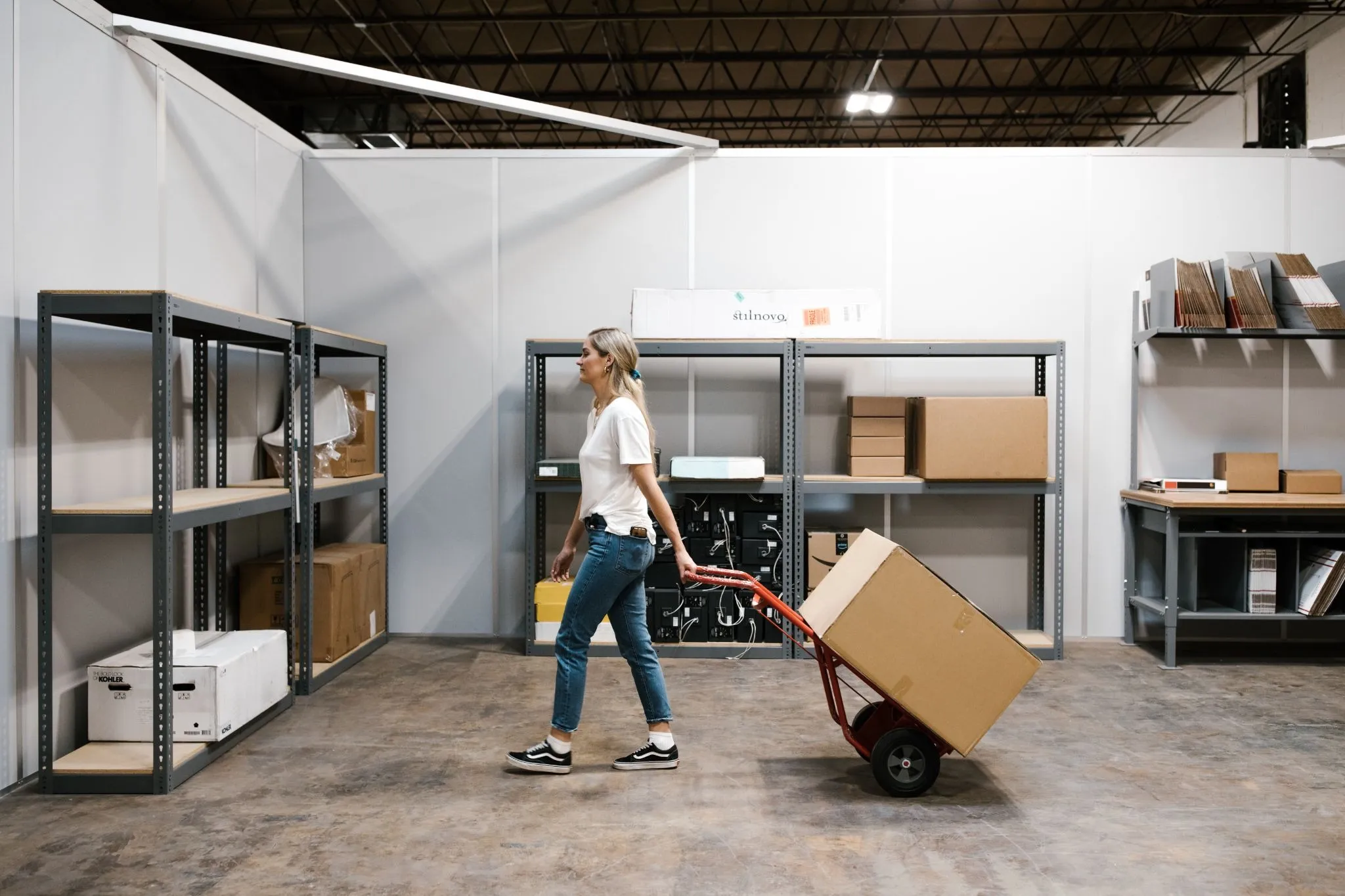
Here’s what you've got at your disposal:
- Daily carrier pickups: Monday through Friday, drop your packages in the sorting area and FedEx, USPS, and UPS clear them on schedule.
- Discounted shipping rates: Our shipping app, Parsel, opens up carrier rates that solo brands typically can't negotiate. Members save several dollars per package on average.
- On-demand labor: The team handles whatever you throw at them by the hour, including order fulfillment, FBA prep, kitting, bundling, and cycle counts. Billing runs in 15-minute blocks starting at $45/hour.
- Free inventory inbounding: Our crew receives and stores inbound packages on your behalf, so a vacation week doesn't mean a stalled business.
- 24/7 security: Surveillance and monitored access run around the clock.
- Content studio: A professional-grade photo and video studio so you can film content in the building.
Here's how shipping looks when it stops being a daily fire: 👇
Save on shipping with Parsel
Parsel is a shipping app that is available to all Saltbox members, which unlocks carrier rates and label pricing that many startups can't access independently.
Most members end up using it the same way: print labels faster than they did on their old platform, pay noticeably less per package, and stop worrying about whether tomorrow's shipments will make the 4:30 PM cutoff.
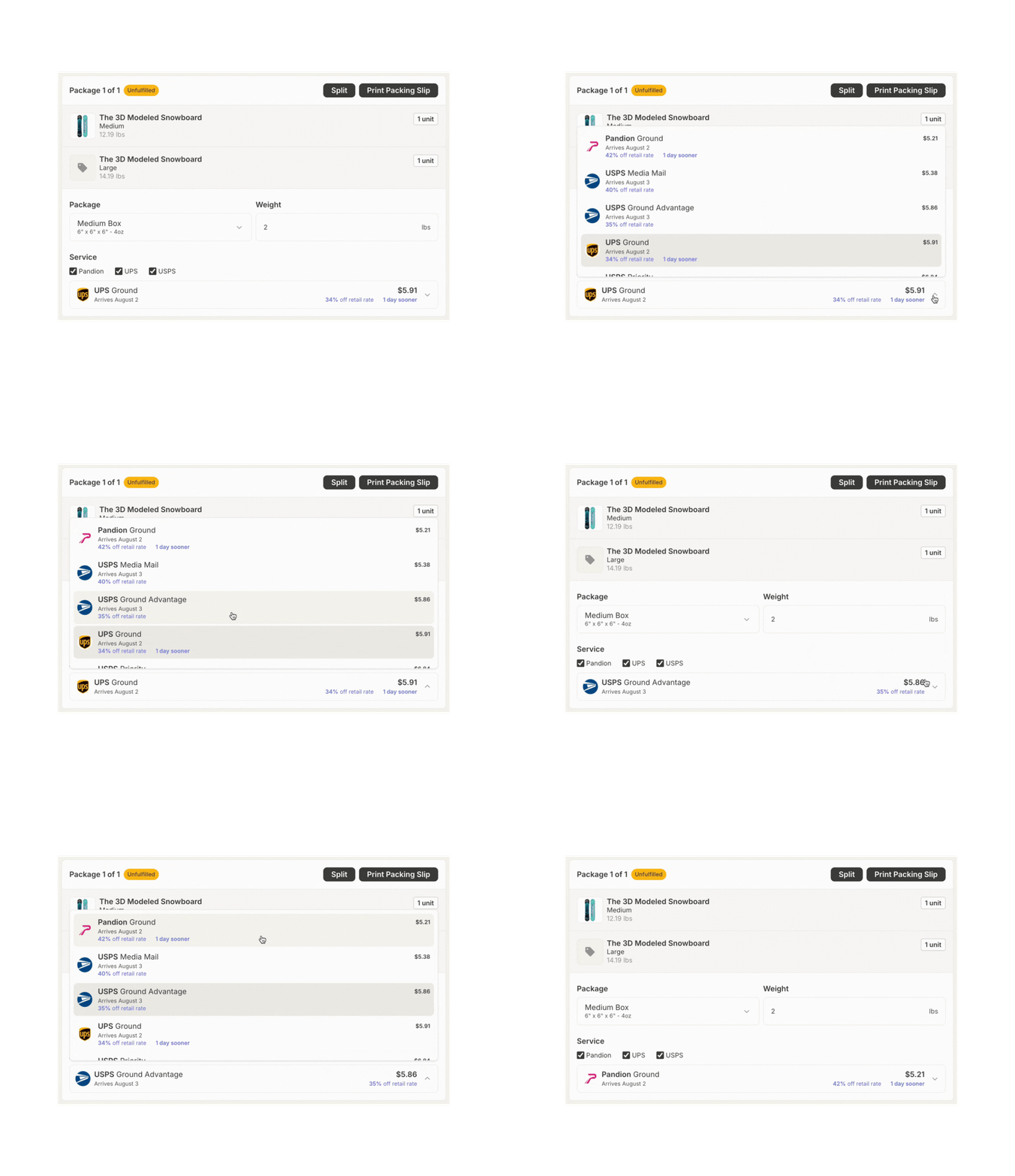
Rate shopping happens inside the app itself, so when a regional carrier beats the national rate on a specific zone, you see it and book it.
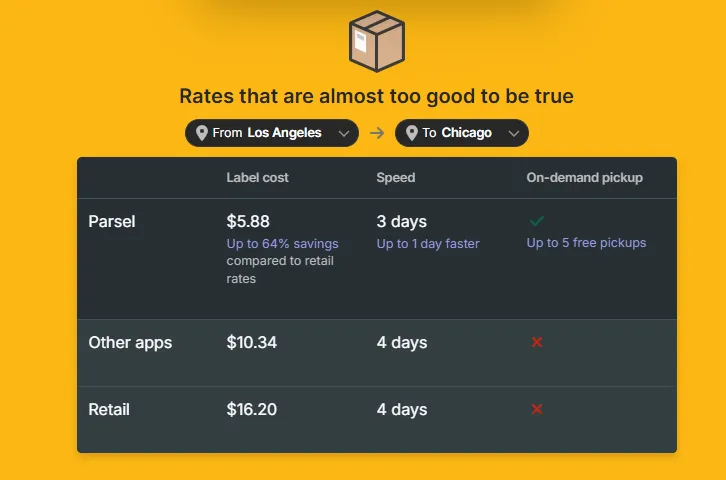
Want to try Parsel? You can sign up to Parsel here.
Saltbox locations across the U.S.
We're spread across the West Coast, the East Coast, and the Central U.S., with 11+ locations in total:
- Los Angeles, San Gabriel Valley.
- Los Angeles, Torrance.
- Phoenix.
- Seattle, SoDo Row.
- Denver, Park Hill.
- Dallas, Carrollton.
- Dallas, Farmers Branch.
- Atlanta, Upper Westside.
- Atlanta, Westside Park.
- Washington D.C., Alexandria.
- Miami, Doral.

Interested in one of our locations across the U.S.?
You can book a tour to see it alongside our operations experts. Available Mon-Fri, 8:30 AM-4:30 PM Central Time.
Book a TourHow is Saltbox different from Amazon FBA?
Amazon FBA wants your inventory in their building, ideally for a long time, and ideally being shipped through their carrier mix. That's the entire premise.
Saltbox runs the inverse: your inventory stays in your suite, in your city, with you choosing the carrier and the packing flow.
A few specifics worth pulling out:
- You can still run Prime, just under Seller-Fulfilled Prime (SFP)*, which Saltbox locations qualify for.
- You can physically walk into your space at 6 PM if a customer flagged a packaging issue and you want to fix it today.
- You build carrier relationships through Parsel rather than feeding Amazon a per-unit fulfillment fee.
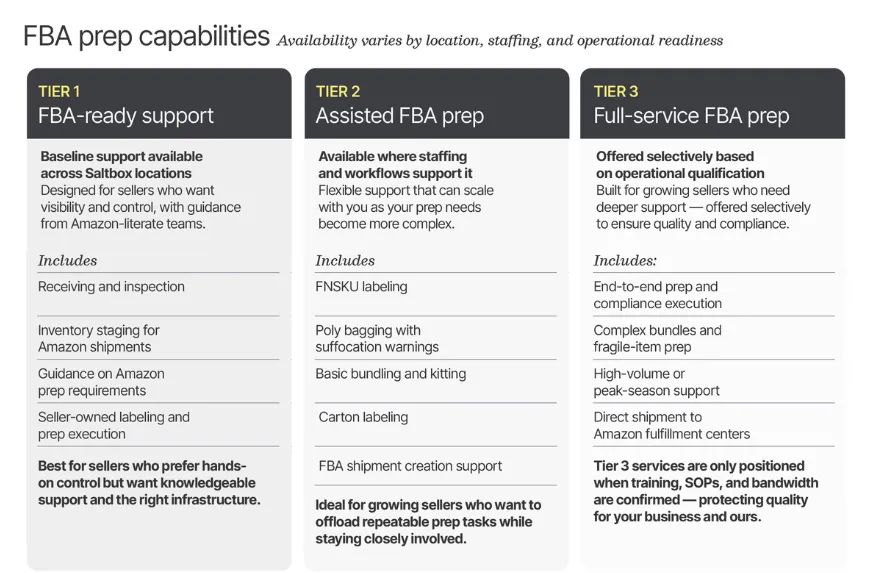
* You can hire our team to ensure everything is prepared properly since Amazon has strict requirements. We also do FBA preb for our members using FBA.
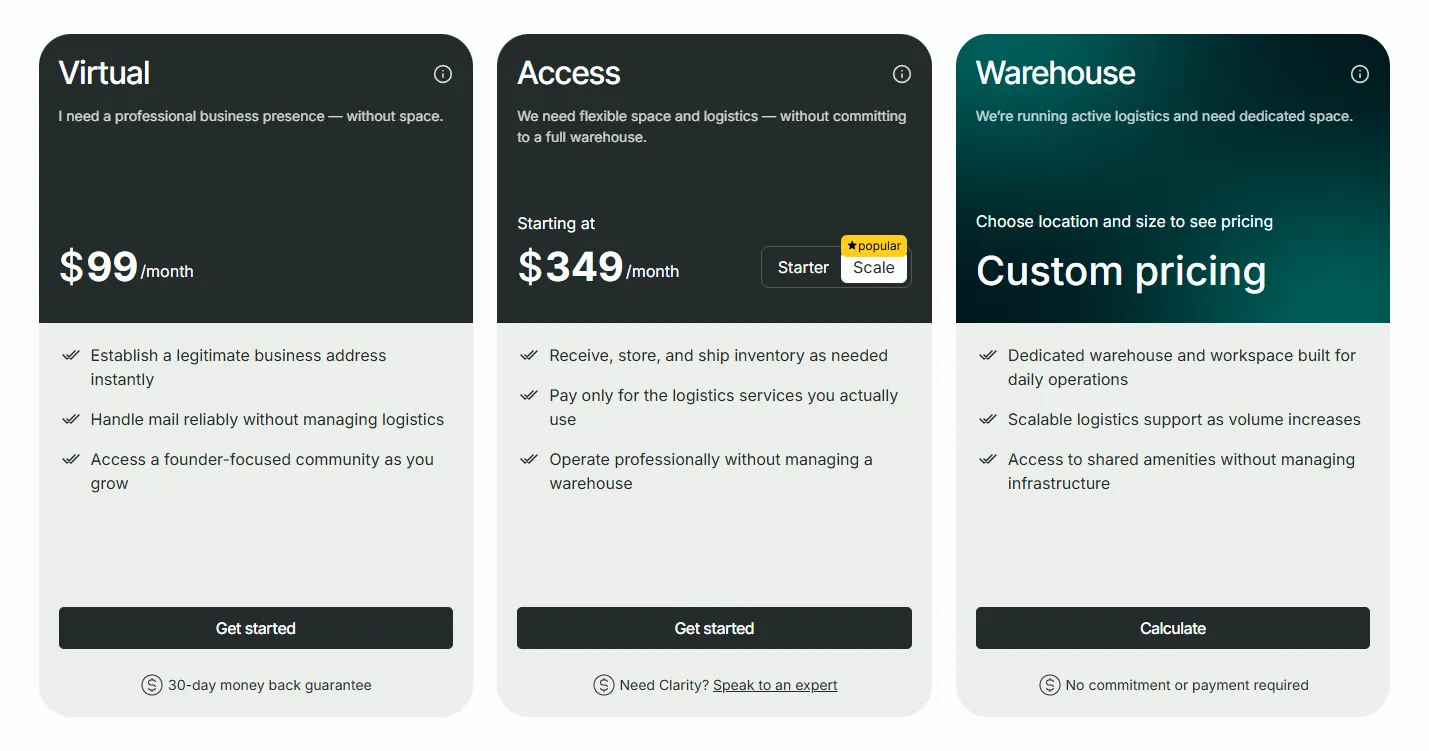
Saltbox's membership, warehouse, and office plans
Pricing builds in three steps: pick a membership, then a warehouse size (optional), then an office (also optional).
The three membership tiers:
- Virtual at $99/month covers a professional mailing address (mail only, no packages) and access to the Upstream Entrepreneurs Club. Useful for brands not yet ready for a physical footprint.
- Access from $349/month adds physical entry to our locations: loading dock, packing stations, meeting rooms, and content studio. FBA sellers testing co-warehousing without a suite can start here.
- Warehouse runs on custom pricing and includes the flexible warehouse and office suites, the shipping technology, and the on-site operations team.
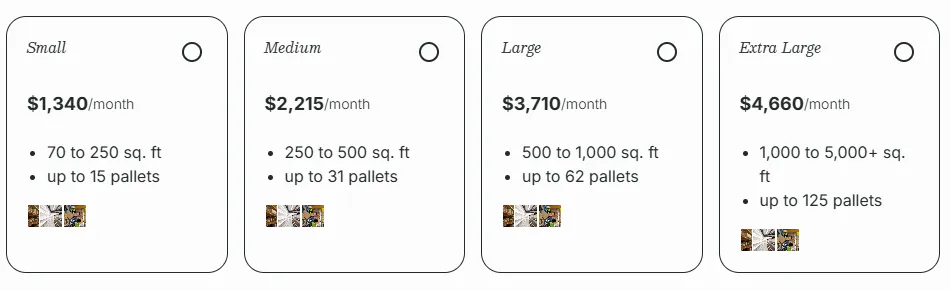
Warehouse pricing varies by city. Here’s Denver’s pricing, for example:
- Small Warehouse from $1,340/month, 70 to 250 sq. ft., 4 to 15 pallets, 1 to 2 employees.
- Medium Warehouse from $2,215/month, 250 to 500 sq. ft., 16 to 31 pallets, 1 to 4 employees.
- Large Warehouse from $3,710/month, 500 to 1,000 sq. ft., 32 to 62 pallets, 1 to 10 employees.
- Extra Large Warehouse from $4,660/month, 1,000 to 5,000+ sq. ft., 63 to 125 pallets, 1 to 50 employees.
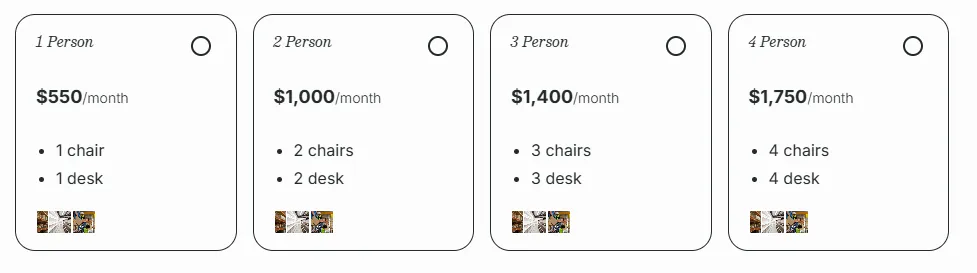
Offices are also priced regionally. Denver as the example again:
- 1-person office: $550/month, 1 chair, 1 desk.
- 2-person office: $1,000/month, 2 chairs, 2 desks.
- 3-person office: $1,400/month, 3 chairs, 3 desks.
- 4-person office: $1,750/month, 4 chairs, 4 desks.
➡️ If you want to save, 10% comes off paying annually or 5% paying biannually.
Saltbox pros and cons
✅ Warehouse, shipping, and office all sit in one building across 11+ U.S. locations.
✅ Access plans from $349/month let FBA sellers try the model without committing to a suite.
✅ Truly month-to-month without the need to be on an annual lease.
✅ Parsel discounts on shipping that solo brands typically can't access.
✅ Seller-Fulfilled Prime (SFP)-eligible, which keeps your Prime badge intact.
❌ Not available in Canada, although it’s possible to handle operations from our Phoenix location.
❌ Fewer locations than national 3PL networks.
#2: Room2Work
Best for: Atlanta-area founders straddling the "too big for the kitchen table, too small for a warehouse lease" stage.
Locations: 1 (Roswell, GA, in metro Atlanta).
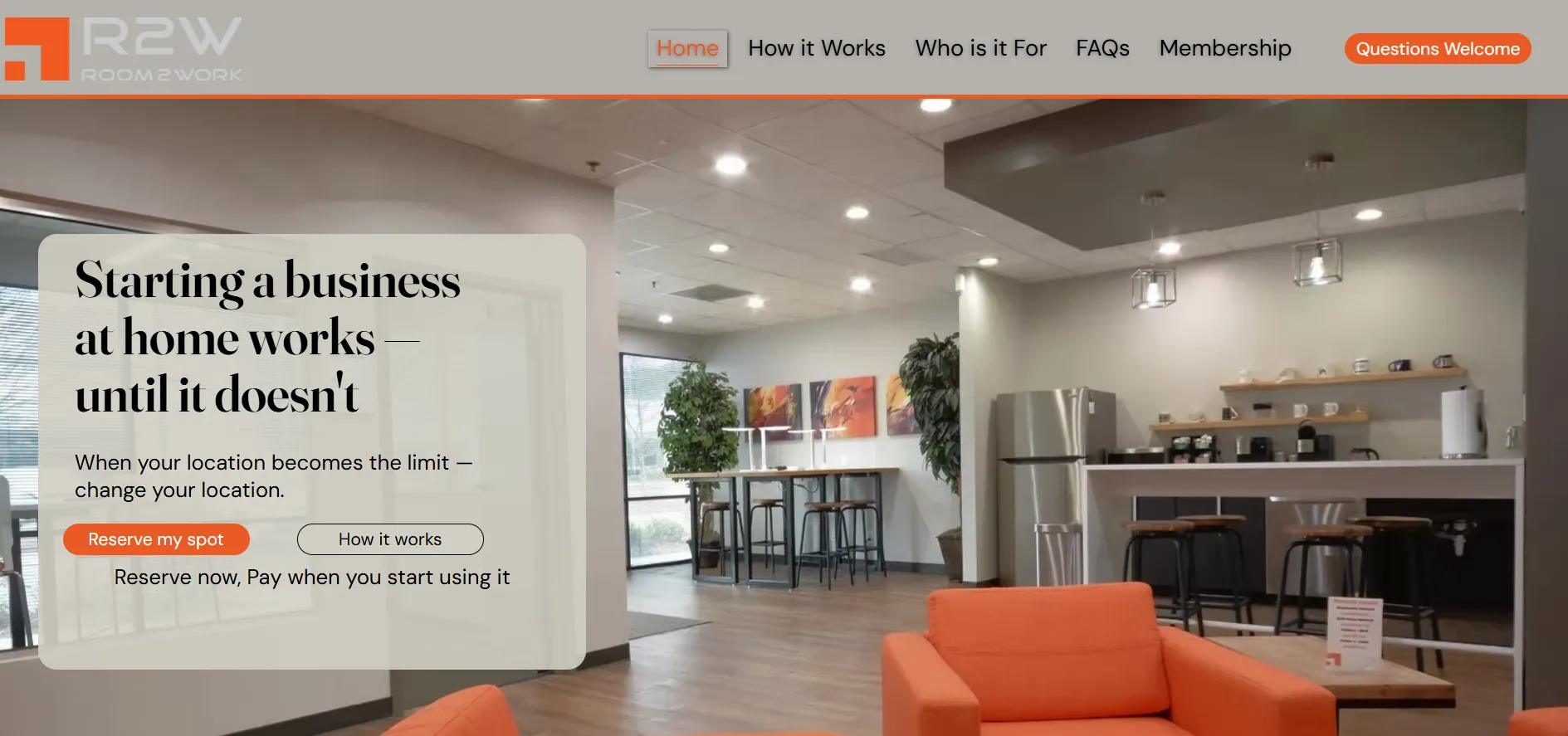
Room2Work exists for the exact person who started a brand on the kitchen table, filled the garage, and is now wondering whether the next step really has to be a 3-year industrial lease.
The space mixes coworking, private offices, meeting rooms, and co-warehousing storage into a single Roswell footprint, with month-to-month memberships.
Amenities and benefits
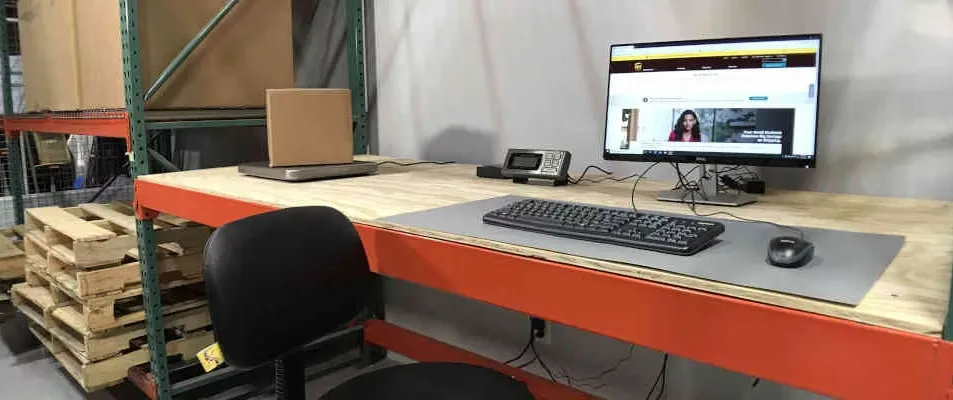
- Light production space for active work that doesn't fit at a desk, like assembling kits or prepping samples before a shoot.
- Professional meeting and conference rooms that are a step up from taking a client call at a coffee shop.
- Mail and virtual address memberships if you want an Atlanta business presence without paying for a physical desk.
- A small, local member base, which makes the networking feel organic rather than forced.
Pricing
Room2Work keeps its pricing simple with month-to-month memberships and no long-term contracts:
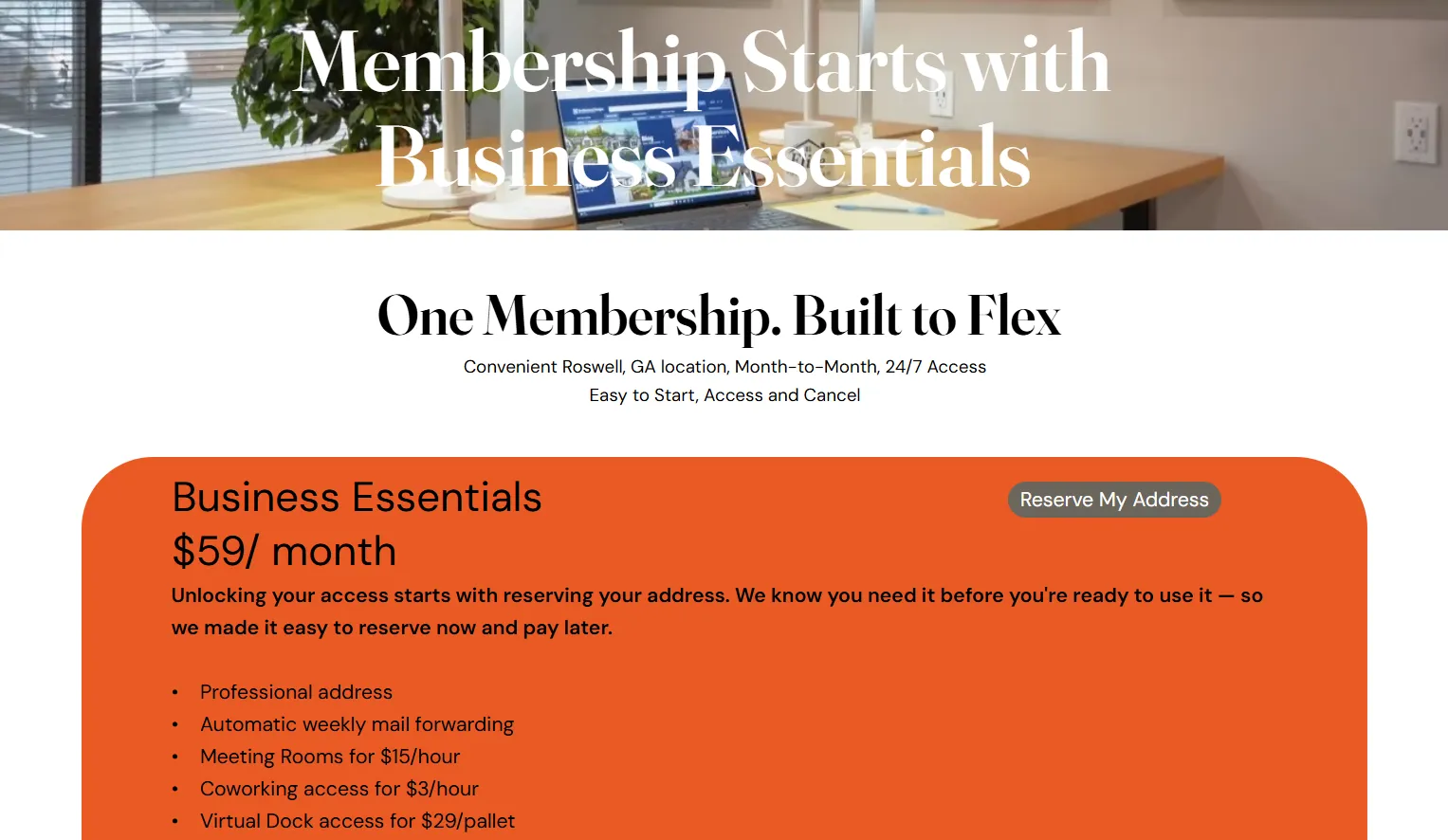
- Business Essentials: $59/month. Gets you a professional address, automatic weekly mail forwarding, meeting rooms at $15/hour, coworking access at $3/hour, and virtual dock access at $29/pallet.
- Add Coworking: $99/month on top of Business Essentials. Gives you regular access to ergonomic sit/stand desks seven days a week.
- Meeting Rooms: $15/hour for members. Options range from a huddle room for quick conversations to a conference room for larger client meetings, each equipped with whiteboards and wireless monitors.
- Dedicated Workspace and Storage: You’ll have to join the waitlist. Private offices and storage space for teams of 2-5 people or storage for 4 to 16 pallets, with month-to-month flexibility.
Pros and cons
✅ The lowest-friction entry point on this list.
✅ Month-to-month across all memberships.
✅ Mixes coworking, office, and storage in one place, so solo founders don't pay for space they don't need.
❌ A single Roswell location means it only works if you're in the Atlanta area.
❌ Not a fulfillment operator: storage is self-managed.
What are the best 3PL and distributed fulfillment alternatives to Amazon FBA?
These four are the closest direct swaps for FBA in terms of model: you ship inventory in, they pick and pack and ship out:
#1: Flowspace
Best for: Brands that want fully outsourced fulfillment with a tech platform sitting on top.
Locations: 130+ partner fulfillment centers across the U.S. and parts of Canada.
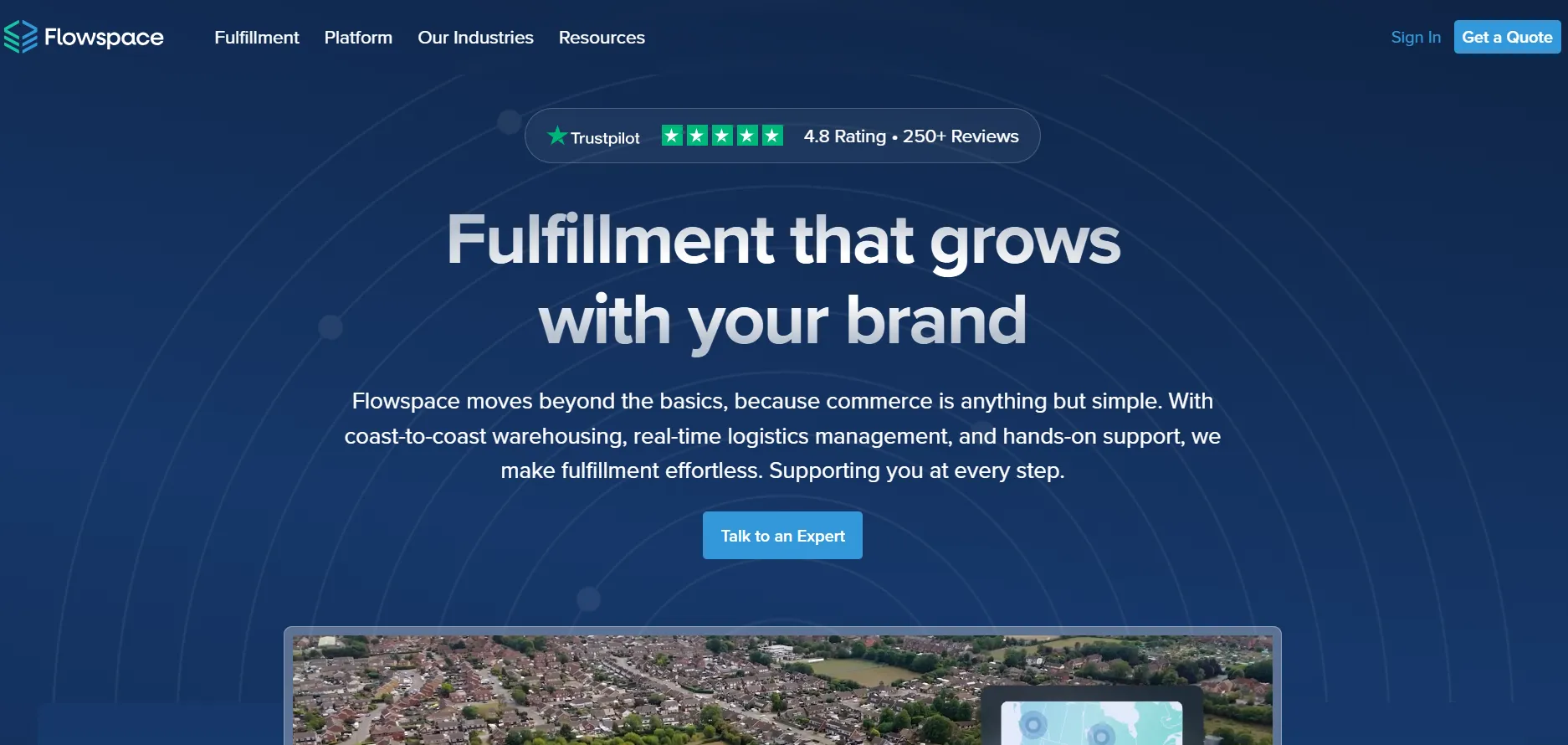
Flowspace runs a distributed 3PL network, but the differentiator is software.
You hook into the platform, ship inventory to one of their partner warehouses, and the routing logic decides which node fulfills each order based on shipping zones.
Amenities and benefits
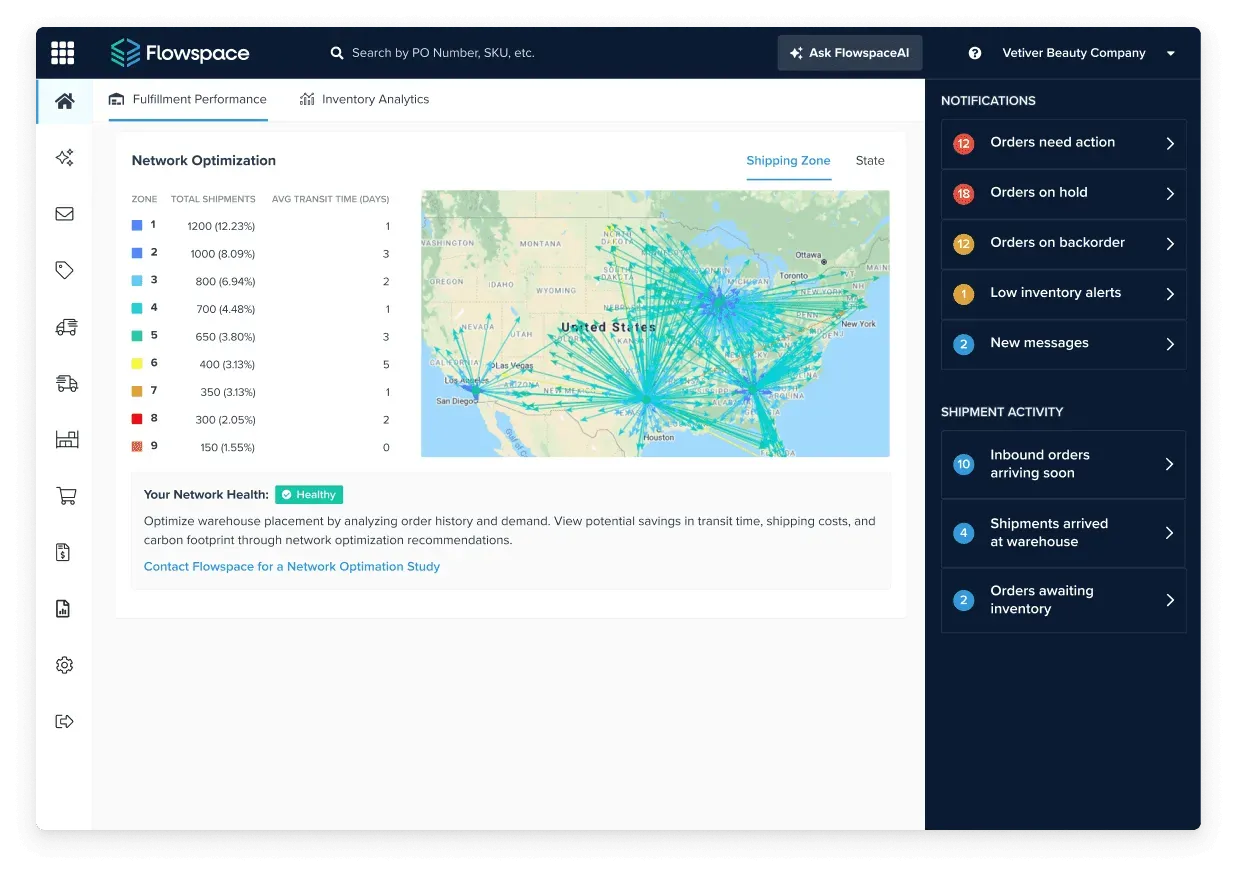
- Inventory routing handled by the platform itself rather than by you, based on the product profile and customer location.
- Full fulfillment services built-in, including pick-pack, shipping, kitting, labeling, and returns processing.
- A tech layer that gives you live inventory counts, order status, and routing visibility in one dashboard.
- Usage-based pricing instead of real estate commitment, so no lease sits on your balance sheet.
Pricing
There's no public rate card. Quotes get built around SKU count, order volume, storage, and fulfillment complexity, with the usual mix of storage fees per pallet, pick-and-pack per order, and pass-through carrier charges.
Pros and cons
✅ Network reach lets you put inventory near customers.
✅ Real fulfillment, not just warehouse rental.
✅ No real estate commitments tied to your name.
❌ You don't pick which partner warehouse holds your inventory, which is why some members have been looking for Flowspace alternatives.
❌ Pricing is opaque enough that direct cost comparisons are hard.
#2: FedEx Fulfillment
Best for: Established brands shipping high volume that already run on FedEx infrastructure.
Locations: 3 U.S. fulfillment centers (California, Texas, New Jersey), with 2 more planned in Georgia and Indiana.
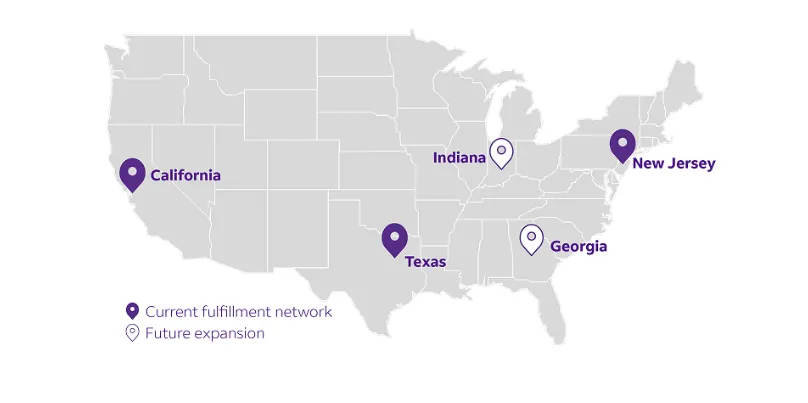
If FedEx is already your dominant carrier, the logic of plugging your fulfillment into the same parent company is straightforward.
FedEx Fulfillment runs out of company-operated centers (not partner-operated like Flowspace), with robotics-driven inventory handling and a proprietary cloud platform doing the connective work.
This setup reaches 96% of the U.S. population in 2-day standard shipping, which is the kind of national delivery promise FBA built its reputation on.
Amenities and benefits
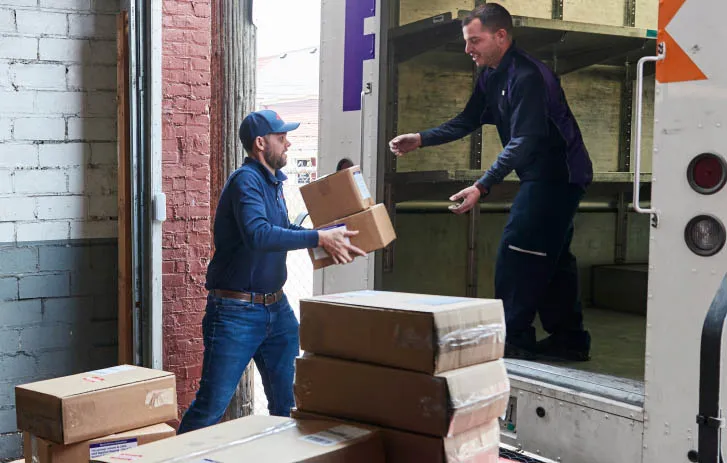
- Pick, pack, and ship are handled in-house by FedEx staff and robots.
- Returns processing is built in, including custom and branded packaging support.
- The proprietary cloud platform connects with Shopify, Magento, and WooCommerce.
- Multi-carrier flexibility lets you ship with FedEx or split the volume across carriers.
💡 Are you interested in how Flowpsace compares to FedEx Fulfillment? Check out our Flowspace vs. FedEx Fulfillment comparison guide.
Pricing
Custom only. Volume and inventory quantity drive the quote, and there's no public rate card to model from.
Pros and cons
✅ Direct line into FedEx's national carrier network.
✅ Robotics and AI tools doing the warehouse coordination.
✅ Strong 2-day reach from a small footprint of centers.
❌ Not designed for smaller DTC brands without serious volume.
❌ No physical access to your inventory once it lands in the grid.
#3: FlexSpace Logistics
Best for: Canadian brands that need nationwide fulfillment and storage without committing to a single facility.
Locations: 450+ partner locations across Canada, including Toronto, East York, and Victoria.
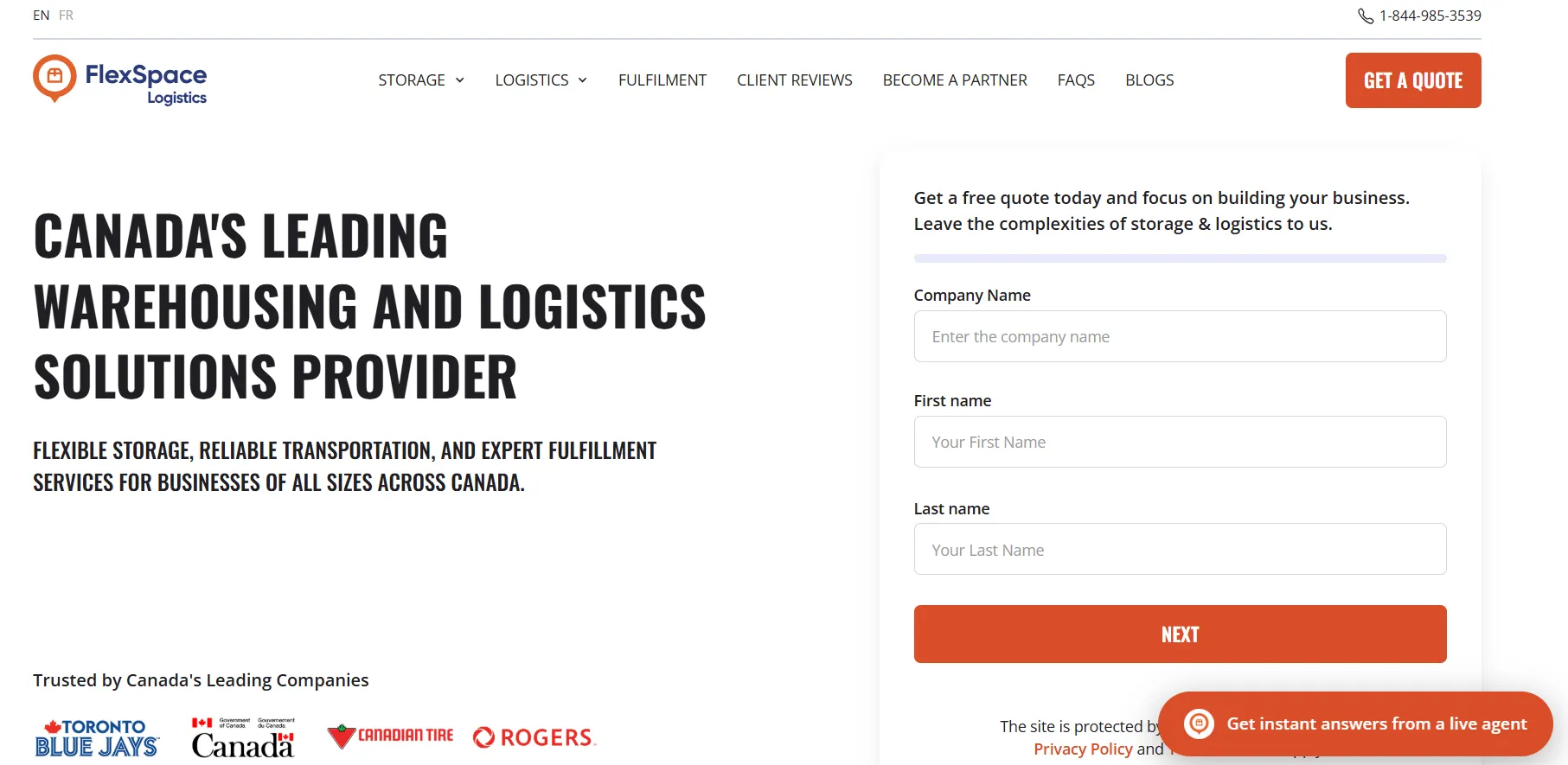
FlexSpace Logistics positions itself less as a warehouse operator and more as an operations matchmaker for the Canadian market.
The company connects brands to the right combination of storage, fulfillment, and carrier partners from a coast-to-coast network.
Amenities and benefits
- Storage that flexes with your actual inventory, starting at roughly 25 sq. ft. and scaling into the thousands of sq. ft. inside the same relationship.
- DTC and B2B fulfillment both supported through the partner facilities, with pick-and-pack, labeling, and inventory tracking built in.
- A freight layer that covers less-than-truckload, full-truckload, specialized carriers, and last-mile delivery through the same operator, which is where FlexSpace starts looking different from a pure 3PL.
- One contract and one contact for what would otherwise be three separate vendor relationships.
Pricing
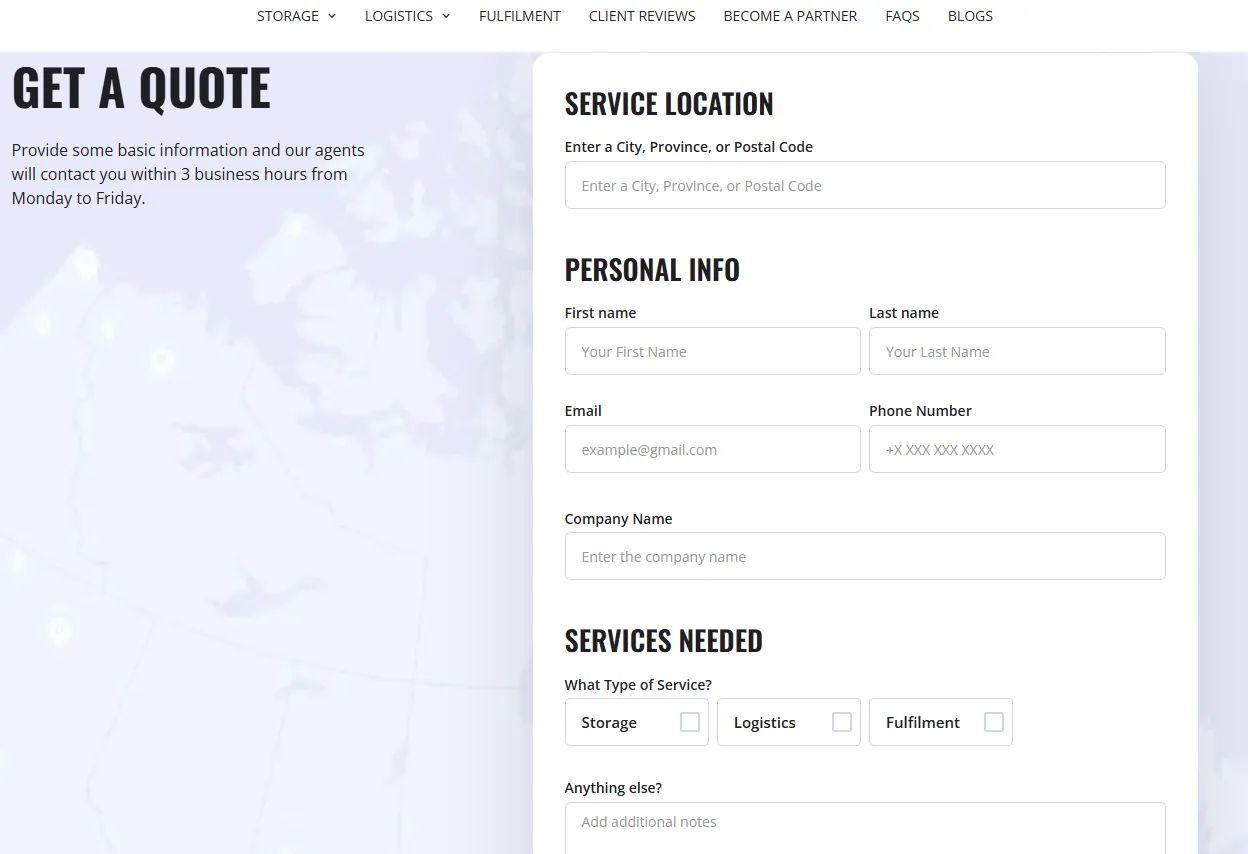
FlexSpace builds each quote around the specific solution, so nothing is published up front.
You'll have to request a quote through their team for pricing based on your storage, fulfillment, and transportation needs.
Pros and cons
✅ Genuinely national Canadian coverage (450+ partner facilities).
✅ One partner handling storage, fulfillment, and transportation together.
✅ Month-to-month contracts rather than multi-year lock-ins.
❌ Not a walk-in warehouse experience. You don't control the physical space.
❌ The partner-network model means consistency varies by facility.
#4: BOXIE24
Best for: East Coast and Florida brands that want storage with fulfillment services bolted on.
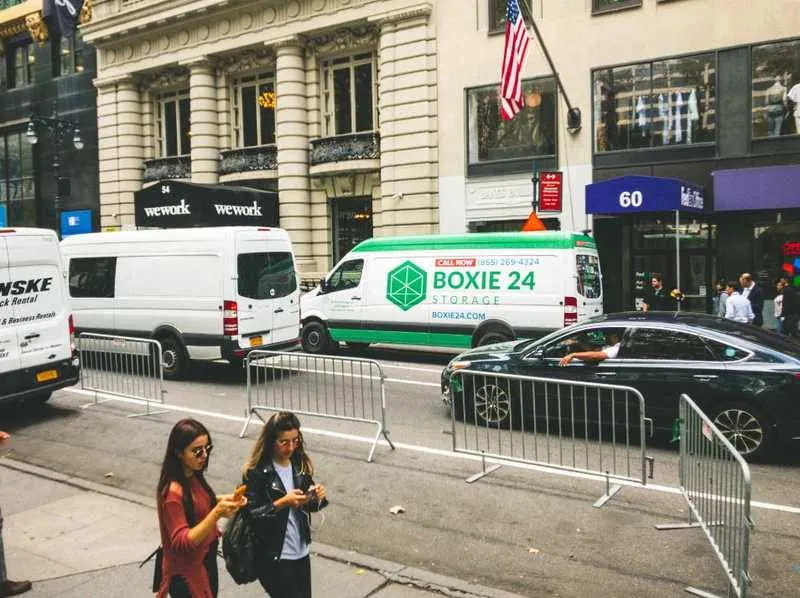
Locations: 3 U.S. storage hubs (Miami, New York City, Philadelphia).
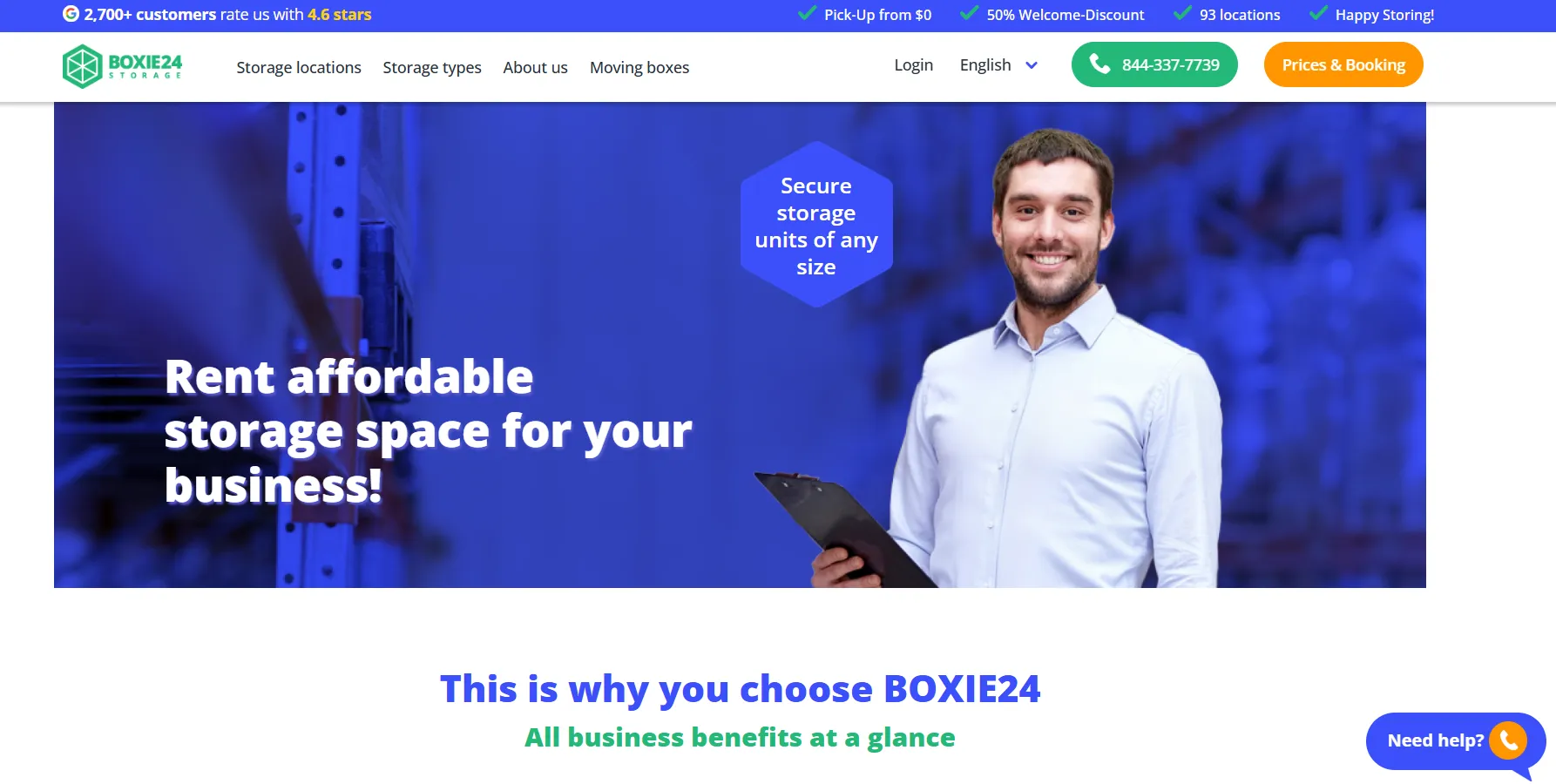
BOXIE24 sits between two categories.
Part of the offering is just storage (document archives, seasonal inventory, extra equipment during office moves), but there's a full-service operations layer on top for ecommerce brands that want the storage to actually ship orders out.
You end up with pick-and-pack, returns, and inventory management on the same account as the space itself.
Amenities and benefits
- Storage sizing runs wider than almost anything else in the list, starting at 10 sq. ft. and scaling up to 1,000+ sq. ft.
- A fulfillment layer on top of the space itself covers pick-pack, outbound shipping, returns handling, and inventory management.
- BOXIE24 can pick up inventory from your location and return it when needed, which removes the friction of hauling pallets across town.
- Modern security baked into every facility: climate control, a warehouse management system, 24/7 camera monitoring, and alarm systems, all built around document-grade standards.
Pricing
Business rates aren't published publicly (unlike their consumer self-storage pricing), so the path is a quote request tied to how much space and service you actually need.
Pros and cons
✅ Combines storage and fulfillment on one relationship.
✅ No deposits, no long-term contracts, and monthly cancellation.
✅ Storage sizing goes small enough for side-project volume.
❌ Only three U.S. hubs, all on the East Coast.
❌ Ongoing service fees add up compared to straight warehouse rent.
What are the best flexible warehouse and storage alternatives to Amazon FBA?
These four aren't FBA replacements in the fulfillment sense; they're space-first solutions.
If your bottleneck is square footage rather than the act of fulfillment itself, this bucket is where you should be looking:
#1: WorkHub
Best for: Texas-based founders who want flexible workspace plus light warehouse space without a security deposit.
Locations: 7, all in Texas (including Spring, Conroe, and Forest West).
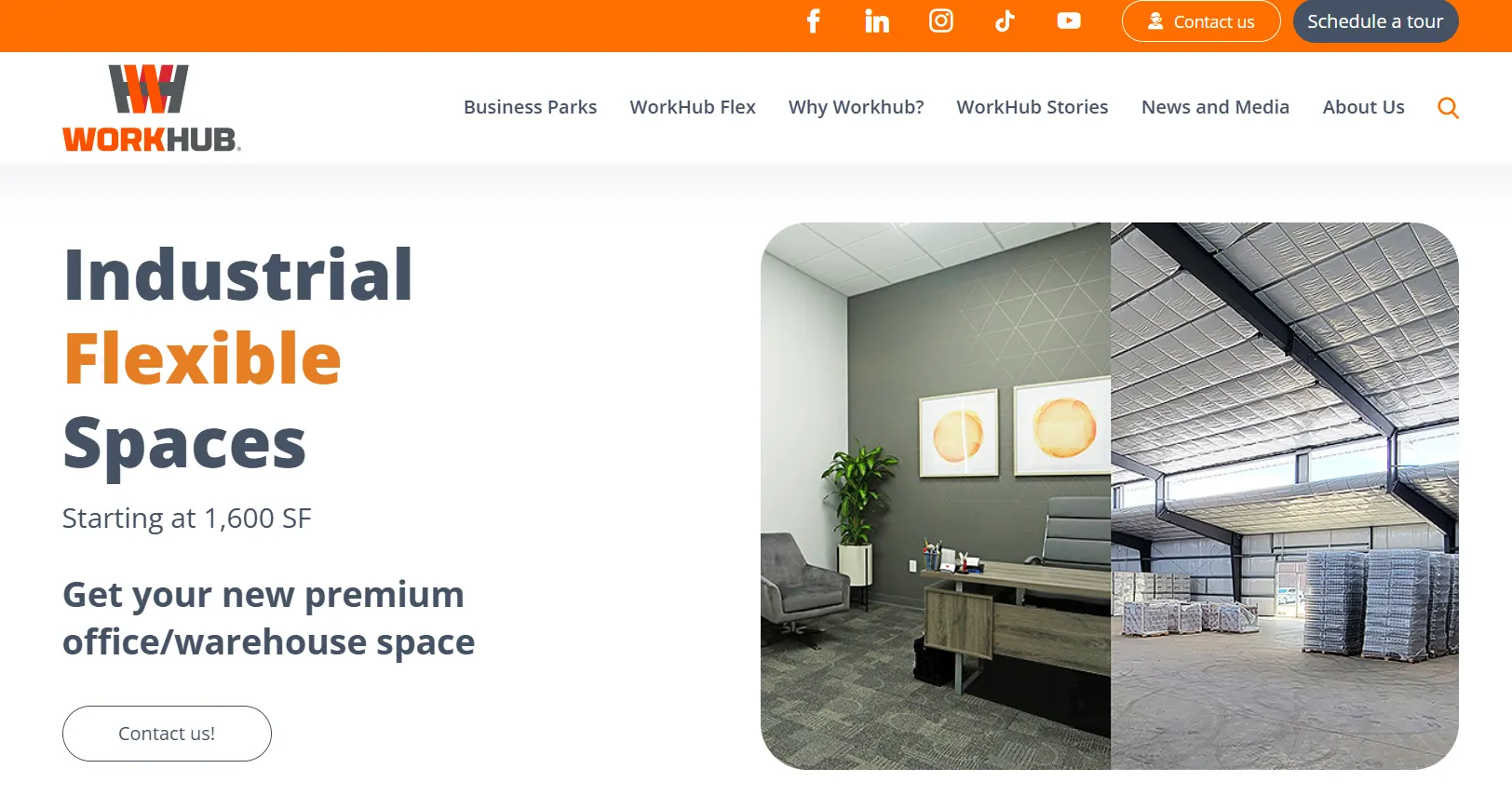
WorkHub reads like a flex workspace first and a warehouse second.
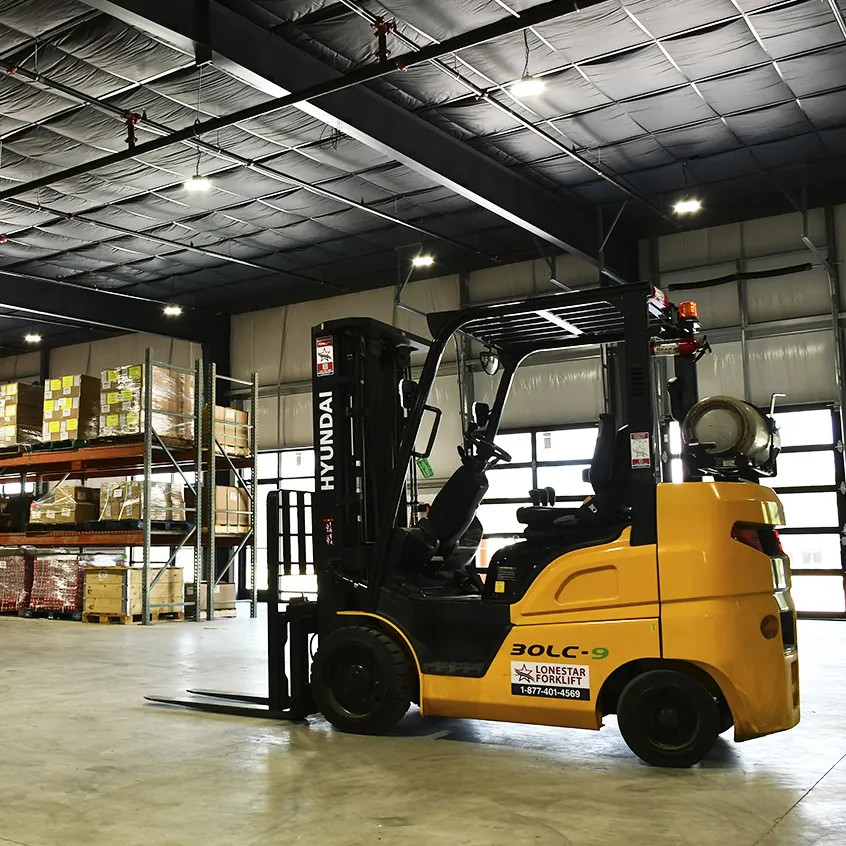
The company runs a set of buildings built around hot desks, private offices, and shared infrastructure, but then adds loading docks, forklifts, and climate-controlled warehouse space into the same campus.
Amenities and benefits
- Workspace that scales with team size, from a hot desk for a solo founder through dedicated desks and all the way to private offices with a door that closes.
- Bookable meeting rooms for wholesale buyer visits, client days, or a full-team working session.
- Industrial infrastructure that comes standard rather than as an upsell: climate-controlled warehouses, loading dock access, and forklift use without extra rental fees.
- Energy-efficient buildings that keep utility costs predictable, which matters if you're running equipment around the clock.
Pricing
WorkHub keeps most of its pricing off the public site.
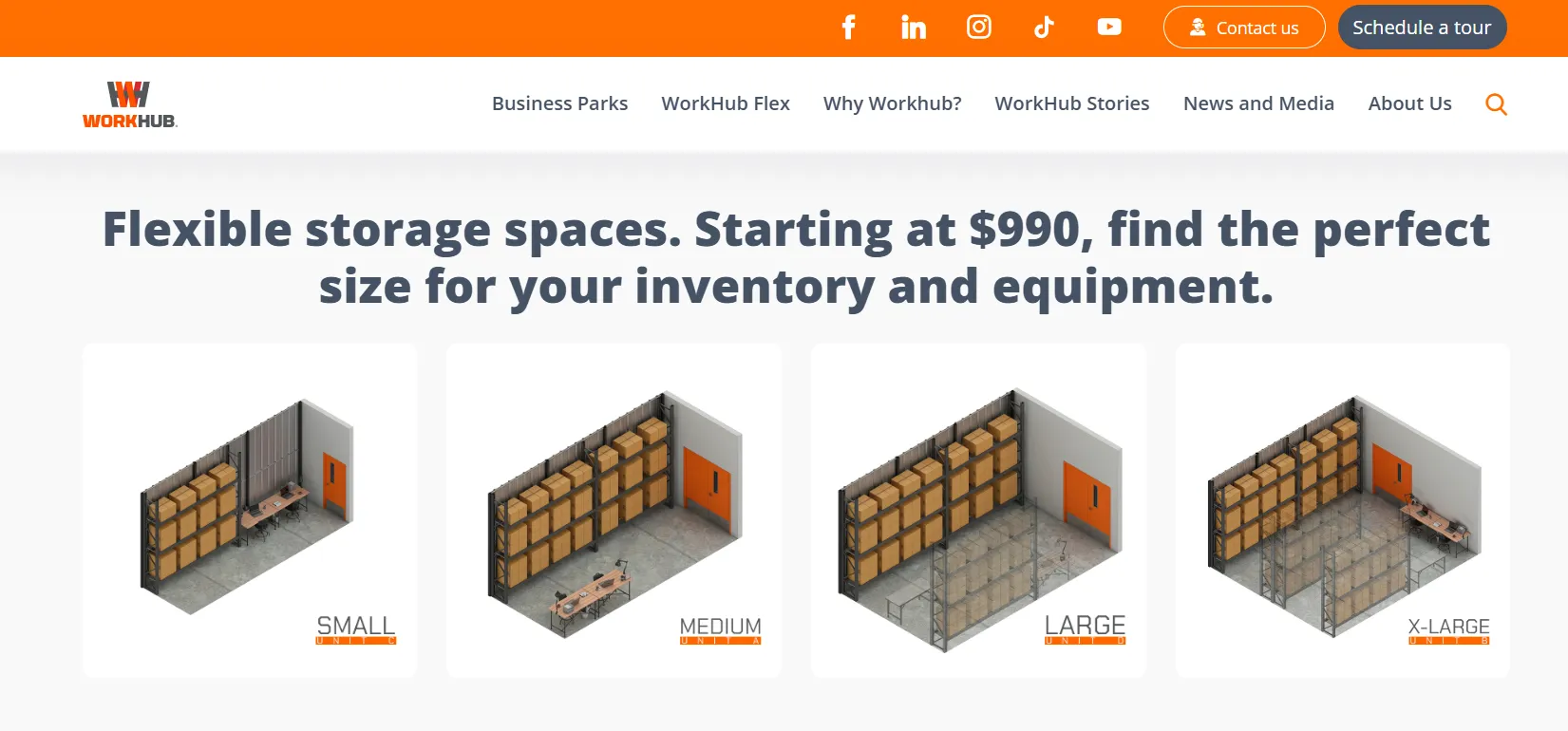
What's visible: flexible storage spaces start around $990/month, with workspace pricing tied to the specific membership and location you pick.
Pros and cons
✅ Broad workspace range inside the same lease, from hot desks to private offices.
✅ No security deposit required.
✅ Loading dock and forklift included, not extra.
❌ Texas-only footprint.
❌ Pricing transparency is limited.
#2: TradeSpace
Best for: Canadian founders in Calgary who want co-warehousing with built-in fulfillment.
Locations: 3 locations in Calgary, Canada.
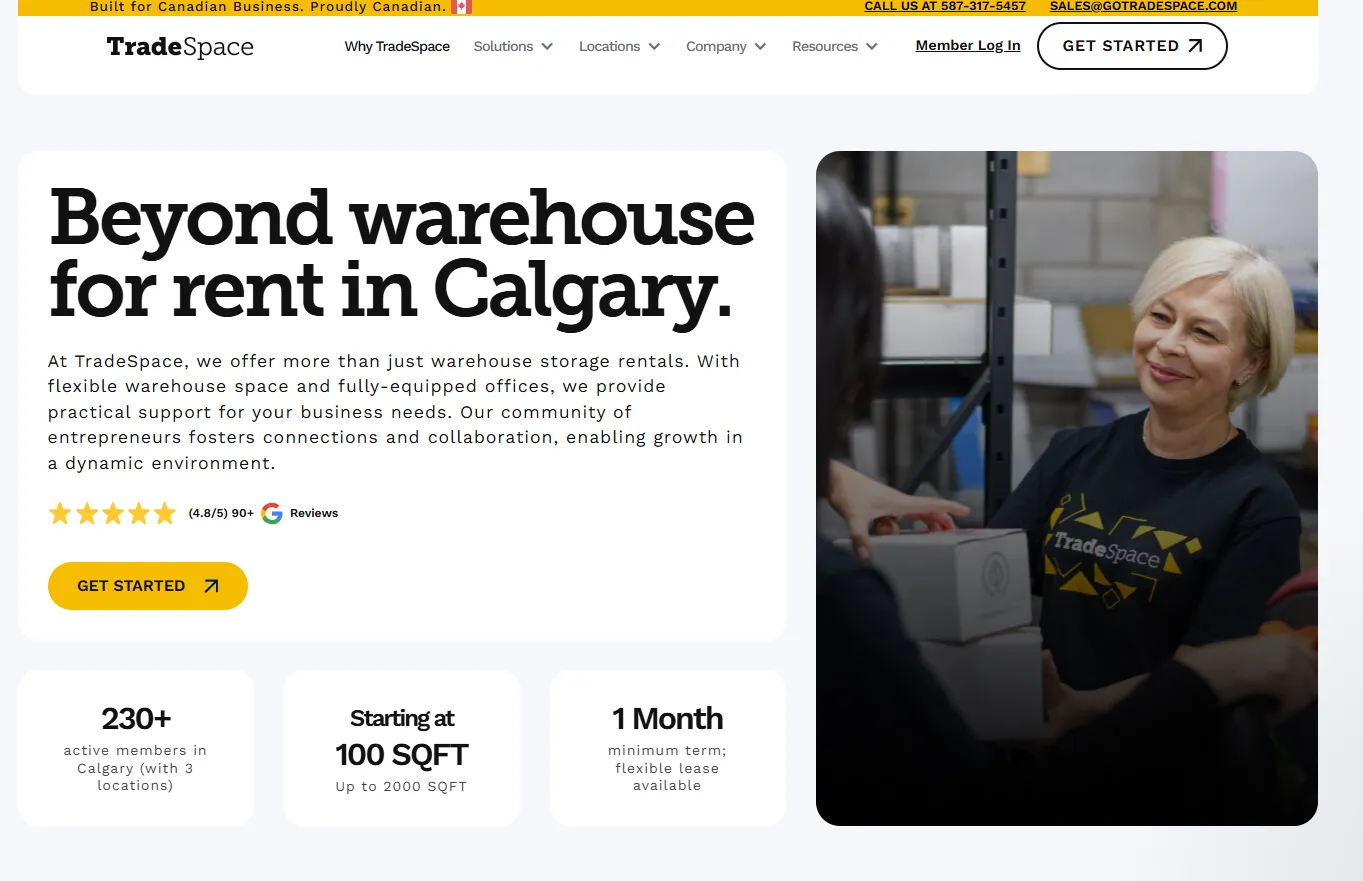
TradeSpace is what you'd get if a warehouse-for-rent operator and a co-warehousing brand merged and opened three buildings in Calgary.
The real estate piece is flexible industrial space from 100 to 2,000 sq. ft.
For Calgary-based brands that want to stop choosing between "lease a warehouse" and "outsource to a 3PL," TradeSpace tries to collapse the decision into one relationship.
Amenities and benefits
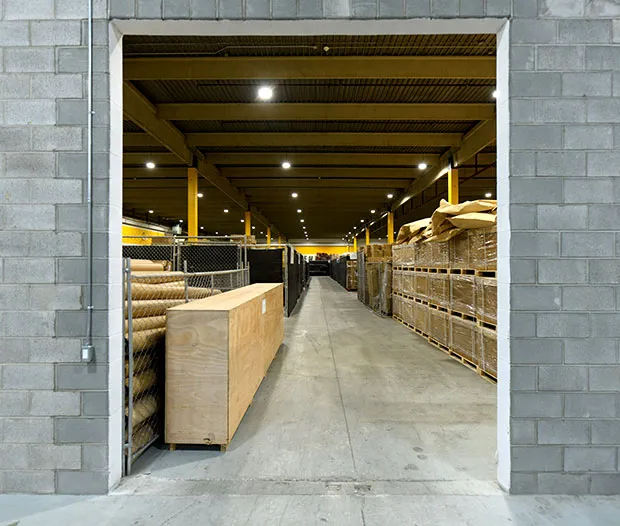
- Warehouse suites that sit at the smaller end of the industrial spectrum, anywhere from 100 sq. ft. up to 2,000 sq. ft., which is a useful range in a Calgary market where 5,000 sq. ft. is often the minimum elsewhere.
- Cross-docking so inbound product doesn't have to sit on your shelves before moving to the next destination.
- Forklift access and shipping & receiving handled by the operations team rather than left to you.
- Office rentals in the same building as the warehouse, with amenities already included.
Pricing
TradeSpace doesn't publish pricing publicly, so you'd need to request a quote tied to the suite size and services you need.
Pros and cons
✅ Warehouse, office, fulfillment, and operations under one roof.
✅ Month-to-month leasing.
✅ Real fulfillment capabilities (pick, pack, ship, labeling, storage).
❌ Only in Calgary, Canada.
❌ Spaces max out at 2,000 sq. ft., so scaling past that means moving out.
#3: Workspace USA
Best for: Founders who'd rather buy their flex space than rent it.
Locations: 3 Texas locations (including Georgetown and Killeen).
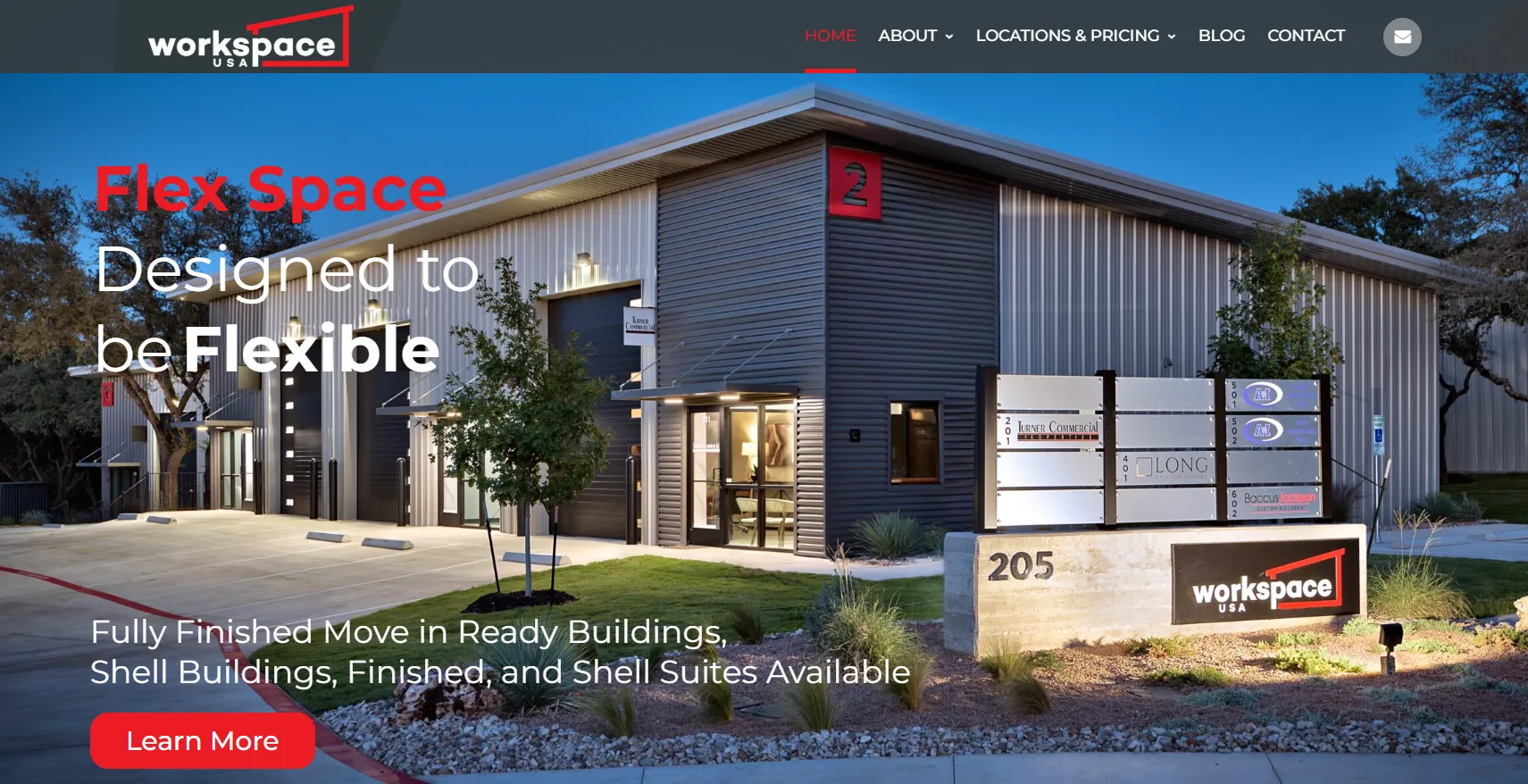
Workspace USA is the outlier on this list and is worth understanding for that reason.
While most operators rent you space, Workspace USA sells it.
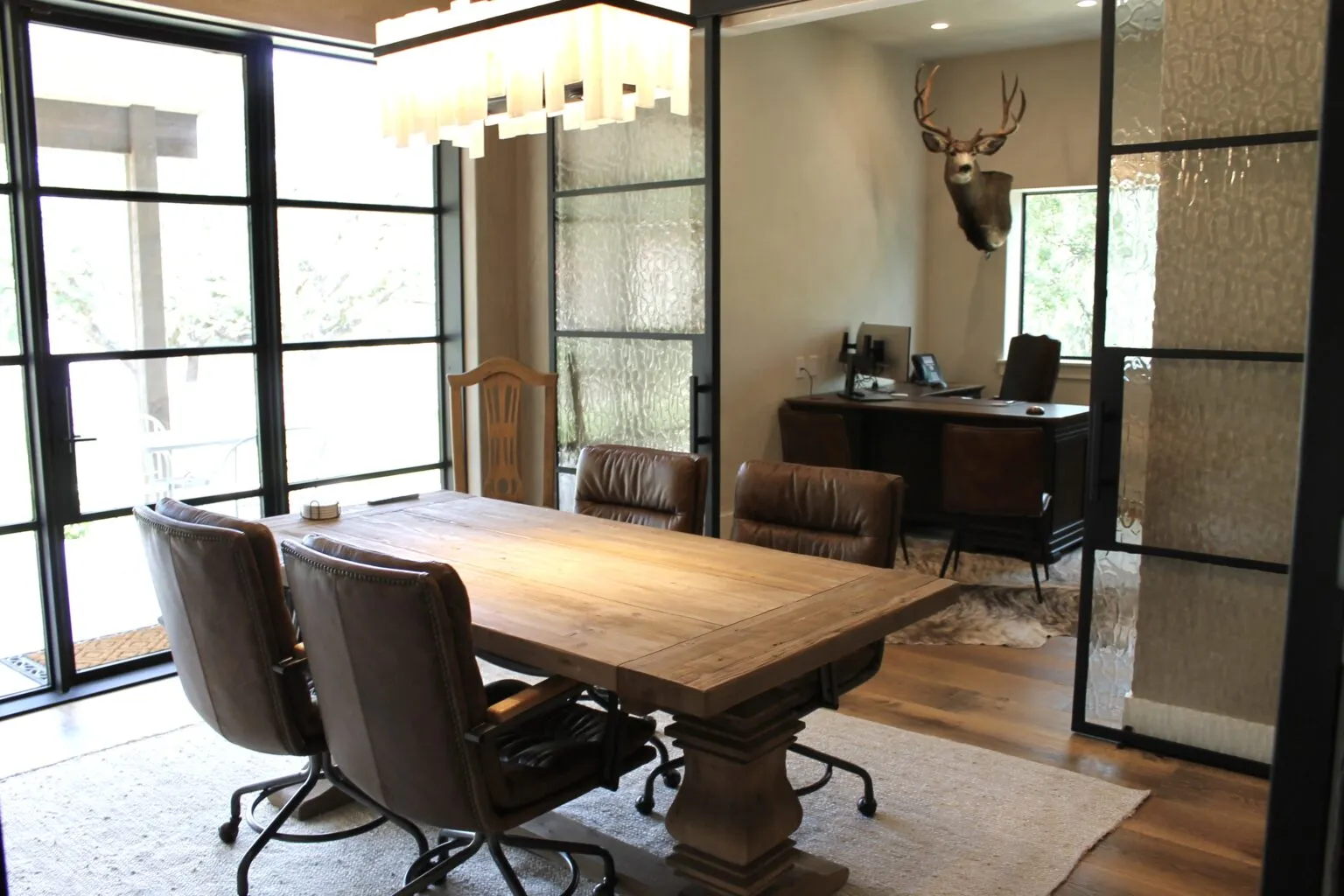
You purchase a move-in-ready unit combining office, warehouse, and light industrial configurations, with lease or lease-to-purchase options if you're not ready to commit to buying outright.
Amenities and benefits
- Customizable flex spaces combining office, warehouse, and industrial uses in one footprint.
- Move-in ready buildings with HVAC, bathrooms, office areas, and high-speed internet already installed.
- Lease or lease-to-purchase options that let you transition from rent toward ownership over time.
- Texas locations sit close to major regional markets and transportation corridors.
Pricing
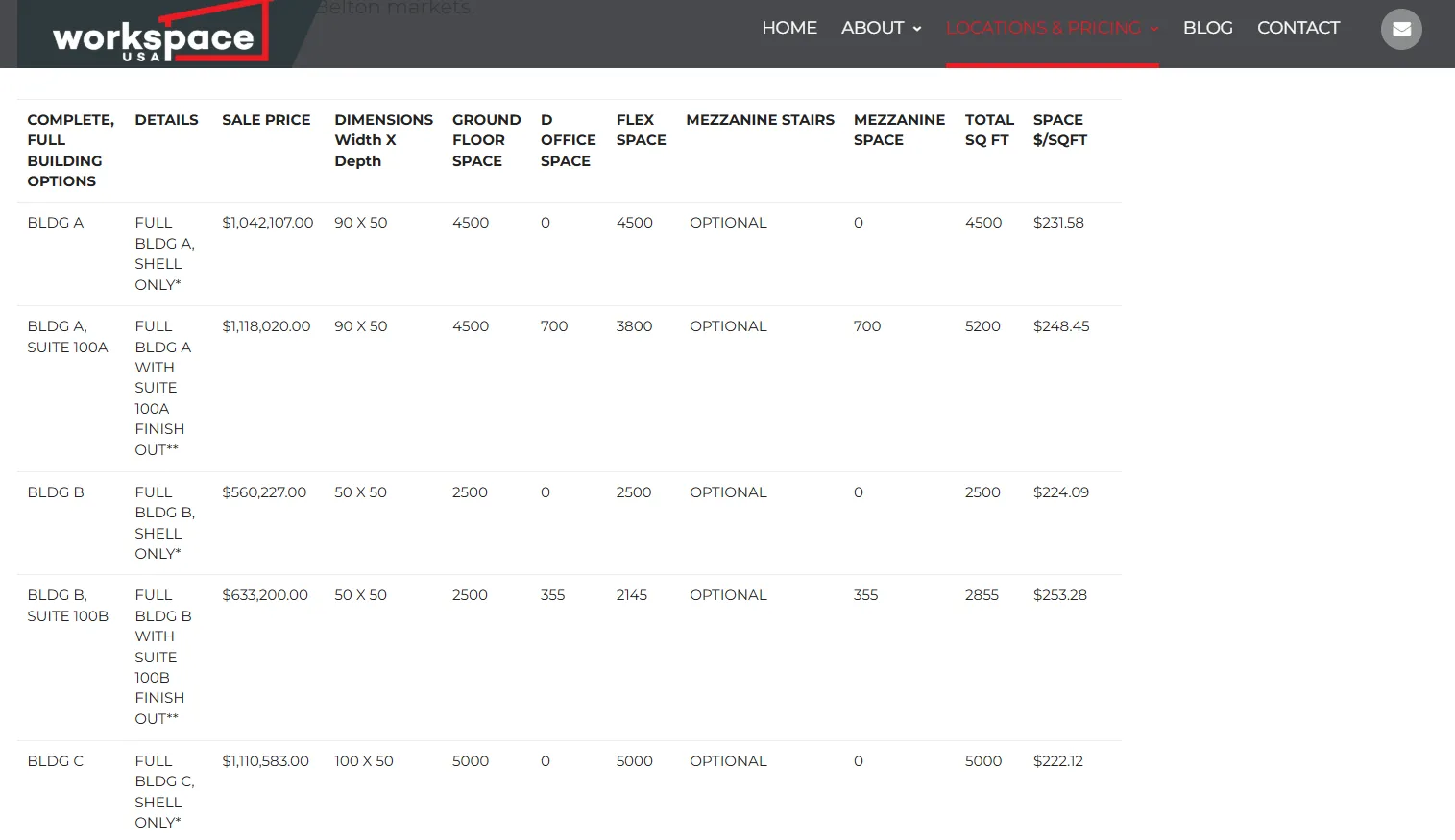
Workspace USA focuses on ownership rather than monthly rentals, with prices varying by location, size, and finish level:
For Killeen, TX:
- Individual suites start around $282,000–$351,000 for shell-only units (1,250–1,500 sq. ft.).
- Fully finished suites range from $356,000–$427,500, depending on size and office build-out.
- Full buildings range from approximately $560,000 to $1.18M+.
- Pricing typically falls between $225–$285 per sq. ft., depending on finish level.
For Georgetown, TX:
- Finished individual suites are priced around $567,000 for ~2,267 sq. ft.
- Ground floor pricing reaches up to $315 per sq. ft., with total floor space closer to $250 per sq. ft.
- Full buildings exceed $1M+, depending on size and build-out.
Pros and cons
✅ Build equity instead of paying rent, with lease-to-purchase as a bridge.
✅ Customizable flex spaces that serve as office, warehouse, or light industrial.
✅ Professional, move-in-ready buildings.
❌ Texas-only.
❌ Buying requires serious upfront capital relative to monthly rental.
#4: Crate Warehouse
Best for: Houston-based brands that want all-inclusive warehouse space with real logistics support.
Locations: 1 location in Houston, TX.
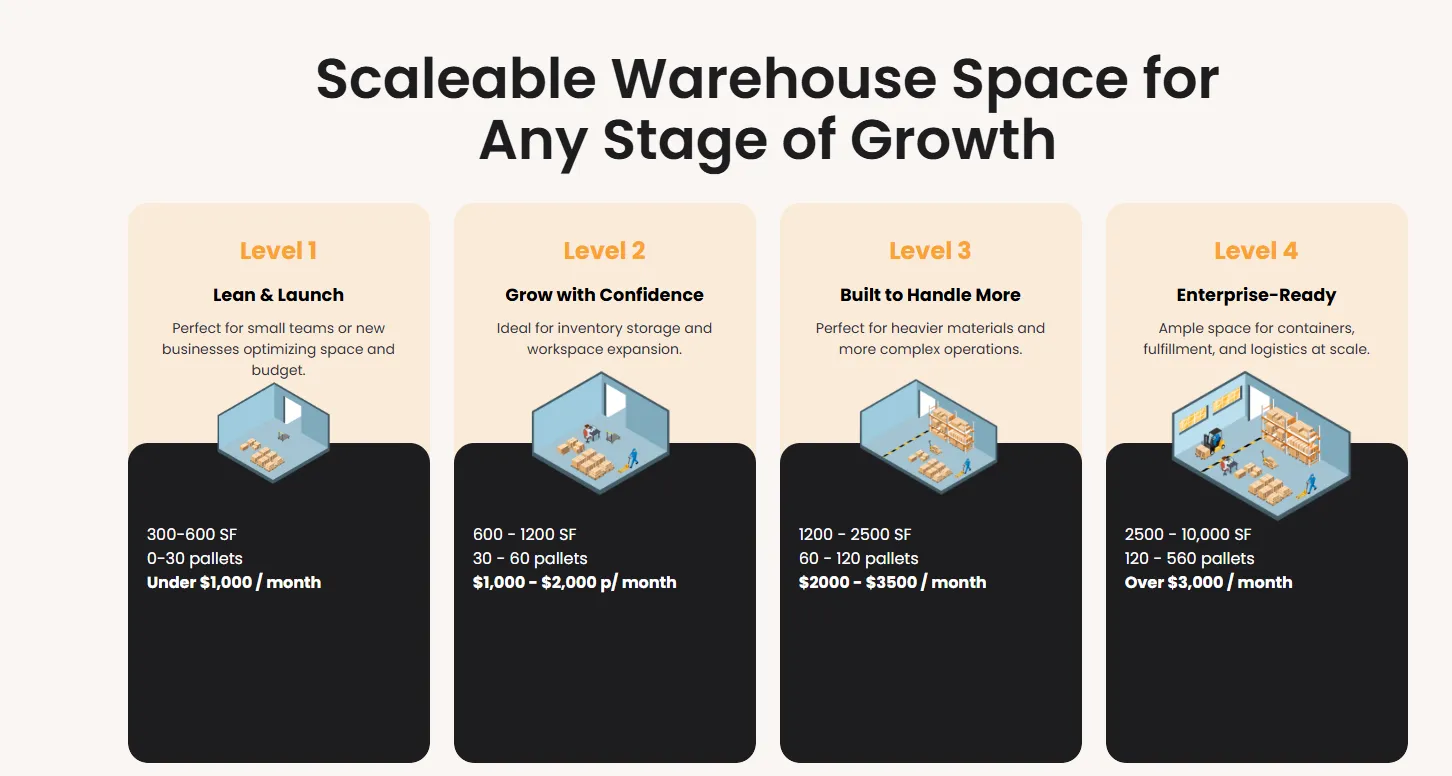
Crate Warehouse keeps a tight focus: one building, one city, and four membership tiers that scale from small-team storage up to enterprise-ready distribution space.
Everything else (forklift access, on-site operations, freight receiving, 24/7 monitoring, package handling) is baked into a single monthly fee rather than billed as add-ons.
Amenities and benefits
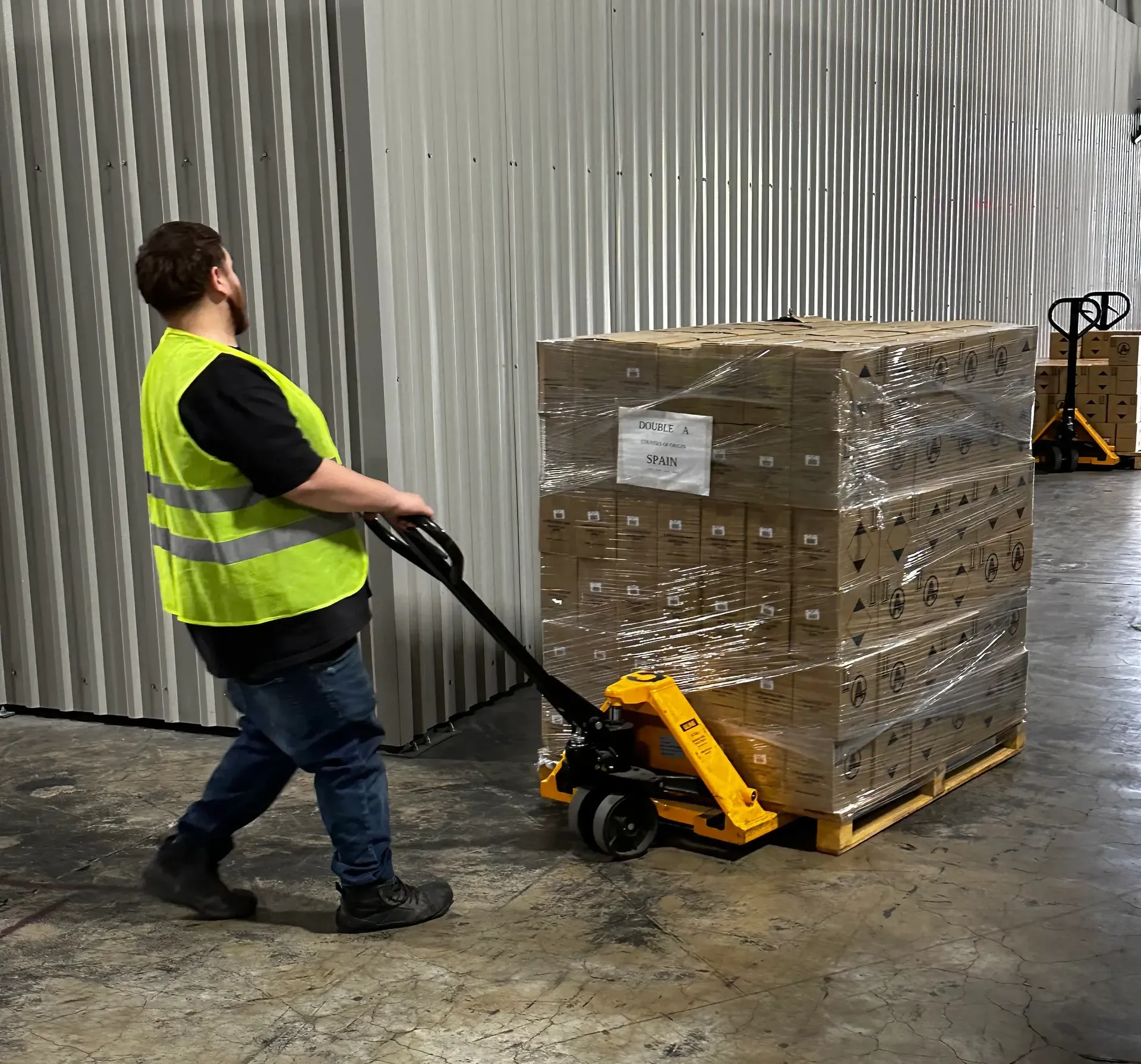
- Forklift equipment available on-site without a separate rental line item on your invoice.
- On-site operations and fulfillment handled by the team on the floor when your volume outpaces your hands.
- Inbound freight and parcel receiving both covered inside the monthly membership, not charged as extras.
- Dock capacity designed so members aren't competing for dock slots during busy receiving windows.
Pricing
Four membership levels scale with space and pallet capacity:
- Level 1: Under $1,000/month for 300 to 600 sq. ft., up to 30 pallets.
- Level 2: $1,000 to $2,000/month for 600 to 1,200 sq. ft., up to 60 pallets.
- Level 3: $2,000 to $3,500/month for 1,200 to 2,500 sq. ft., up to 120 pallets.
- Level 4: Over $3,000/month for 2,500 to 10,000 sq. ft., up to 560 pallets.
Pros and cons
✅ Bundled membership pricing makes monthly costs predictable.
✅ Scales up to 10,000 sq. ft. of warehouse space.
✅ Equipment, such as forklifts, comes standard with no rental fees.
❌ Only one U.S. location (Houston).
❌ Smallest tier starts at 300 sq. ft., which can be too much for early-stage sellers.
Choose Saltbox to move off Amazon FBA for good
Amazon FBA does what it's built to do, which is process volume.
The cracks usually appear later: storage fees creeping up, an inventory commingling issue affecting your customers, or an Amazon Basics product appearing on the same search page as yours, undercutting on price.
At that point, most sellers do the obvious thing and move to another 3PL.
The Amazon-specific frustrations disappear, but the bigger pattern (inventory in someone else's building, contract terms, opaque pricing, support behind a ticket queue) tends to follow you to the next vendor.
Saltbox is the move that breaks the pattern: you get a private suite you can walk into, a team on-site that knows your brand, discounted shipping rates, and an operation that grows because you're shaping it, not because you're escaping it.
Here’s what that looks like in practice with Saltbox:
- Month-to-month warehouse suites across 11+ U.S. locations.
- Access plans from $349/month for sellers stepping in without a full suite.
- Discounted shipping through Parsel's carrier mix.
- Operations Support – billed in 15-minute blocks from $45/hour.
- Free inventory inbounding handled by our crew, even when you're traveling.
- SFP eligibility so the Prime badge stays on your listings without sending inventory to FBA.
- A community of 1,000+ businesses across the U.S. working through the same questions you are.
You can talk to an expert to learn more about Saltbox and why so many businesses choose us, or book a tour at one of our facilities to see the space for yourself.
Frequently asked questions
Amazon’s FBA prep requirements include labeling with correct FNSKU barcodes, poly bagging with suffocation warnings when needed, bubble wrapping fragile items, bundling or kitting products properly, and applying accurate carton labels. Detailed guidelines are available in Amazon Seller Central under Packaging and Prep Requirements.
Co-warehousing differs from a traditional 3PL in that it gives small businesses direct access to their inventory, flexible terms, and on-site resources.
Co-warehousing improves fulfillment control by offering business owners direct access to inventory, packaging, and shipping workflows, improving quality control and customer experience.
A traditional 3PL manages your inventory on your behalf. You hand over your products and they handle fulfillment. Co-warehousing gives you your own space within a shared facility, so you keep direct access to and control over your inventory while still benefiting from shared infrastructure, discounted shipping rates, and on-demand support. Read more about how to switch 3PL providers without disrupting your business.