.webp)


Key takeaways
- Switching 3PL providers is less disruptive than staying with one that's holding you back, if you follow the right sequence.
- "Good enough" fulfillment has a real price: elevated error rates, slower shipping, and founder time spent managing a vendor instead of growing a brand.
- A 60-day transition with staggered SKU migration and a defined parallel-run window is the standard framework for mid-volume operators.
- The founders who struggle during a switch aren't underprepared; they just don't know what to do in what order.
If you've been thinking about switching 3PL providers for longer than you care to admit, you're not alone.
I've talked with hundreds of ecommerce founders who knew their fulfillment partner wasn't working; the error rates were climbing, the communication was disappearing, and the costs kept creeping up.
But they stayed anyway. Not out of loyalty, out of fear. Fear of open orders, inventory in transit, re-onboarding timelines, and a business that doesn't pause while you figure it all out.
A 3PL transition can feel like performing surgery while running a marathon. And a parallel-run method — using two 3PL providers simultaneously during a switchover — sounds logical in theory, but overwhelming in practice when you're already stretched thin.
But here's what I know after working with operators at every stage of growth: switching 3PLs is almost always less disruptive than staying with one that's holding you back.
The founders who execute a clean switch don't do it by accident. They follow a framework. That's exactly what this post gives you: a step-by-step process for timing your switch, sequencing the move, and landing on the other side without losing a single order.
At Saltbox, we've helped dozens of operators make this move. The ones who struggled weren't generally underprepared; they just didn't know what to do in what order. By the end of this post, you will.
Why does switching 3PLs feel harder than it is?
What makes switching 3PL providers feel harder than it is for ecommerce founders is a combination of fear of disruption, the sunk cost trap, and that their current fulfillment operation is “good enough.”
This operational anxiety and cognitive bias keep founders stuck long after they should have made the call. Let’s break it down.
1. Fear of operational disruption
The number one reason founders don't leave a bad 3PL is simple: they're scared of what will break during the move.
What if there's a gap in fulfillment? What if an order gets lost in the transition? What if the new provider makes things worse? These are legitimate questions. But I've noticed that founders who ask them almost never ask the inverse: what's the ongoing cost of staying?
Every week with a provider who's missing SLAs, misrouting shipments, or burying you in reconciliation emails is a week your customers are absorbing that dysfunction.
The question isn't whether switching carries risk. It's whether staying is riskier.
2. The sunk cost trap
"We've already built our processes around them." I hear this constantly.
The time invested in onboarding, integrations, and working around a 3PL's limitations creates a psychological anchor that's hard to shake.
But sunk costs aren't a reason to stay, they're a reason to audit honestly.
Every month you remain with a provider that doesn't fit is a month you're actively losing ground, not just standing still.
3. "Good enough" fulfillment
There's a version of 3PL dysfunction that doesn't look dramatic.
Orders ship out, customers get their packages (eventually), and nothing obviously explodes.
But "good enough" fulfillment has a real price: elevated error rates that inflate return costs, slow shipping that damages your conversion rate, and founder time spent managing a vendor instead of growing a brand.
Good enough is not a neutral position. It's a slow drain.

The 3PL exit checklist
Already decided to leave your 3PL? This step-by-step checklist will give you a clear action plan, including how to conduct an inventory audit, review contracts, develop a transition timeline, set up carriers, and handle day-one operations at a new facility.
Download nowHow do you know it's time to switch 3PL providers?
There's no single trigger that tells you it's time to switch 3PL providers. But there are patterns, and when more than one shows up at once, the answer is usually clear.
Signs it's time to switch (a quick gut-check):
- Error rate above 1–2% with no clear accountability from your provider
- Per-unit costs increasing as your order volume grows
- No real-time inventory dashboard, or one that's consistently inaccurate
- Customer complaints about shipping outpacing your internal alerts
- You spend more than a few hours per week managing your 3PL relationship
- Your contract auto-renewed, and you didn't notice until it was too late
"The founders who struggled during a 3PL switch weren't underprepared in general, they just didn't know what to do in what order."
Your error rate is climbing, and your 3PL isn't owning it
Pick, pack, and ship errors happen. What separates a good 3PL from a bad one isn't a perfect error rate; it's accountability.
If your provider is deflecting blame, requiring you to submit tickets for every discrepancy, or failing to show you what changed after a mistake, that's a structural problem, not a bad week.
You've outgrown your current pricing structure
A lot of 3PL pricing models are designed to look affordable at low volume and become punishing at scale.
Volume-based penalties (where your per-unit cost actually increases as you grow) are a sign that your provider's incentives don't align with yours.
If you're doing more orders and paying disproportionately more, it's time to model out what a different pricing structure would actually cost you.
You're losing visibility and your customers are noticing
Real-time inventory visibility isn't a premium feature; it's table stakes.
If you're regularly finding out about stockouts, mispicks, or delayed shipments through customer complaints rather than your own dashboard, your 3PL's technology is behind. And your customers are paying for it.
You're doing workarounds just to get basic things done
Every workaround is a tax on your time.
If you've built spreadsheets, manual processes, or internal SOPs specifically designed to compensate for your 3PL's limitations, those workarounds are telling you something.
A fulfillment partner should reduce your operational load, not multiply it.
Your 3PL isn't built for where your business is going next
Maybe the current setup works for where you are today.
But if you're planning to launch new SKUs, expand to new channels, or increase order volume in the next 12 months, ask yourself: is your 3PL built for that?
If the answer requires a phone call to get a quote or a contract amendment to accommodate growth, that's a warning sign worth taking seriously.
What should you do before starting a 3PL switch?
Before starting a 3PL switch, preparation is what separates a clean transition from a chaotic one. Before you make a single call to a new provider, do this work first.
1. Pull your fulfillment data
Go into your current 3PL's dashboard and pull everything:
- Error rates by SKU
- Average ship time by carrier
- Cost per order
- Inbound receiving times
This data does two things: it tells you exactly how bad the current situation is, and it gives you a benchmark to hold your next provider accountable to.
Don't start a search without knowing your numbers.
2. Review your current contract (specifically termination clauses and notice periods)
This is the step founders skip most often, and it's the one that creates the most expensive surprises.
Read your contract. Look specifically for:
- Required notice periods (30, 60, or 90 days are common)
- Fees for early termination
- Any clauses around what happens to your inventory if you exit
Some 3PLs hold inventory until outstanding invoices are settled. Know that before you start the process.
3. Complete an inventory audit
Before anything moves, you need a complete, accurate picture of what's where.
What's on the shelf at your current 3PL? What's in transit from suppliers? What's on hold or flagged in their system? This audit is your baseline.
Any discrepancies between your records and your 3PL's records need to be resolved before the move, not after.
4. Map your open orders and expected volume over the next 30–60 days
Look at your order calendar. Are there promotions, restocks, or high-volume periods scheduled in the next 60 days?
A transition window should ideally avoid peak demand periods.
If you're heading into a launch or a seasonal spike, wait until it passes. Transitioning during a quiet window significantly reduces risk.
5. Define your non-negotiables for a new provider
Write down the specific things that broke in your current relationship and the specific capabilities you need in the next one. Examples can include:
- Real-time inventory visibility
- Month-to-month flexibility
- Space that scales with your order volume
- On-site support that doesn't go through a ticket queue
Being clear on your non-negotiables before you start evaluating options saves weeks of back-and-forth.

What should you look for in a new 3PL provider?
When looking for a new 3PL provider, there are 5 key things to look for: pricing transparency, space flexibility, inventory visibility and tech stack compatibility, hands-on support, and proximity to your customer base.
Not all 3PLs are built the same, and the criteria you use to evaluate them matters as much as the providers themselves.

Curious how Saltbox compares to traditional 3PLs?
Read our blog post, “Saltbox vs 3PL: How to choose which one is right for your business.”
Read the post1. Pricing model transparency
Ask for a complete rate card upfront: storage fees, pick-and-pack fees, receiving fees, special project fees, and what happens to pricing as your volume changes.
The founders who get burned most often are the ones who signed a 3PL contract based on a headline rate and didn't read the footnotes.
If a provider is vague about pricing or requires a custom quote before sharing anything, that tells you something about how transparent the relationship will be.
2. Space flexibility
Traditional 3PLs assign you to shared fulfillment infrastructure. Your products sit alongside other brands' inventory, and your space allocation is at the discretion of the operator.
If you need more room during a product launch or a holiday push, you're often negotiating against capacity constraints you can't see.
Look for a model where your physical footprint is yours to adjust up or down on terms that make sense for your business. Our post on switching from a 3PL to a co-warehousing solution covers this dynamic in detail.
This is one area where Saltbox's co-warehousing model is genuinely different. Members get private warehouse suites they control, without the rigidity of a traditional 3PL contract or the chaos of a shared fulfillment floor.
If your volume changes, your space should change with it on your timeline, not your provider’s.
3. Real-time inventory visibility and tech stack compatibility
Your next provider should integrate cleanly with your existing tech stack (i.e., Shopify, your order management system, and your carrier accounts).
Ask specifically how inventory is tracked, how often it syncs, and what the process is when there's a discrepancy.
Saltbox members get access to Parsel, Saltbox's shipping platform partner, which integrates with Shopify and provides real-time tracking, batch order processing, and discounted carrier rates all in one place.
4. Hands-on support vs. ticket queue
What actually happens when something goes wrong? The honest answer from most 3PLs is: you submit a ticket and wait.
If your fulfillment partner's primary support channel is a help desk, that's a meaningful limitation when you have a time-sensitive problem.
At Saltbox, members work with an on-site team that's physically present in the facility; not a remote support function managing dozens of accounts from a dashboard.
That proximity changes the nature of the relationship entirely.
5. Proximity to your customer base
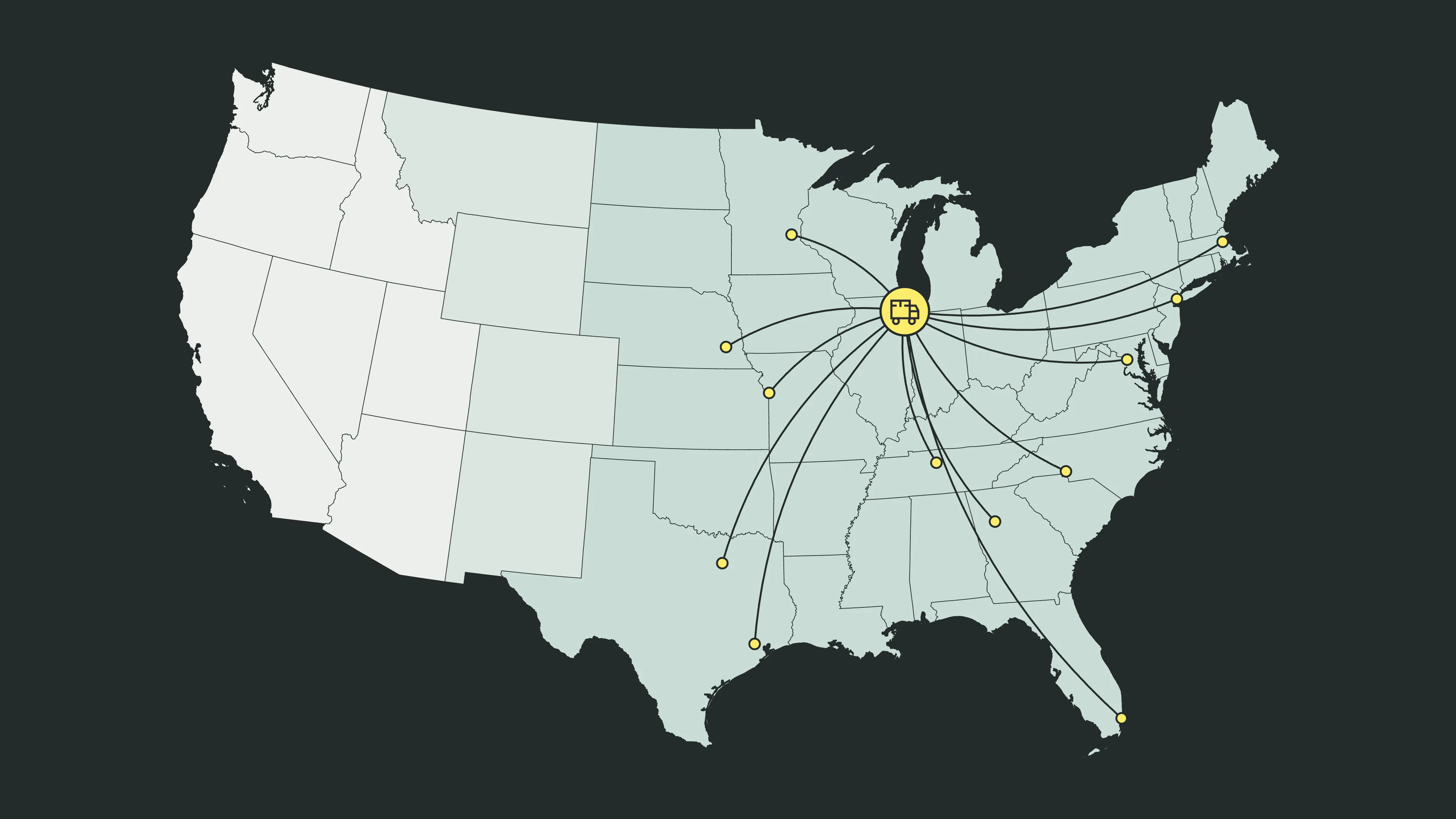
Where your inventory lives affects your shipping speed and cost. Proximity to your primary customer concentration lets you offer faster transit times at lower rates.
Saltbox has locations across Atlanta, Dallas, Denver, Los Angeles, Miami, Phoenix, Seattle, and the Washington D.C. area, covering the major U.S. demand corridors.
For a comprehensive look at what to weigh when evaluating a 3PL alternative for small businesses, that post is a good companion read.
How do you time a 3PL switch without disrupting fulfillment?
When you want to time your 3PL switch without disrupting fulfillment operations, there are 5 core things you can do: use a parallel-run method, sequence your inventory move, build a transition timeline, communicate the switch to important stakeholders and channels, and freeze new SKU migrations.
Timing is where most transitions succeed or fail, so it’s important to get it right.
1. Use the parallel-run method
The parallel-run method means operating both your current and your new 3PL simultaneously for a defined overlap period, typically two to four weeks.
You migrate a subset of SKUs to the new provider first, run real orders through it, and validate performance before migrating the rest.
This eliminates the "big bang" risk of cutting over entirely on day one, and it gives you a controlled environment to catch issues before they affect your full order volume.
2. Sequence your inventory move
Don't move everything at once. Start with slow-moving SKUs that carry the lowest risk in case something goes sideways during the transition.
Once you've validated inbounding, storage, and pick-pack-ship at the new location, migrate your core SKUs.
Save your highest-velocity products for last; these are the ones where a disruption is most expensive, so they should move only after you have confidence in the new provider.
3. Build a realistic transition timeline
The right timeline depends on your order volume and inventory complexity.
Here are three frameworks to consider:
- 30-day transition: Works for operators with under 500 orders/month, limited SKU count, and no upcoming volume spikes. One overlap week, clean cut-over.
- 60-day transition: The most common framework. Two to three weeks of parallel operations, staggered SKU migration, buffer time for integration troubleshooting.
- 90-day transition: Recommended for high-volume operations (1,000+ orders/month), complex SKU catalogs, or businesses with a seasonal peak in the near window. Slower migration, more overlap, lower risk.
4. Communicate the switch to important stakeholders and channels
Before you move into your new 3PL provider’s warehouse, you must give carriers the new pickup address and contact information well in advance.
You’ll also need to update your sales channels (Shopify, Amazon, wherever you sell) with new warehouse details for inbound inventory.
Last but not least, tell your team which orders are routing where during the overlap period. And if you're selling on a marketplace with fulfillment SLA requirements, confirm your timeline doesn't put those at risk.
5. Freeze new SKU migrations
During the overlap period, set a clear rule about which provider fulfills which order type (ideally based on which SKUs are already live at each location). The cleanest approach is to freeze new SKU migrations whenever open order volume spikes.
Pro tip: Don't split a single order across two fulfillment locations. The administrative overhead isn't worth it.

What does re-onboarding with a new provider actually look like?
The switch is done. Now comes the first 30–60 days, a period that either validates your decision or reveals new problems early enough to correct them.
Getting your SKUs, rates, and integrations set up
Expect the first week to be heavy on setup: configuring your carrier accounts, mapping your SKUs in the new system, connecting your sales channels, and running test orders.
This setup time is normal and doesn't mean something is wrong. Build it into your timeline and communicate it to your team so nobody is surprised.
Running a pilot batch before going all-in
Before routing your full live order volume through the new provider, run a pilot batch; a defined set of real orders across your SKU range.
Validate pick accuracy, packaging quality, carrier scan events, and delivery confirmation. Catching an issue on 50 orders is a very different conversation than catching it on 500.
What to track in the first 30 days
These are the metrics that will tell you whether the switch worked:
- Order accuracy rate (target: 99%+)
- Average time from order receipt to ship confirmation
- Receiving turnaround time for new inbound inventory
- Number of support interactions required per week (should trend down, not up)
- Cost per order vs. your benchmark from your previous provider
How Saltbox's onboarding process works
Saltbox doesn't drop you into a facility with a key and a floor map.
New members go through a structured onboarding with the on-site team; your space is configured for your operation, your Parsel integration is set up and tested, and your first inbound is handled with your team present.
The goal is that by the end of week one, you're running orders with confidence, not troubleshooting from scratch.

Ready to map out your transition?
Book a call with a Saltbox expert, and we'll walk through your current 3PL setup, your timeline, and what the switch to Saltbox would actually look like for your operation. No pressure, just a real conversation.
Book a callWhat mistakes do founders make when switching 3PLs?
Even well-prepared transitions can go sideways. Here are the most common places they do.
- Moving before the contract exit window opens. If your current 3PL requires 60 days' notice and you give them 30, you're legally exposed and operationally tangled. Know your notice period before you say anything.
- Not running parallel operations long enough. Two weeks feels like a long time when you're paying two providers simultaneously. But cutting the overlap short is where errors compound. Give yourself more buffer than you think you need.
- Choosing a new 3PL on price alone. The cheapest rate card doesn't account for the cost of errors, poor support, or a tech stack that doesn't integrate with yours. Model total cost of operations, not just the headline number.
- Forgetting to update your sales channels. A surprising number of founders complete a move and realize they never updated their warehouse address in Shopify or their marketplace settings. Those updates take five minutes and prevent days of routing problems.
- Skipping the inventory audit before the move. Moving unaudited inventory into a new facility just shifts the problem. Discrepancies that exist at your current provider will exist at the new one too, unless you resolve them first.
Switching 3PLs is doable; you just need the right framework
Most founders who finally make the switch say the same thing: it was easier than they expected.
The disruption they feared never showed up. What was actually disrupting them was staying.
If you're ready to map out your transition timeline, the Saltbox team can walk through it with you. We'll compare your current setup against what Saltbox members are working with today; no hard sell, no pressure. Just a real conversation about whether it's the right move for your operation.
Frequently asked questions
Most 3PL transitions take between 30 and 90 days, depending on your order volume, SKU complexity, and contract notice requirements. A 60-day timeline using the parallel-run method is the most common approach for mid-volume operators.
Yes. The parallel-run method lets you migrate inventory and orders to a new provider while your current 3PL continues to fulfill. The key is sequencing the move by SKU, starting with slow-movers, and setting clear rules for which provider handles which orders during the overlap.
Prioritize pricing transparency, space flexibility, real-time inventory visibility, and on-site support. Also evaluate tech stack compatibility; your new provider should integrate cleanly with your existing sales channels and shipping tools without requiring a custom build on your end.
Your inventory stays at your current provider until you schedule and execute the move. You'll typically arrange freight pickups or coordinate carrier transfers for existing stock, while routing new supplier inbounds directly to your new location. A full inventory audit before the move is essential to catch discrepancies before they become your new provider's problem.
The right time is usually six months before most founders actually do it. If your error rate is consistently above 1–2%, your costs are scaling faster than your volume, or you're spending meaningful time every week managing your provider relationship, those are signals worth acting on sooner rather than later.
Traditional 3PLs give you access to shared fulfillment infrastructure on their terms. Saltbox is a co-warehousing model, which means members get private warehouse suites they control, an on-site team that's physically present, and access to Parsel, Saltbox's shipping platform partner, for discounted shipping and real-time tracking.
The model is built for founders who want the support of a fulfillment partner without giving up visibility and control. Read more here about how Saltbox compares to traditional third-party logistics providers.