
.png)


Key takeaways
- Saltbox is the best co-warehousing ShipNetwork alternative for DTC brands wanting fulfillment-ready private warehouse suites, on-demand labor, shipping discounts, and an affordable entry-level access plan that starts from $349/month for shipping services and operations support.
- WareSpace, FlexHQ, Portal Warehousing, ReadySpaces, Loloft, and Cubework round out the co-warehousing options for founders who just want physical space for their inventory.
- Flowspace, FedEx Fulfillment, and Flexe are the more traditional 3PL picks if you'd rather stay outsourced, though switching 3PL vendors rarely fixes the issues that pushed you off ShipNetwork in the first place.
I'll walk through 10 ShipNetwork alternatives in 2026, split between co-warehousing operators (where your inventory stays in your hands) and traditional 3PLs (if you'd rather stay fully outsourced).
What are the best alternatives to ShipNetwork in 2026?
The strongest alternative to ShipNetwork in 2026 is Saltbox, with its co-warehousing model, month-to-month memberships, on-demand fulfillment support, and discounted shipping.
If staying inside a 3PL is closer to what you want, Flowspace is the closest match on the list.
Here's the full shortlist with the 10 best options on the market:
What are the best co-warehousing alternatives to ShipNetwork in 2026
Co-warehousing completely changes the operational model of the traditional 3PL.
Instead of handing over your inventory and waiting on dashboard updates, you rent a private suite, walk in whenever you want, and decide for yourself whether to pack the orders or hire someone to do it.
Seven operators fit that pattern:
#1: Saltbox
Saltbox is the strongest co-warehousing pick on this list for founders coming off a 3PL like ShipNetwork.
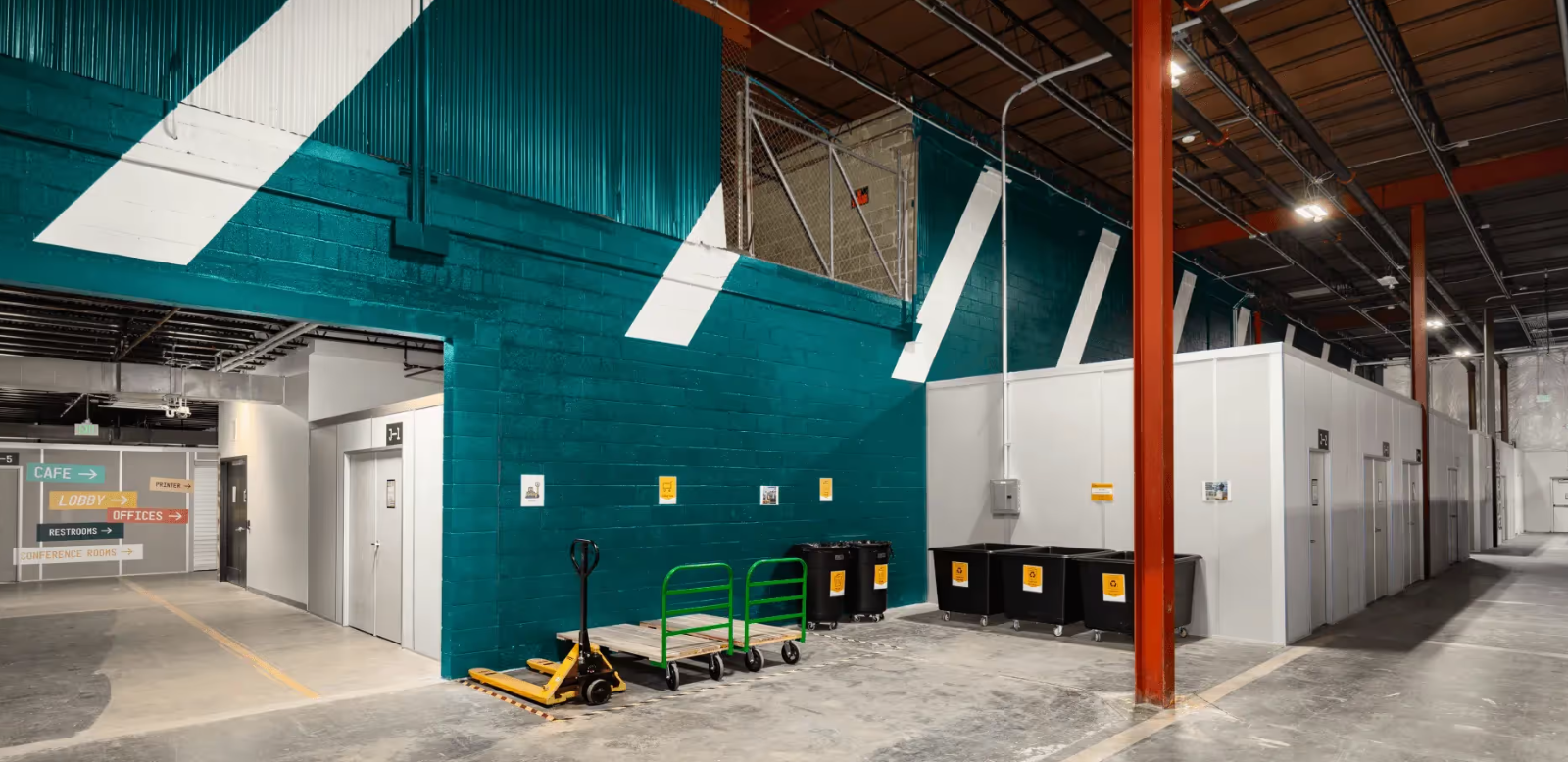
Small warehouses start at $1,285/month in cities like Atlanta, Saltbox Fulfillment handles labor when you want to be hands off, and your inventory stays in a suite you walk into.
The reason Saltbox exists is to fill the gap between "do everything yourself in a self-storage unit" and "hand it all to a 3PL."
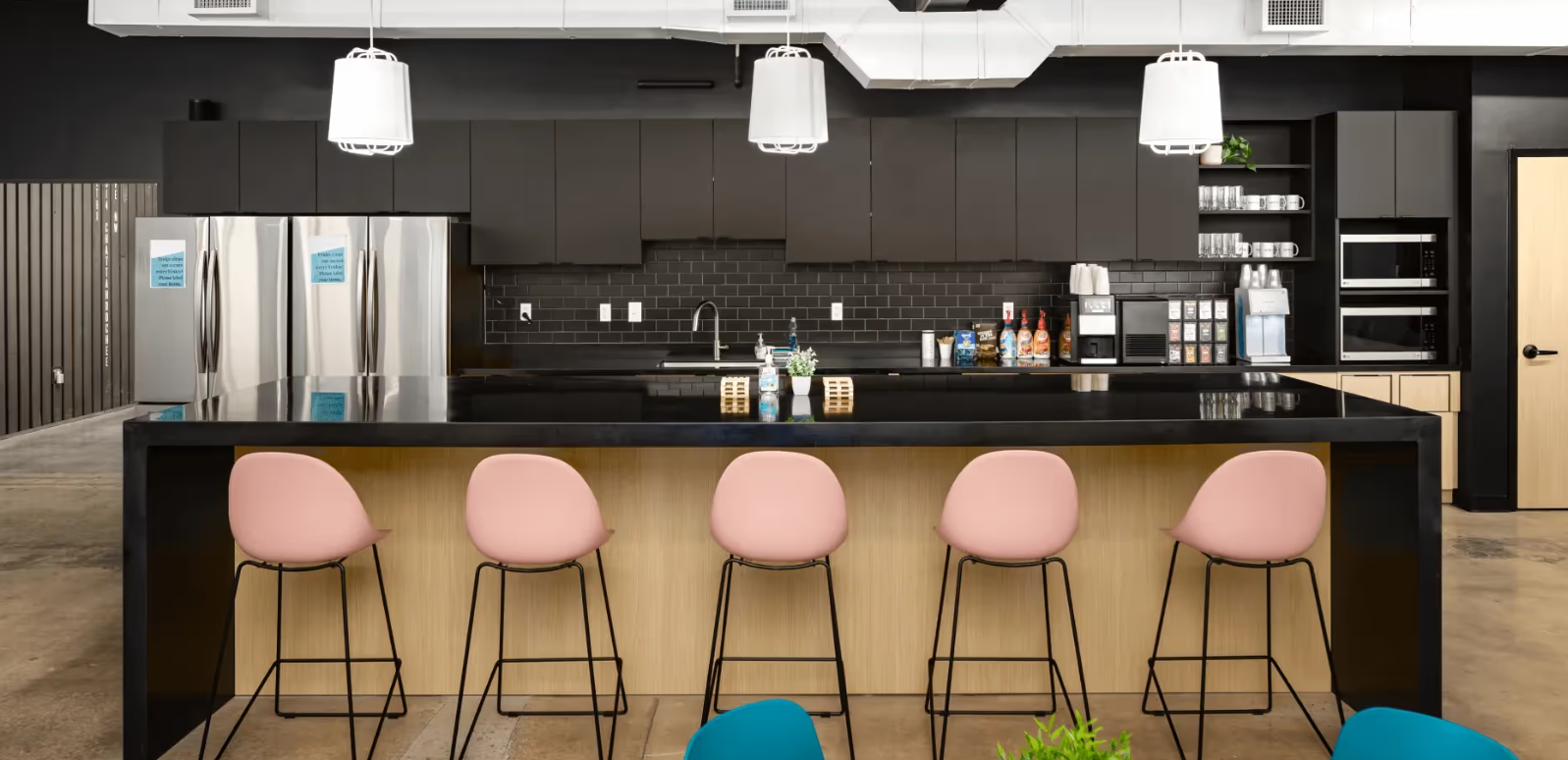
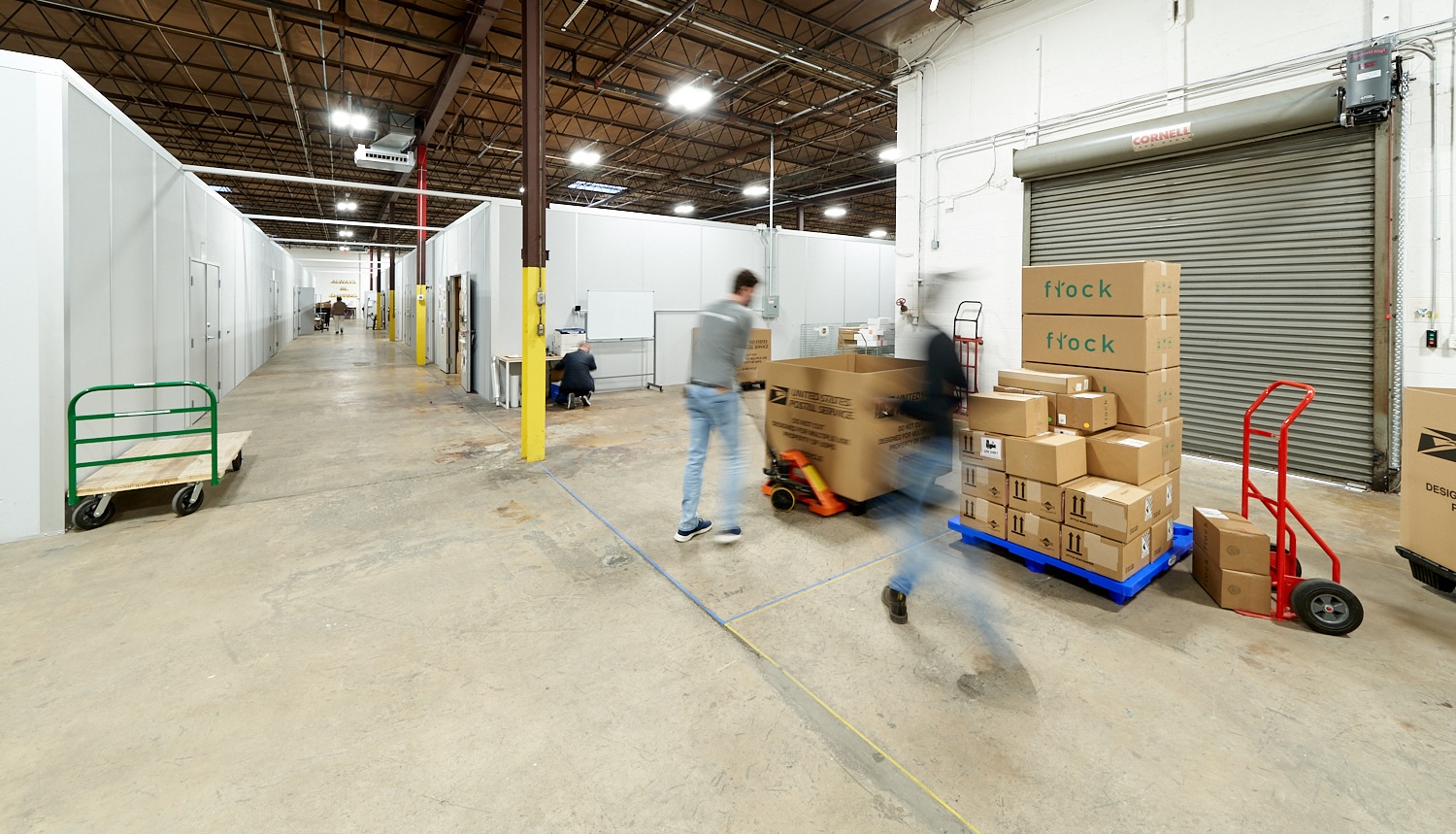
Here’s how that middle ground looks like this in practice: a private warehouse suite, a separate office space if you want one, and an on-site operations team that runs the parts of fulfillment you don't want to handle (or only when demand spikes).
Ripl Efek, Sant and Abel, and Cyclone Pods are three of the brands that have built their operations inside this model.
Quick disclosure before going further: Saltbox is our solution, and I'll aim to keep the breakdown below honest rather than promotional.
Warehouse and office space that grows with the brand
Across 12 Saltbox locations in the U.S. (and growing!), warehouse footprints stretch from 70 sq. ft. (small enough for a one-person operation packing 50 orders a week) up to 5,000+ sq. ft. for teams running a real SKU catalog with multiple staff.
Offices sit alongside the suites at the same facility, so the brand's HQ and its fulfillment floor share the same address.
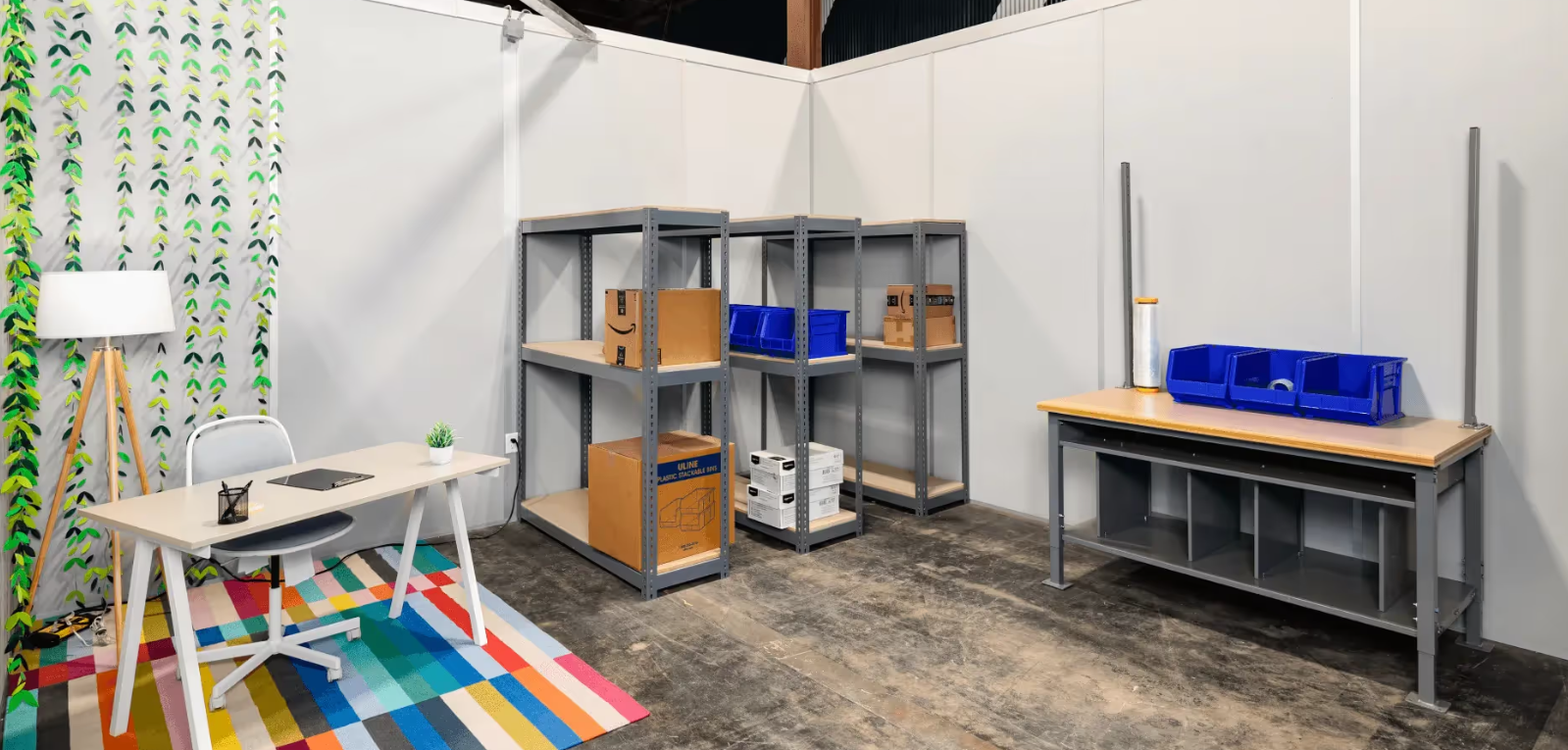
Billing is monthly with no long-term commitment, and you can step into a bigger suite (or shrink to a smaller one) when volume changes.

Not ready to move into a warehouse space, yet?
Saltbox Access Plans will provide you with a mailing address, receiving services, discounted rates, on-site labor, and an entrepreneurial network.
Explore Access PlansFour warehouse tiers cover the range of stages we see:
- Small (70 to 250 sq. ft., 4 to 15 pallets): a single suite for 1 to 2 people, sized for solopreneurs and small teams that need their own dedicated footprint.
- Medium (250 to 500 sq. ft., 16 to 31 pallets): room for up to 4 people, aimed at brands already growing and ready to expand inventory.
- Large (500 to 1,000 sq. ft., 32 to 62 pallets): fits up to 10 employees, for operations dealing with serious inventory throughput.
- Extra Large (1,000 to 5,000+ sq. ft., 63 to 125 pallets): up to 50 employees, built for established DTC brands needing real warehouse depth.
➡️ You can take a quiz after selecting your location to figure out the right fit, or book a tour and have our team figure out the right amount of space for your use case.
How operations and shipping work day to day
There are essentially three modes you can run from a Saltbox suite:
- Solo: Every pick is yours.
- Assisted: You call for help during launches and peak season.
- Fully managed: Saltbox Fulfillment runs your pick-pack-ship.
The labor scales up by the hour, instead of having to hire a full-time employee. For example, Saltbox members who hired our on-demand team for fulfillment support saved a total of 19,275.75 hours in 2025.
Here's what's part of the membership:
- Daily carrier pickups: FedEx, USPS, and UPS collect from the sorting area, so packages leave the building without a post-office trip.
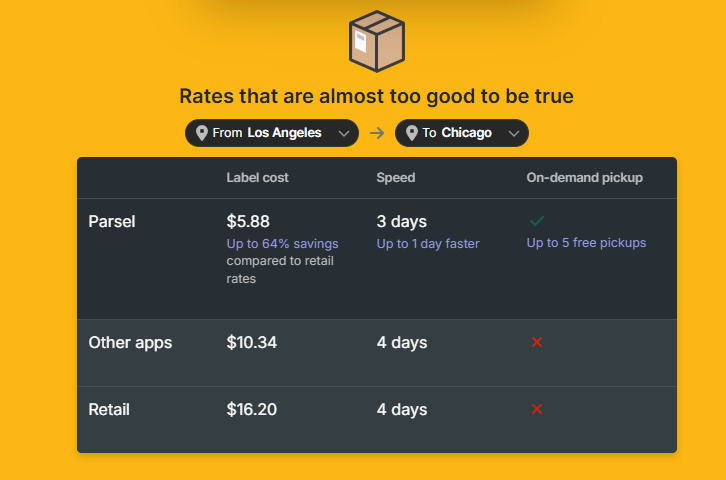
- Parsel shipping rates: members route labels through our shipping app partner and unlock carrier pricing that's normally reserved for higher-volume shippers.
- Saltbox Fulfillment for on-demand labor: hourly help for packing, inbounding, kitting, and inventory work during launches and peak weeks. Our pricing for fulfillment is $3 per pick, and our operational services start from $45/hour.
- Free inventory inbounding: the on-site crew accepts and stores deliveries even if no one from your team is in the building that day.
- Round-the-clock security: 24/7 surveillance and access control across every facility.
- In-house content studio: a professional product photo and video studio sits inside the facility, so no external rental is needed.

Want to see how it works for growth-stage brands? 👇
Parsel: the shipping software inside every membership
Parsel is the shipping app baked into every Saltbox membership.
The platform surfaces label pricing from carriers that most early-stage brands can't access on their own.
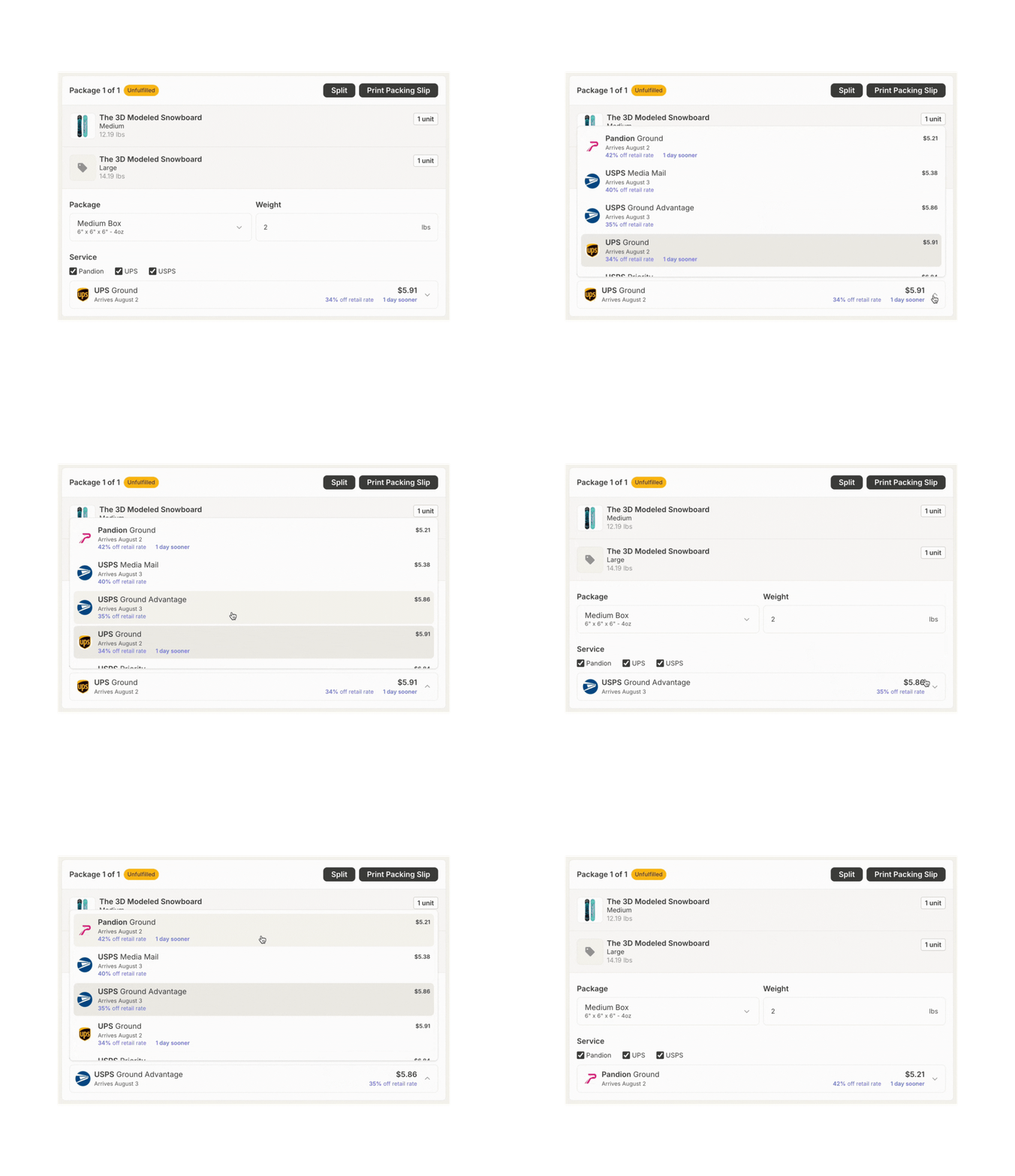
USPS, UPS, and FedEx sit in the platform alongside a roster of regional and emerging carriers.
Members compare rates inside the app shipment by shipment, and outbound cut-off goes as late as 4:30 PM.
Want to try Parsel? You can sign up to Parsel here.
Saltbox locations across the U.S.
Saltbox has 12 U.S. locations today, spread across the West Coast, the East Coast, and the Central U.S.:
- Los Angeles, San Gabriel Valley.
- Los Angeles, Torrance.
- Phoenix, Tempe.
- Seattle, SoDo Row.
- Denver, Park Hill.
- Dallas, Carrollton.
- Dallas, Farmers Branch.
- Atlanta, Upper Westside.
- Atlanta, Westside Park.
- Atlanta, Chamblee.
- Washington D.C., Alexandria.
- Miami, Doral.

Interested in one of our locations across the U.S?
You can book a tour to see it alongside our operations experts. Available Mon-Fri, 8:30 AM-4:30 PM Central Time.
Book a TourHow is Saltbox different from ShipNetwork?
The core difference is that ShipNetwork is a traditional 3PL, while Saltbox is a co-warehousing operator.
The end goal is fundamentally the same: your orders leaving the building and arriving at your customers on time, but the approach to who owns the operation is different.
Once your stock hits one of ShipNetwork's fulfillment centers, the pick, pack, ship, and returns work moves entirely to their team.
At Saltbox, your stock stays in a suite you control.
Daily carrier pickups, shipping software, and an on-site team come with the package, and that team is one you can talk to in person.
A handful of practical differences fall out of that split:
- Visibility into stock is physical, not screen-based; you see what's on your shelves because you're standing next to them.
- Packaging, inserts, and the unboxing setup stay in-house, with no per-kit surcharge.
- Pricing is one flat monthly figure for the suite and membership, not a stacked invoice with separate lines for storage, picking, packing, shipping, returns, and expedited handling.
- Our fulfillment service is $3 per pick, unlike some traditional 3PLs that start at one price and then increase each pick thereafter.
- Same-day urgent orders can leave the building because you're the one walking them to the dock.
- No order minimums attached to the agreement.
Co-warehousing is the more practical fit when monthly volume sits anywhere between a few dozen and a few thousand orders, and the unboxing experience still matters to the brand.
With Saltbox, you can also technically be hands-off using our fulfillment team, although you’ll be able to walk in any time during working hours, network with other entrepreneurs, and access shipping rates that you’d otherwise need a 3PL for.
Saltbox's membership, warehouse, and office plans
Three components determine what a Saltbox plan costs: the membership tier, an optional warehouse suite, and an optional office.
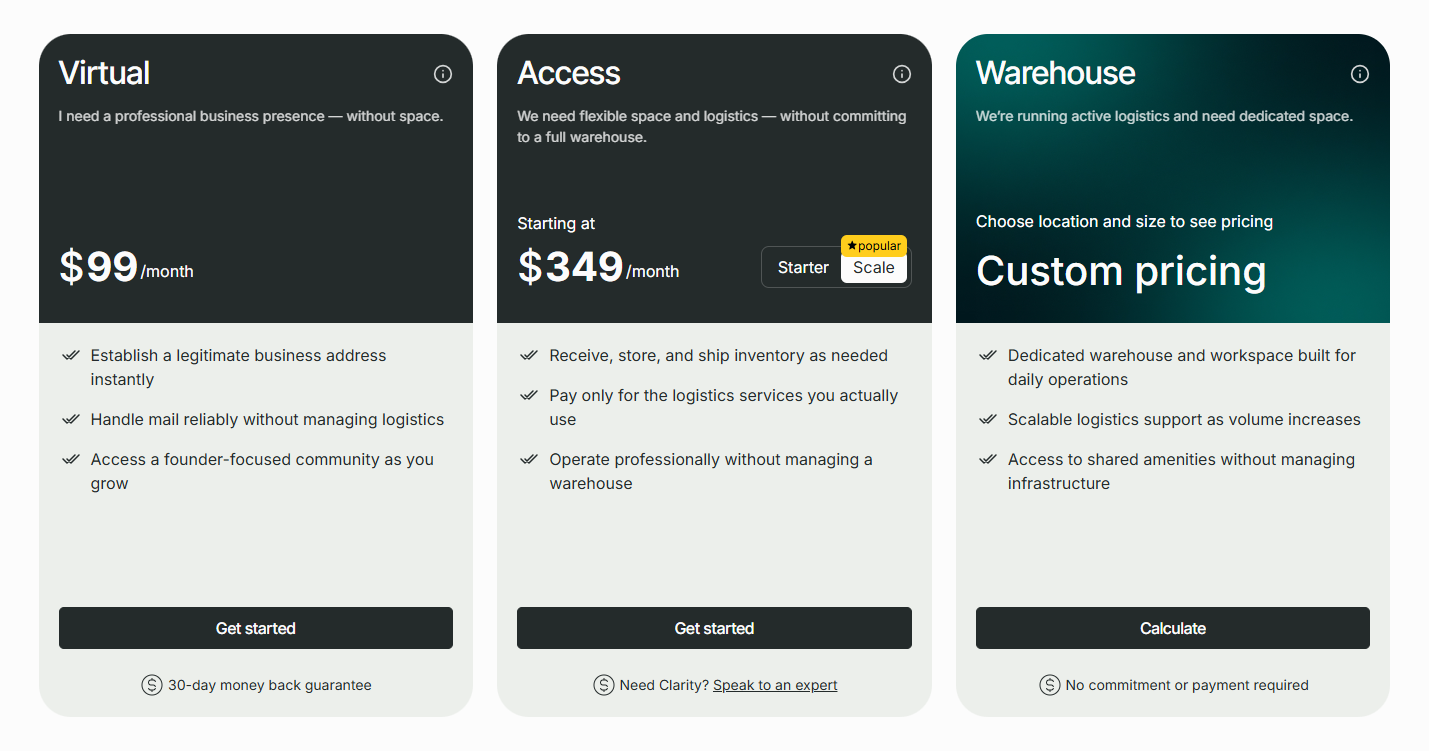
Three membership tiers cover the spectrum:
- Virtual ($99/month): a fully remote tier for brands that need a professional mailing address for letters (not packages) and a way into the Upstream Entrepreneurs Club.
- Access (from $349/month): the entry point with physical access to Saltbox locations, including the loading dock, packing stations, meeting rooms, and the content studio, even without committing to a warehouse suite.
- Warehouse (custom pricing): the full package, with flexible suites, on-site operations support, shipping technology, and the rest of the building's amenities.
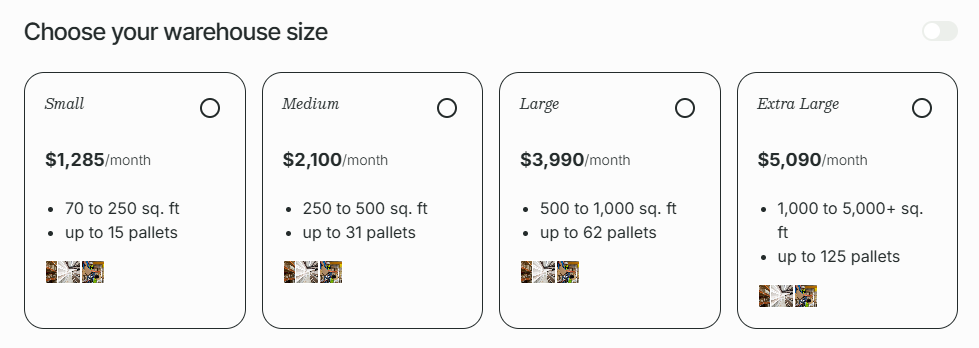
Suite pricing shifts city to city. For reference, here's how Atlanta's Upper Westside breaks down:
- Small Warehouse, from $1,285/month: 70 to 250 sq. ft., 4 to 15 pallets, 1 to 2 employees.
- Medium Warehouse, from $2,100/month: 250 to 500 sq. ft., 16 to 31 pallets, 1 to 4 employees.
- Large Warehouse, from $3,990/month: 500 to 1,000 sq. ft., 32 to 62 pallets, 1 to 10 employees.
- Extra Large Warehouse, from $5,090/month: 1,000 to 5,000+ sq. ft., 63 to 125 pallets, up to 50 employees.
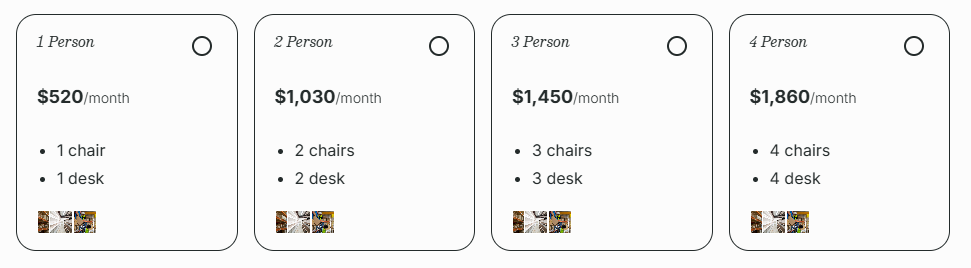
Offices also price regionally. Sticking with Atlanta's Upper Westside:
- 1-person office, $520/month: one chair, one desk.
- 2-person office, $1,030/month: two chairs, two desks.
- 3-person office, $1,450/month: three chairs, three desks.
- 4-person office, $1,860/month: four chairs, four desks.
➡️ Monthly billing has no annual lock-in. Paying annually saves 10%, and biannually saves 5%.
Saltbox pros and cons
✅ Warehouse, shipping infrastructure, and office space under one roof, across 12 U.S. locations.
✅ Monthly billing without a long-term lease obligation.
✅ Parsel partnerships cut shipping costs from day one.
✅ Saltbox Fulfillment labor available by the hour, billed in 15-minute blocks from $45.
❌ No Canadian locations, though Phoenix supports cross-border operations.
#2: WareSpace
Best for: Brands with steady volume that prefer one all-inclusive monthly bill to month-to-month flexibility.
Locations: 20 U.S. cities, including Atlanta, Chicago, Dallas, Denver, Philadelphia, and Phoenix.
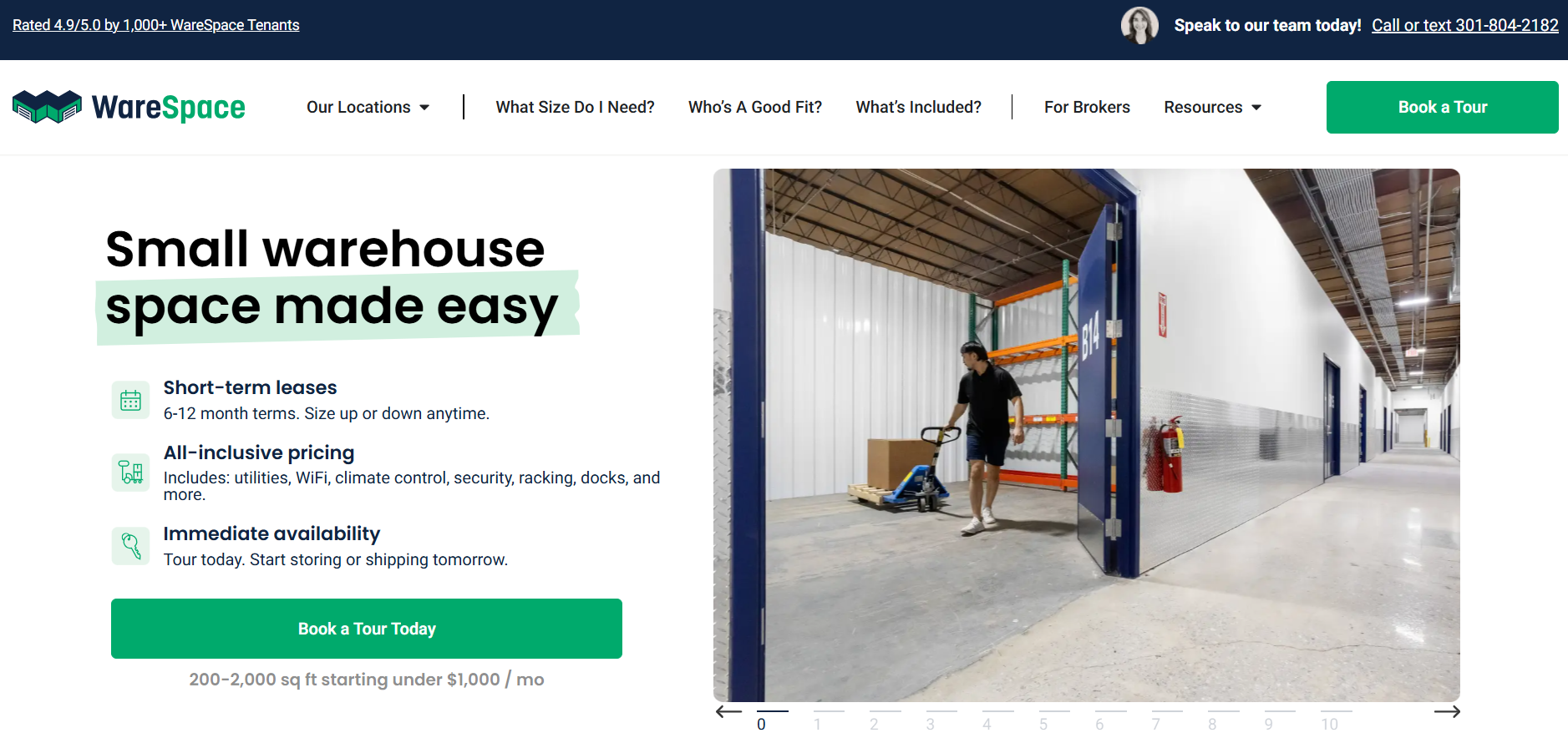
There's an apartment-building feel to how WareSpace is set up: the unit is yours, the racking is already installed, and one bill covers utilities, Wi-Fi, equipment access, and amenities.
Two things factor in before signing: every unit is sized between 200 and 2,000 sq. ft., and the standard lease is either 6 or 12 months rather than rolling monthly.
Amenities and benefits
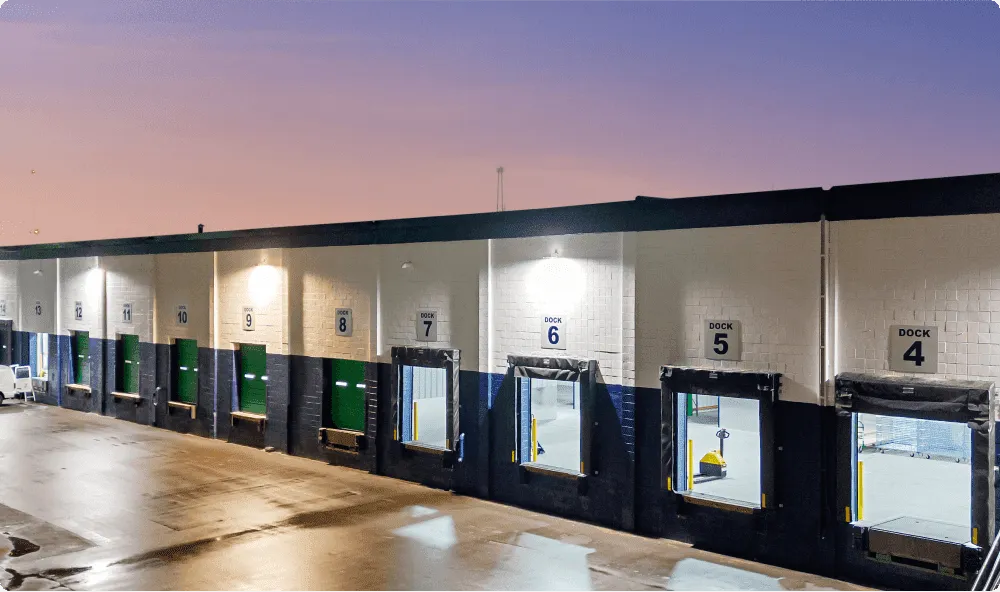
- One bundled fee covers utilities, Wi-Fi, monitored security, and the racking pre-installed inside the unit.
- Shared pallet jacks and warehouse tools are available across the facility, and loading docks come standard.
- Common areas include a kitchen, lounge zones, conference rooms (bookable), with the cleaning service folded into the lease.
- Climate control runs year-round, and after-hours access keeps the schedule flexible.
Pricing
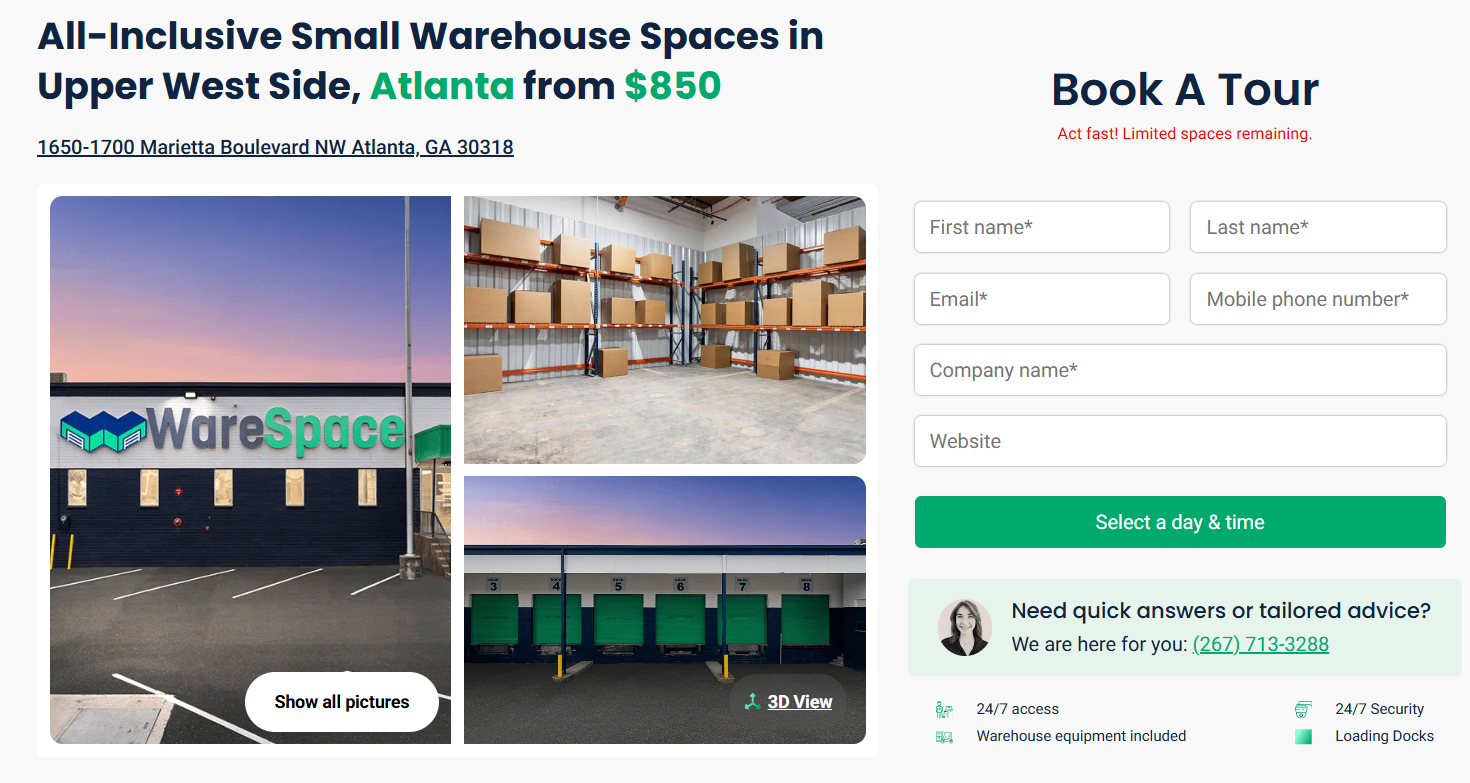
Rates start at $850/month in markets like Atlanta and at $1,000/month elsewhere, with unit footprints between 200 and 2,000 sq. ft. A tour will have to finalize the number for the specific space and city.
Pros and cons
✅ Bundled billing replaces separate utility, Wi-Fi, and equipment invoices.
✅ The 20-city footprint covers most major coastal and inland metros.
✅ Day-one move-in with racking already in place.
❌ Standard contracts run 6 to 12 months, not month-to-month, unlike some WareSpace alternatives.
#3: FlexHQ
Best for: Ecommerce teams that want the warehouse to feel like a brand HQ, not a storage box.
Locations: 6 U.S. cities, with sites in Los Angeles, Denver, Plano, Salt Lake City, Nashville, and Charlotte.
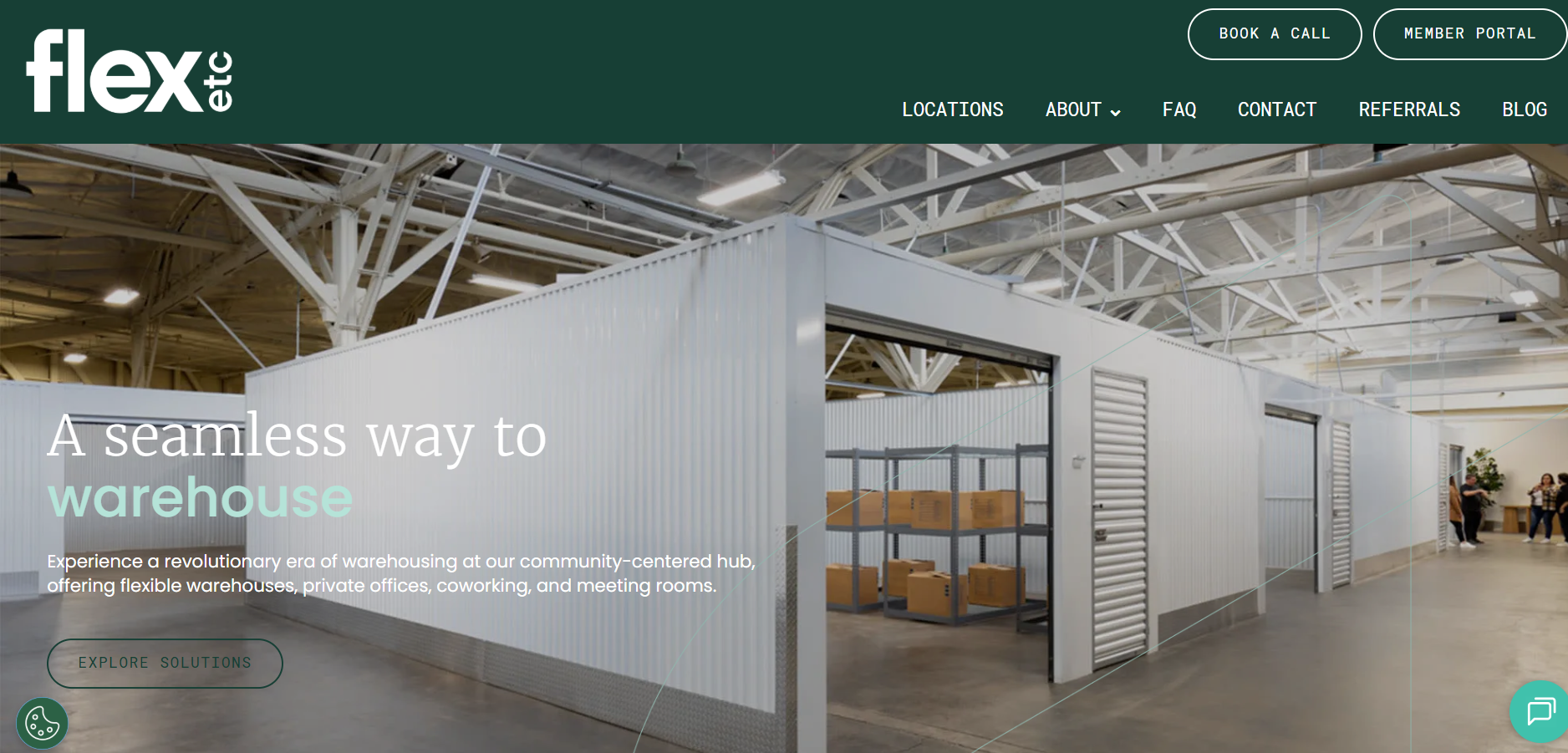
FlexHQ leans hard into the aesthetics of the space.
The buildings are large industrial properties retrofitted into mixed-use environments, with smaller warehouse units sitting next to private offices, studios, and shared work zones.
For brands where the physical office matters to the team's identity, that detail tips the decision.
Amenities and benefits
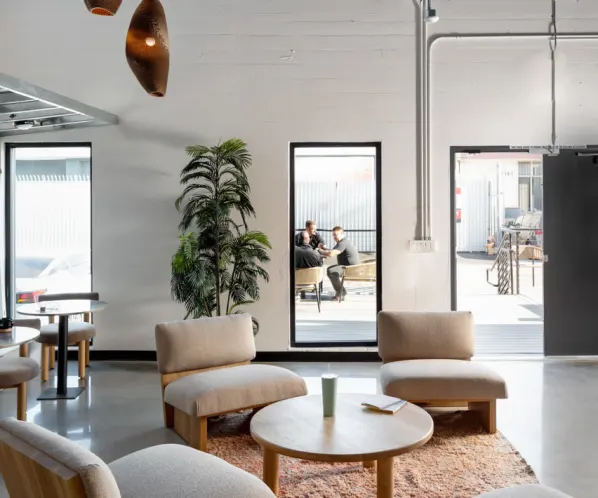
- Coworking memberships and private offices accompany the warehouse units inside the same building.
- The designed office environment doubles as a meeting space and shoot location.
- On-site staff, secure facility access, and the rest of the amenities are part of the membership.
- Month-to-month billing with no long-lease requirement.
Pricing
No public rates appear on the FlexHQ site, so any pricing conversation runs through their team.
Pros and cons
✅ No long-term commitment, with move-in available immediately.
✅ Designer-built environment for brands where the room's look factors in.
✅ Coworking, offices, and warehouse units all sit under the same roof.
❌ Six U.S. cities won't cut it if your customer base is spread coast-to-coast.
#4: Portal Warehousing
Best for: Urban-based ecommerce founders who refuse to drive 45 minutes to a suburban warehouse park.
Locations: 7 U.S. cities, with units in Salt Lake City, Phoenix, Orlando, Minneapolis, Manhattan, Los Angeles, and Brooklyn.
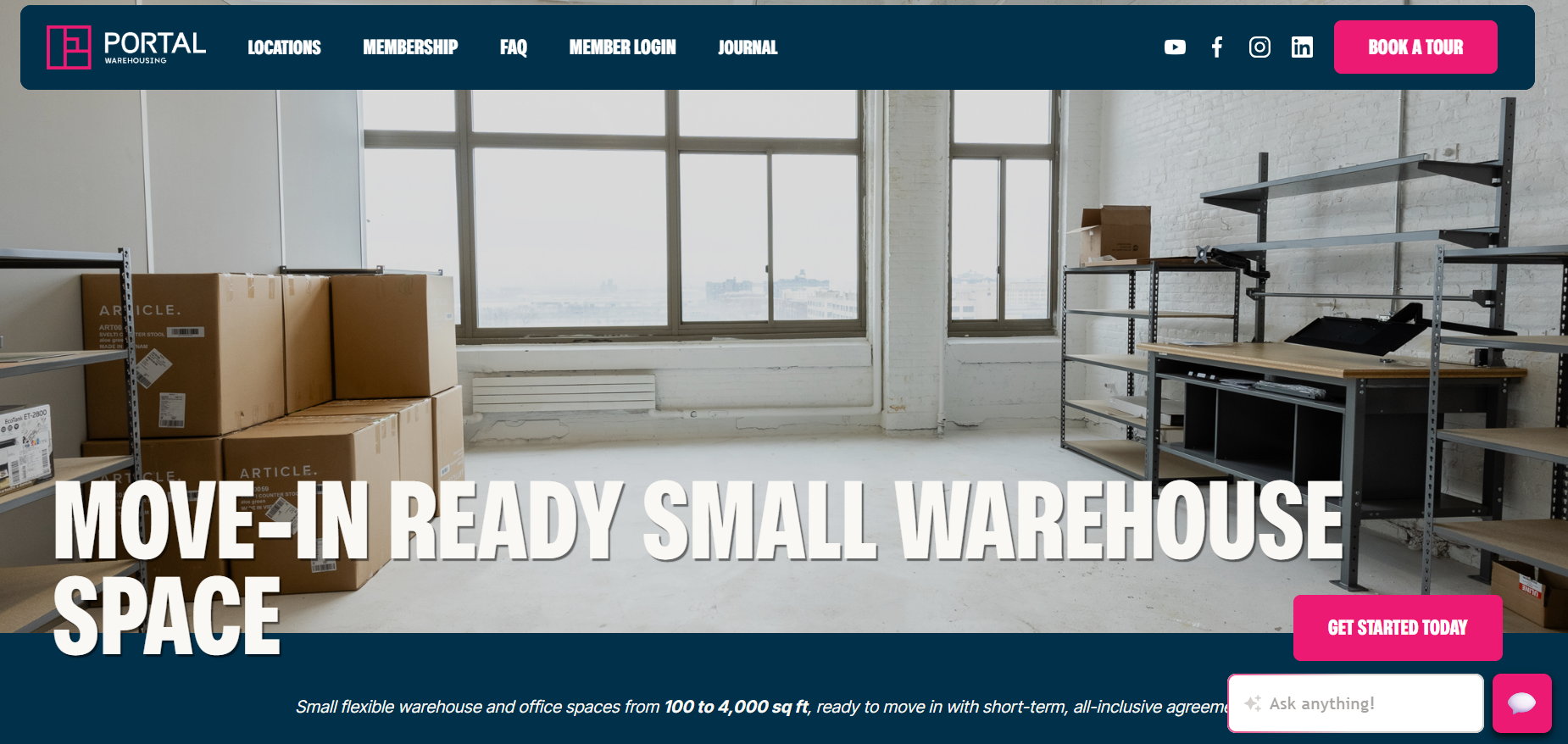
This one's location-first. Where some warehouse operators take the cheaper industrial land at the edge of cities, Portal puts units inside Manhattan, Brooklyn, and downtown Los Angeles, addresses warehousing typically doesn't reach.
The trade-off is footprint: with seven locations, large parts of the country don't have a nearby option.
Amenities and benefits
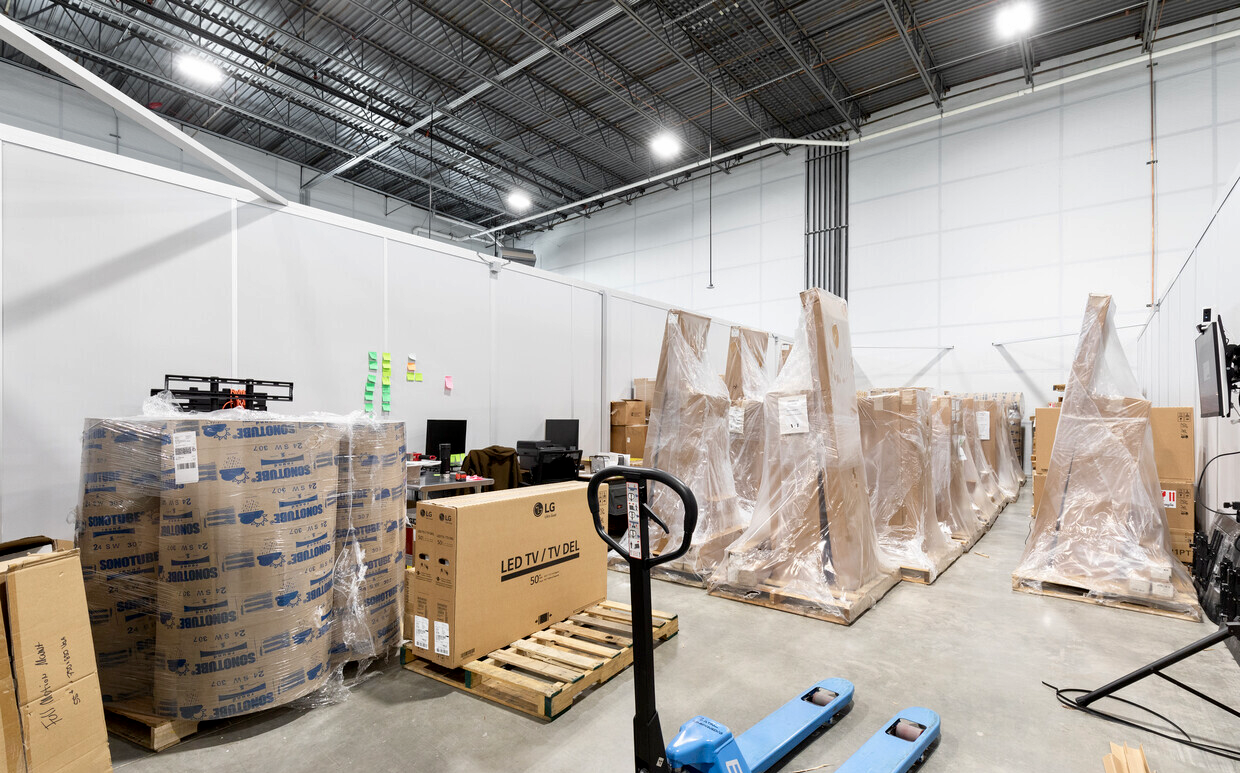
- The membership consolidates utilities, Wi-Fi, racking, dock access, and security into a single invoice.
- Daily carrier pickups handle outbound, with each unit assigned its own shipping address.
- A reception desk and private offices live inside the same building, so client meetings don't need a separate booking.
- Programming for the community is built around the needs of ecommerce founders specifically.
Pricing
Three space tiers stack up like this:
- Small: 250 to 500 sq. ft. starting at $995/month.
- Medium: 500 to 1,000 sq. ft. starting at $1,795/month.
- Large: 1,000+ sq. ft. starting at $2,995/month.
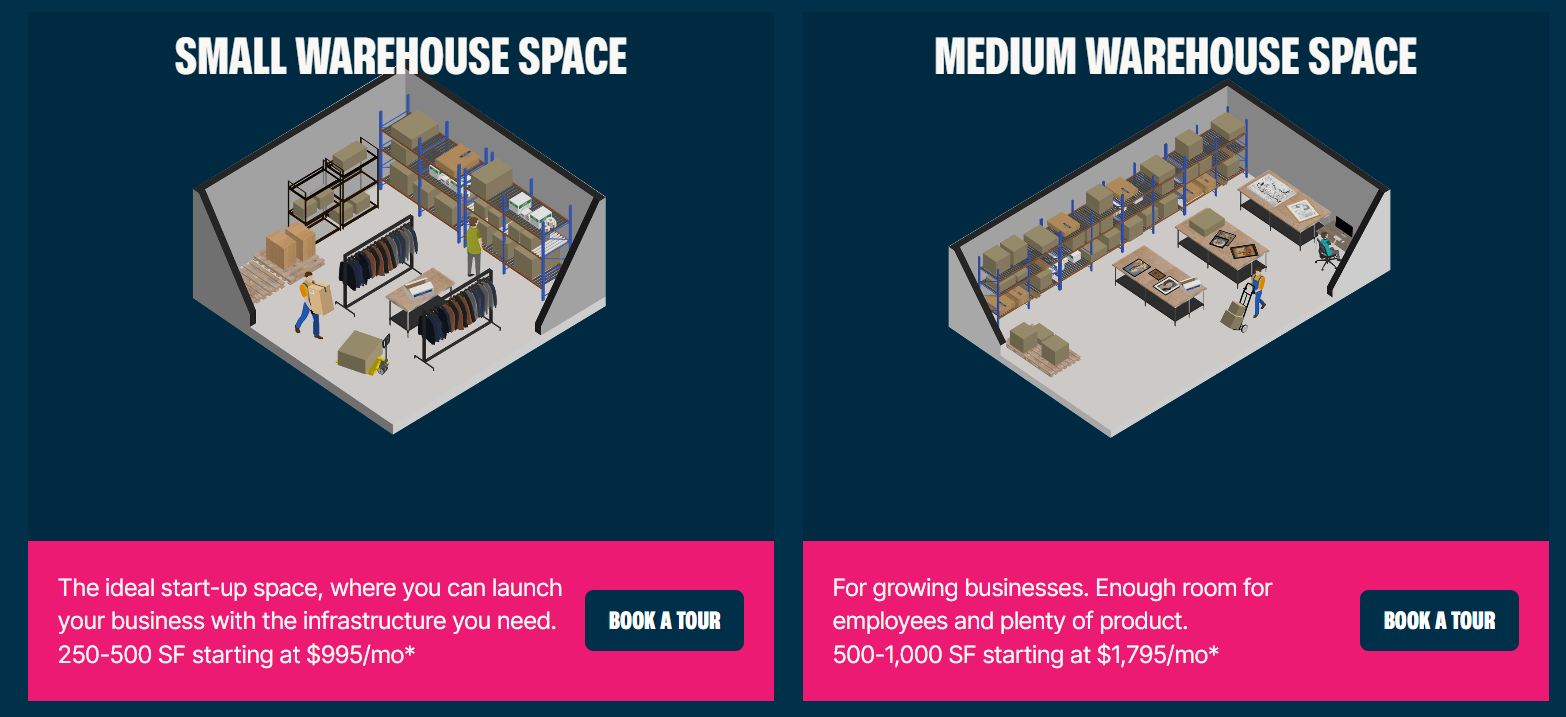
➡️ Pricing varies by location and availability.
Pros and cons
✅ Suites are operational on signing day, with no buildout work.
✅ Office space sits inside the same building as the warehouse footprint.
✅ Urban-core addresses give faster highway access and a deeper labor pool.
❌ Seven-city footprint can leave you boxed out of certain regions.
#5: ReadySpaces
Best for: Brands prioritizing geographic coverage and industrial infrastructure over ecommerce-specific add-ons like content studios.
Locations: 38 across the U.S. and Canada.
The setup at ReadySpaces is closer to traditional industrial than to ecommerce co-warehousing.
Unit sizes go from 100 sq. ft. to 5,000 sq. ft. on a flat-rate lease that bundles utilities, security, and equipment.
Amenities and benefits
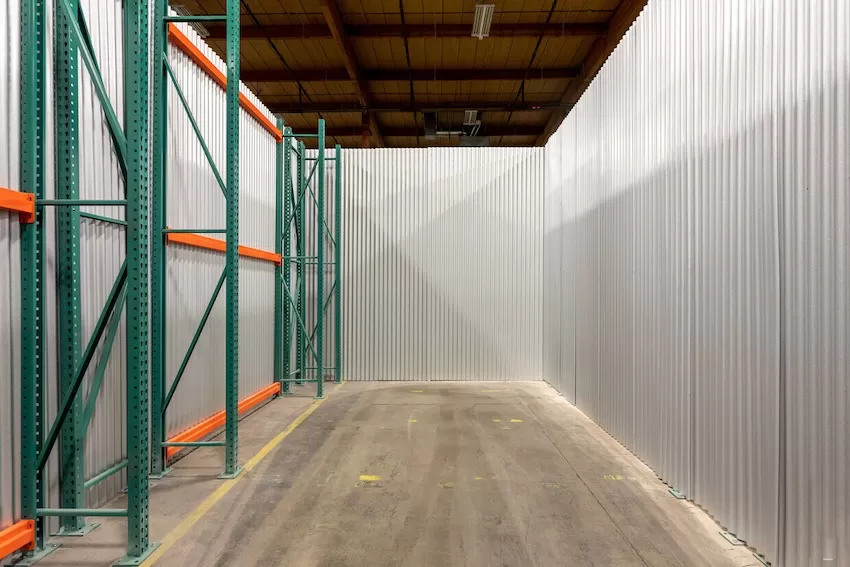
- Unit footprints span 100 sq. ft. up to 5,000 sq. ft., with shared workspace zones inside most facilities.
- Building access is 24/7 through secured entry, with continuous video monitoring across the property.
- Each lease folds in forklift access plus loading docks and grade-level bay entry, eliminating separate equipment rental conversations.
Pricing
Rates are fully custom and depend on the unit's size, its position inside the facility, and any add-ons (loading dock adjacency, 240V power, and so on). Quote-based only.

Pros and cons
✅ Leases start as short as 90 days, far below standard industrial terms.
✅ 38 facilities covering both the U.S. and Canada.
✅ Forklifts and loading dock access are part of the lease itself.
❌ No public pricing makes side-by-side comparison harder, which is why some members have been looking for ReadySpaces alternatives.
#6: Loloft
Best for: Solo founders and 2 to 3-person teams that want a small warehouse plus a coworking desk inside the same address.
Locations: 2, one in Phoenix, AZ and one in Rogers, AR.
Loloft is deliberately small, and that's the appeal.
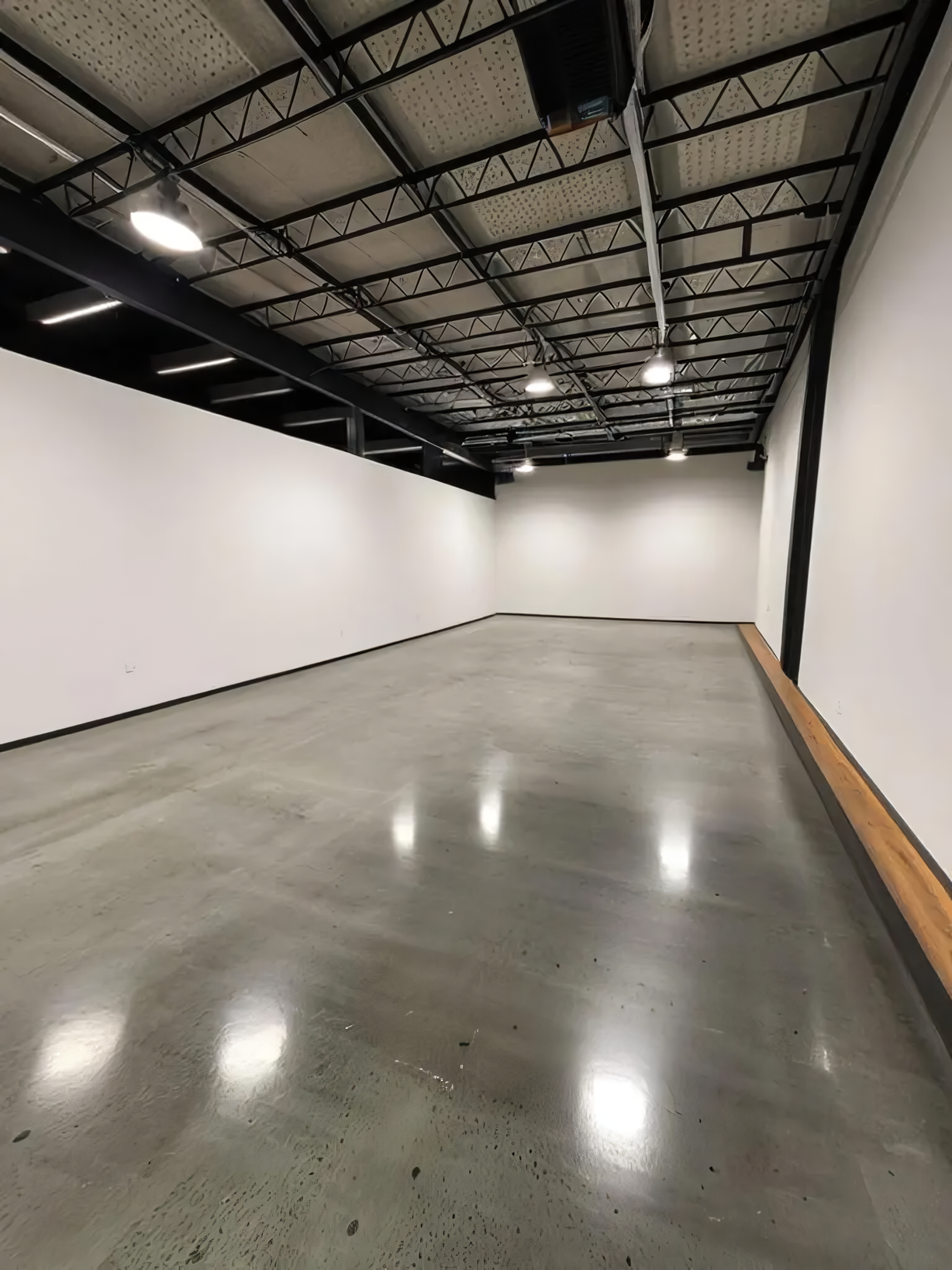
With the membership, you can get a 125 sq. ft. warehouse unit and a coworking desk inside the same building at a reasonable price.
Amenities and benefits
- One membership can layer a coworking spot, a private office, and a warehouse unit inside the same address.
- Wi-Fi, the shared kitchen, and lounge zones are part of the base tier.
- Meeting rooms and classroom spaces stay bookable on top of the membership.
- 24/7 building access, with shared warehouse tools available across the membership.
Pricing
Loloft prices month-to-month across every category.
Rogers, AR rates look like this:
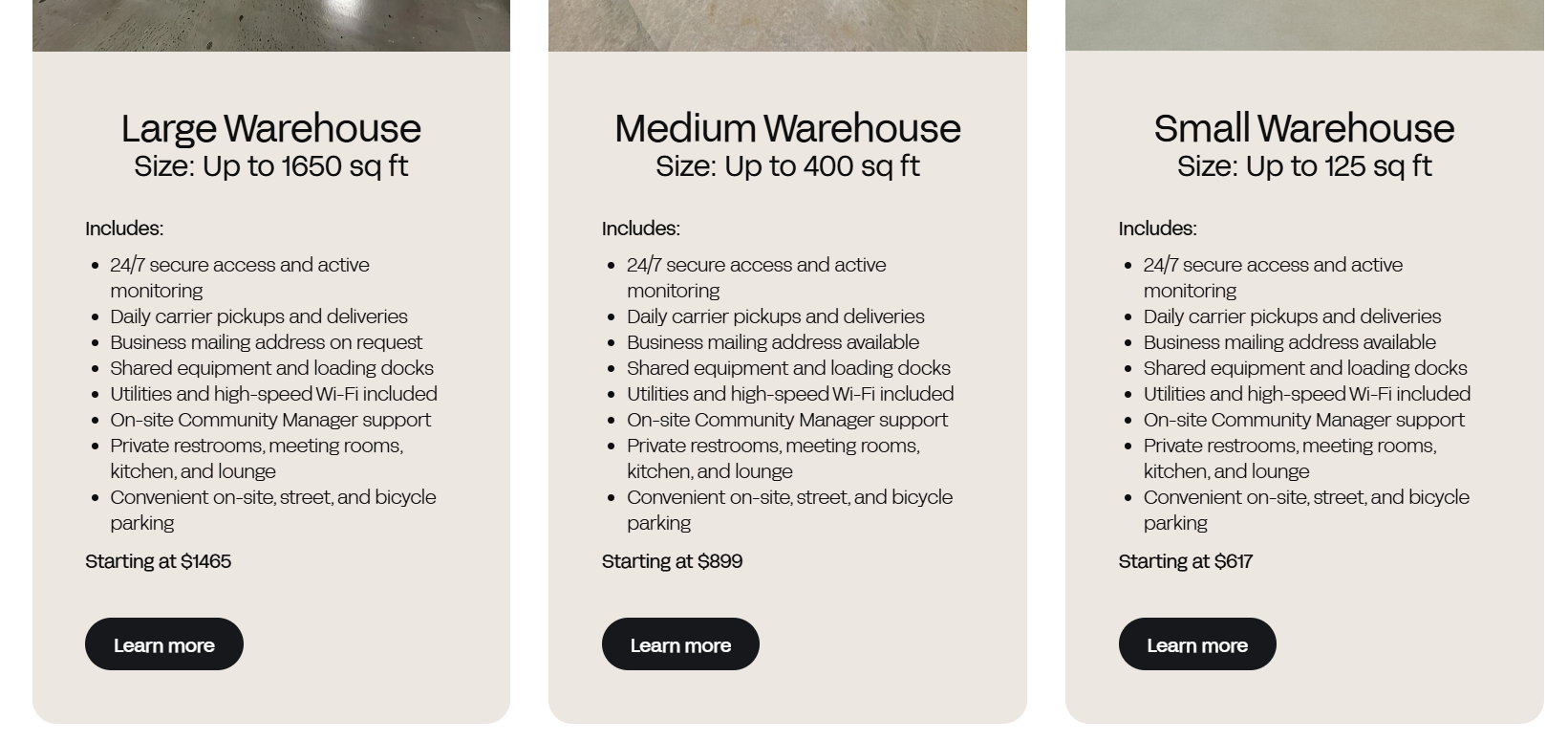
- Warehouses span $617/month for a 125 sq. ft. unit up to $1,465/month for 1,650 sq. ft.
- Offices begin at $425/month for a small dedicated desk and reach $1,299/month for a 182 sq. ft. private office.
- Hot desks sit at $195/month, with $15 day passes available.
Pros and cons
✅ Lowest entry price in this guide for combining a warehouse with an office.
✅ Mail handling is included in the base membership, not an add-on.
✅ Free parking.
❌ Two locations cover the smallest footprint of any operator here.
#7: Cubework
Best for: Later-stage teams that need a real industrial footprint across many U.S. cities, with on-demand forklift labor at every site.
Locations: 77+ U.S. locations.
The Cubework pitch lives in the scale range.
Inventory overflow at 150 sq. ft. and full distribution at 150,000 sq. ft. can both run under the same lease structure, and forklift drivers are available on-demand at every facility.
Lease minimums start at three months, well under standard industrial commitments.
Amenities and benefits
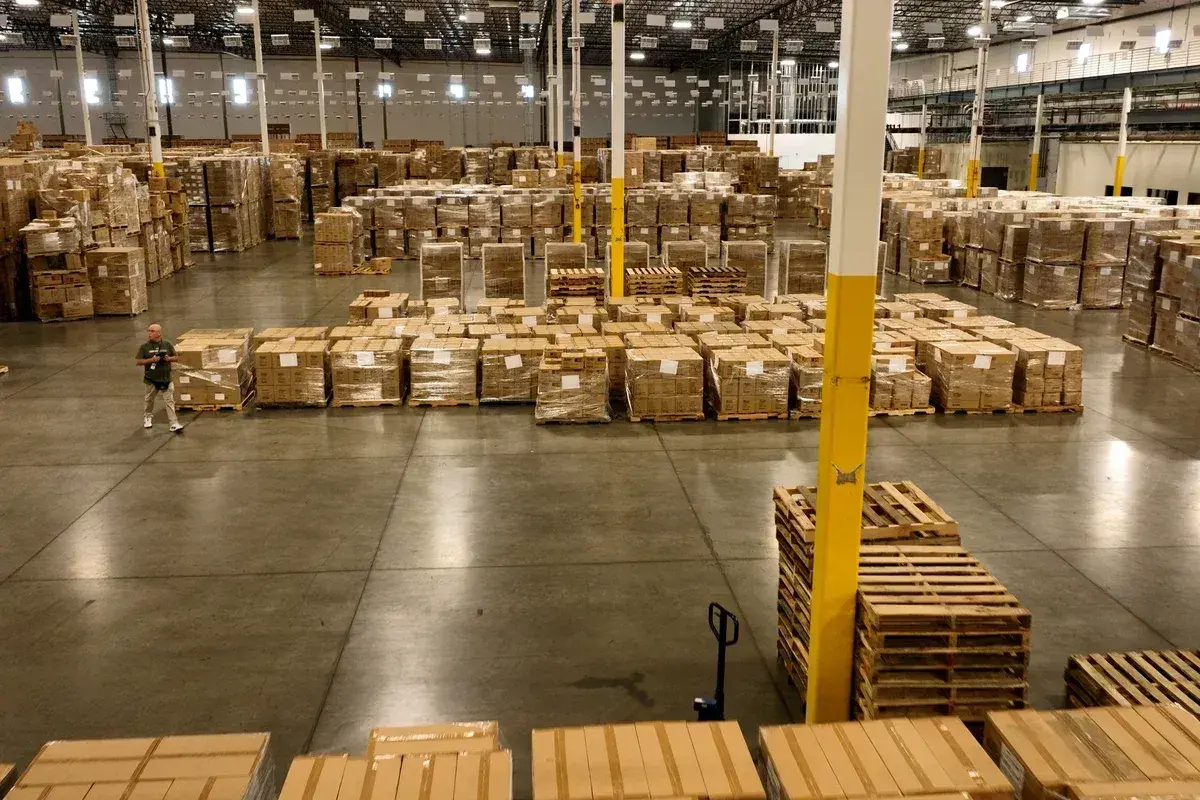
- Footprints range from 150 sq. ft. for overflow stock all the way to 150,000 sq. ft. for full distribution.
- 24/7 access to the building with continuous facility-wide monitoring.
- Forklifts and forklift drivers available on-demand at every location, with no equipment lease required.
- Tall warehouse ceilings and industrial-zoned facilities suit both fulfillment and light manufacturing.
Pricing
Cubework keeps its pricing off the website, and final numbers depend on the city, unit size, and lease term.
Pros and cons
✅ Most facilities sit close to interstates and major freight corridors.
✅ Three-month minimum lease terms are well under standard industrial.
✅ Forklift access and labor are on-demand without capital outlay.
What are the best 3PL alternatives to ShipNetwork in 2026?
The three operators below are the strongest 3PL options for brands genuinely committed to staying outsourced, with the understanding that the model itself stays the same:
#1: Flowspace
Best for: Brands wanting a software-first 3PL with distributed inventory placement across a national network.
Locations: 150+ fulfillment centers across the U.S. and select areas in Canada.
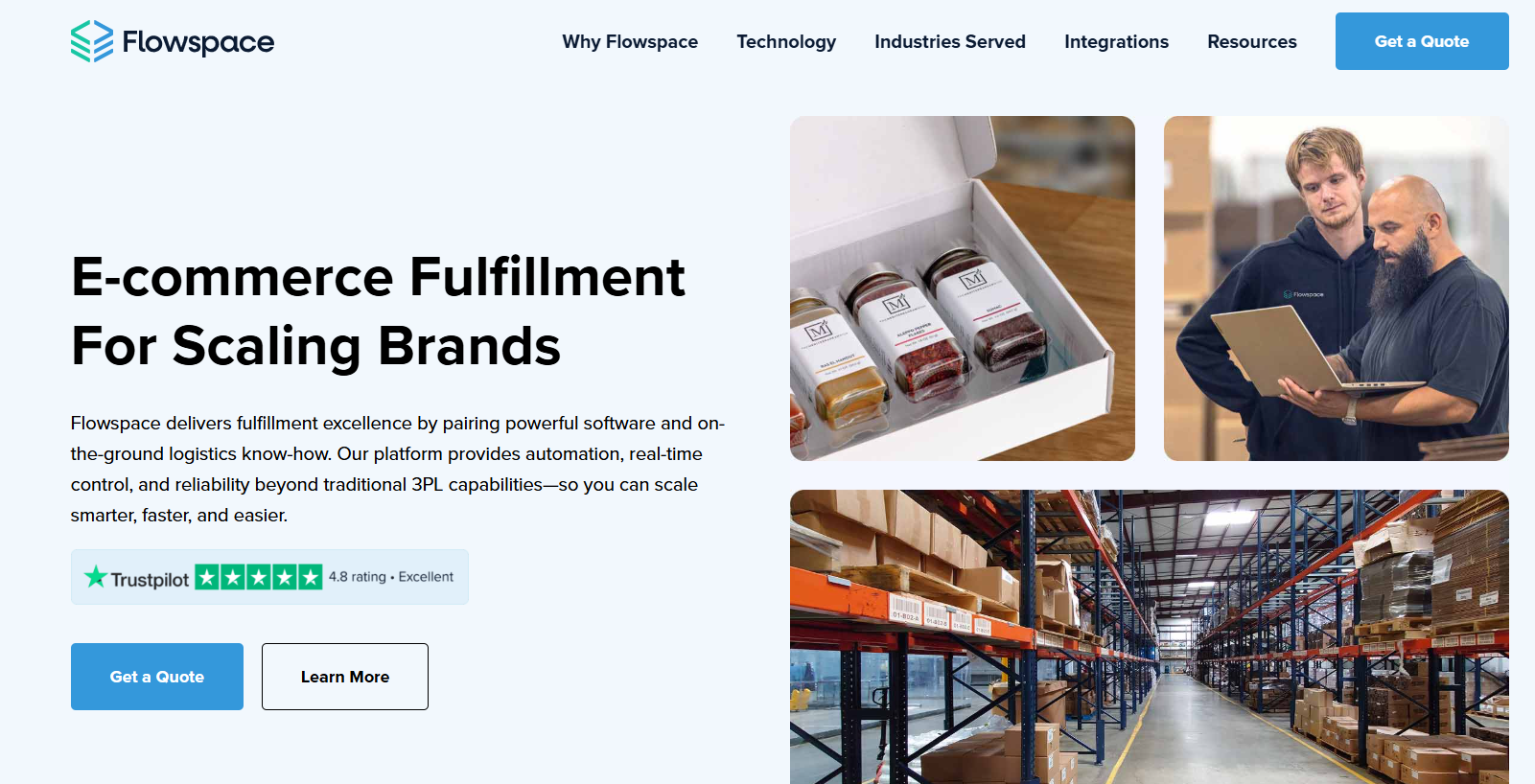
The lift-and-shift swap from ShipNetwork is Flowspace.
The fulfillment network runs roughly an order of magnitude larger than ShipNetwork's footprint, with a Shopify-native platform handling order management, inventory placement, and rate shopping under one interface.
Amenities and benefits
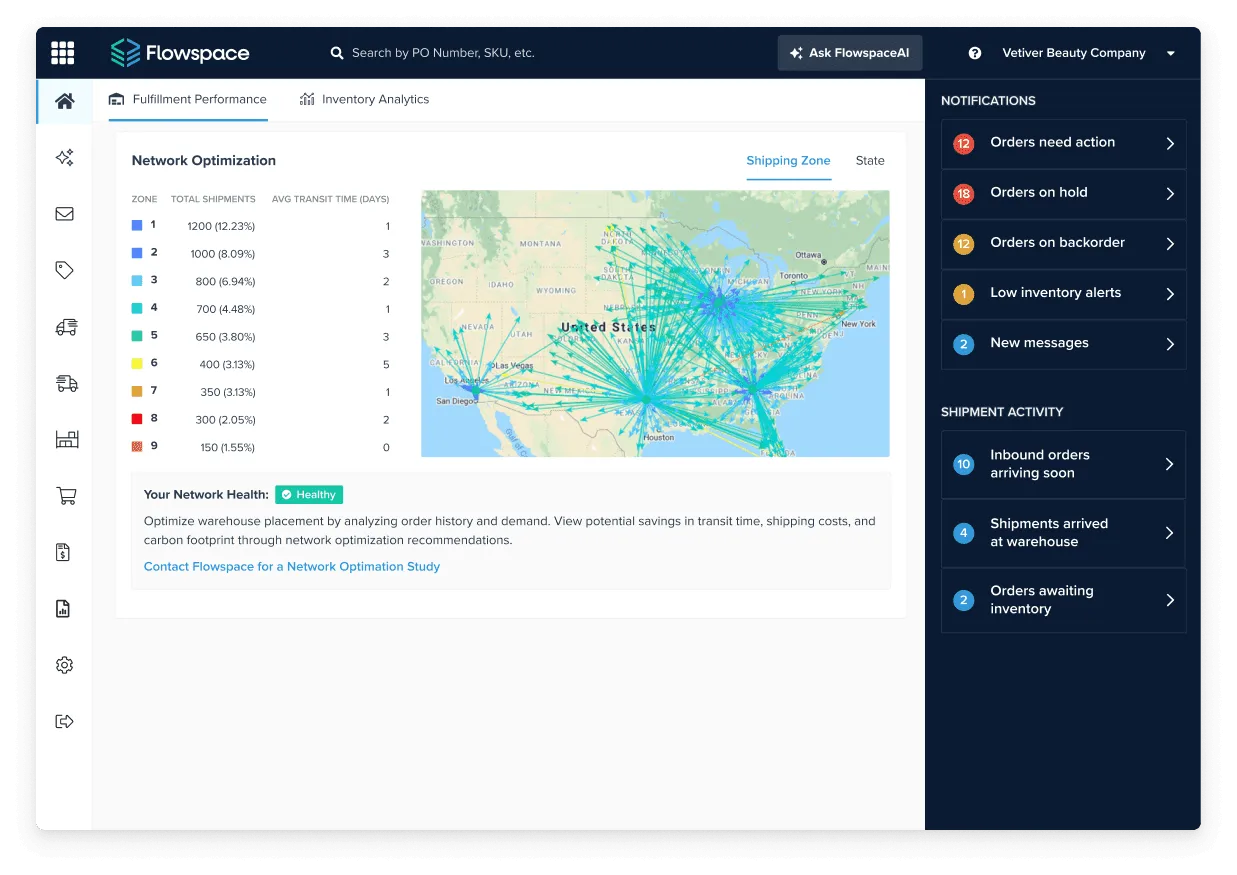
- Stock placement across the 150-center network compresses transit times to the customer.
- Warehouse capacity scales in either direction without a long-term real estate commitment.
- Fulfillment services cover picking, packing, shipping, kitting, labeling, and returns handling.
- Real-time order and inventory data appears in the dashboard across every sales channel connected.
Pricing
Flowspace pricing is custom, based on SKU count, order volume, storage needs, and fulfillment complexity.
You'll need to talk to their sales team for numbers.
Pros and cons
✅ Largest distributed fulfillment network on this list at 150+ centers.
✅ The Shopify integration is treated as a core feature, not a bolt-on.
✅ Pick, pack, and ship sit inside the offer rather than spread across vendors.
❌ Custom pricing makes comparison hard.
#2: FedEx Fulfillment
Best for: High-volume brands that want their carrier and their 3PL under the same vendor.
Locations: 3 active U.S. centers in California, Texas, and New Jersey, with two more planned in Georgia and Indiana.
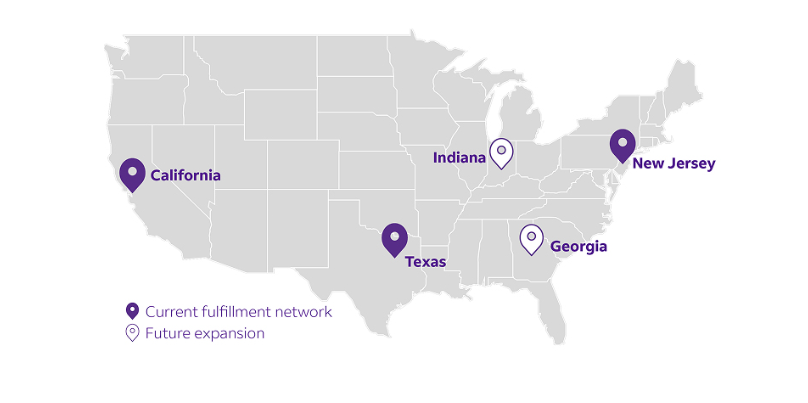
If FedEx is already your primary carrier, FedEx Fulfillment poses an obvious question: should the company storing and packing your boxes be the same one delivering them?
The model is fulfillment-meets-carrier under one roof, with inventory held in FedEx-operated centers and multi-carrier flexibility kept on top of the base shipping infrastructure.
Amenities and benefits

- Inbound stock runs through a quality control pass before entering grid storage.
- Outbound carrier choice stays per-shipment, so FedEx isn't the forced default.
- A cloud platform handles analytics and carrier confidence ratings on top of the fulfillment layer.
💡 Interested in how Flowpsace compares to FedEx Fulfillment? Check out our comprehensive Flowspace vs. FedEx Fulfillment guide.
Pricing
There's no rate card on the FedEx Fulfillment site, although you can use their site to calculate your shipping rates.
Pros and cons
✅ Decades of FedEx carrier infrastructure stand behind every outbound shipment.
✅ Order-level carrier flexibility lets you optimize for cost or speed per shipment.
✅ Strong category coverage for apparel, health and beauty, nutraceuticals, footwear, and CPG.
❌ You’re going to give up control of your inventory.
#3: Flexe
Best for: Mid-market and enterprise brands needing warehouse capacity in dozens of cities without owning any real estate.
Locations: A network of 800+ warehouse operators across North America.

Calling Flexe a 3PL undersells what it actually does.
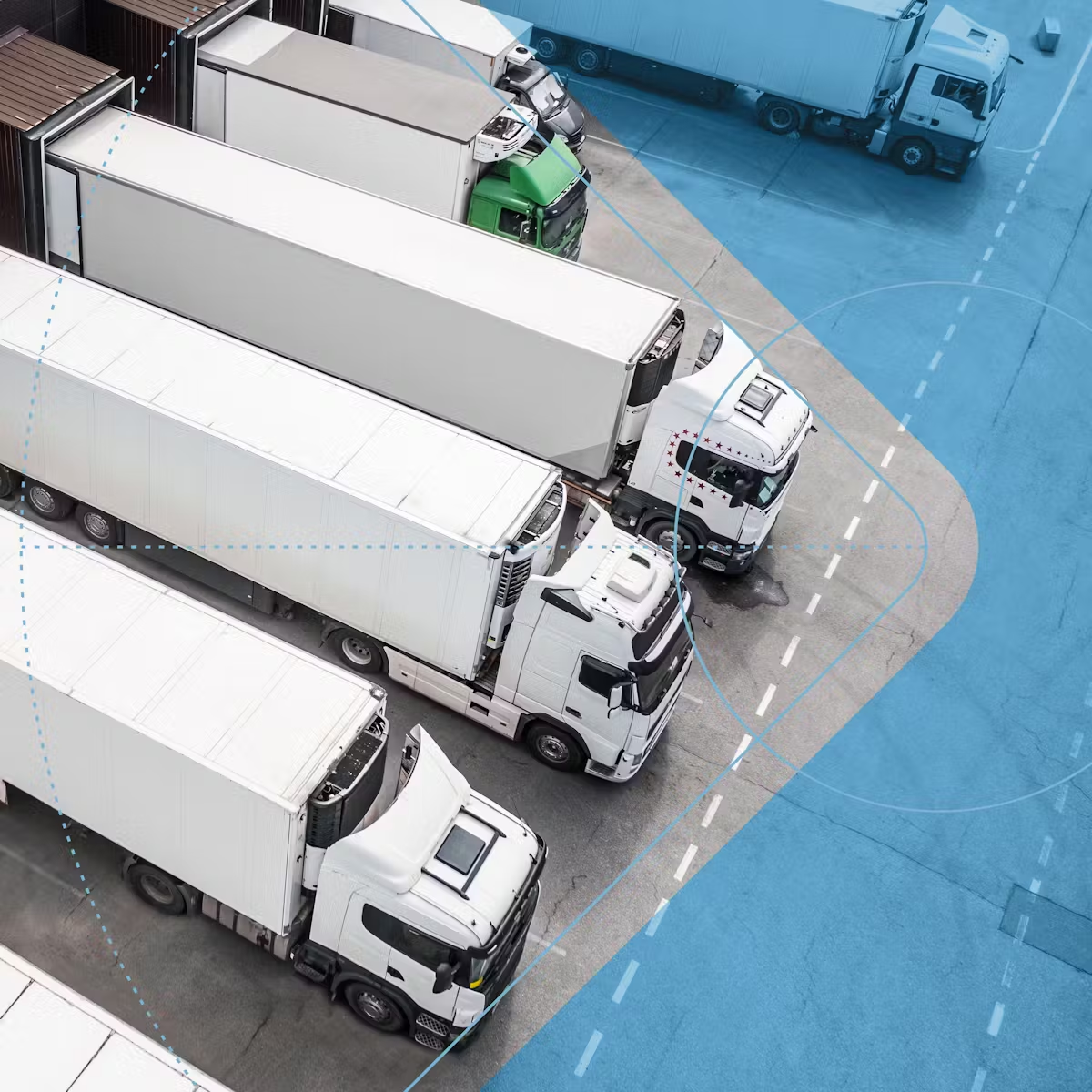
The platform sits between brands and 800+ third-party warehouse operators, handling distribution, fulfillment, and operator matching from one integration, so capacity in dozens of cities can be turned on without leasing a single building.
Amenities and benefits
- One API or EDI hookup unlocks fulfillment reach across 800+ third-party warehouses, including secondary and tertiary markets most networks skip.
- Warehouse, order, and inventory management all live inside one platform instead of three separate systems.
- Network-wide visibility into inventory, order status, and SLA performance updates in real time.
- A consulting layer sits on top of execution, helping brands map networks and match the right operators to each market.
💡 Interested in how Flowpsace compares to Flexe? You can read our Flowspace vs. Flexe guide.
Pricing
Pricing is fully custom and built per account, with the model centered on enterprise-scale agreements.
Quotes come through the Flexe sales team.
Pros and cons
✅ Reaches more cities than any other fulfillment provider in this article.
✅ One integration handles distribution and fulfillment across 800+ partners.
✅ Consulting is part of the engagement, not an add-on.
❌ Built for enterprise scale, which makes it overkill for most growth-stage DTC brands.
Take fulfillment back into your hands with Saltbox in 2026
When I really think about it, most brands looking at ShipNetwork alternatives aren't really shopping for a different 3PL.
The actual need is larger than that.
They want capacity that matches what they ship instead of what they're billed for, price visibility, and confidence that the SKU leaving the warehouse today is the one the customer ordered.
Co-warehousing answers each of those directly, and that's what Saltbox was built around.
Our co-warehousing model gives you a private suite you can walk into during operating hours, an on-site team that receives inbounds when nobody from your side is there, daily carrier pickups baked into the schedule, and Parsel for label pricing and shipping rates most early-stage brands can't reach on their own.
Five things you carry with the move:
- Shelf-level visibility into what you actually have on hand today, not a dashboard guess.
- Full control over the packaging, inserts, and unboxing that the customer sees when the box arrives.
- Monthly billing flexibility, with the option to graduate to a Warehouse plan as volume scales.
- A floor full of ecommerce founders running through the same operational decisions every week.
The shift from a 3PL to co-warehousing isn't really a vendor change. It's a shift in how much of the operation stays under your hands.
If that fits the brand, you can book a tour at any of our 12 locations.
⚠️ Disclaimer: This article was last updated on 3rd of June 2026, and if there's any misinterpretation of the information, please contact us, and we will fact-check it.
Frequently asked questions
While there may be upfront costs, switching to a co-warehousing space can reduce long-term expenses by eliminating hidden fees and rigid contracts.
Yes. The parallel-run method lets you migrate inventory and orders to a new provider while your current 3PL continues to fulfill. The key is sequencing the move by SKU, starting with slow-movers, and setting clear rules for which provider handles which orders during the overlap.
Your inventory stays at your current provider until you schedule and execute the move. You'll typically arrange freight pickups or coordinate carrier transfers for existing stock, while routing new supplier inbounds directly to your new location. A full inventory audit before the move is essential to catch discrepancies before they become your new provider's problem.
Traditional 3PLs often come with long-term contracts, rigid pricing structures, and space commitments that don't flex with actual order volume. Brands that outgrow or underlevel their 3PL agreement frequently end up paying for capacity they don't need.
For Her
For Him
For Pets
For Anyone



Related posts
Learn from businesses improving their operational efficiency. Explore how Saltbox’s expert support and flexible spaces drive their growth.


10 best 3PL companies in Atlanta, GA (2026)
Ten Atlanta 3PL providers compared on buildings and certifications, plus the case for keeping fulfillment in a suite you control.
10 best 3PL companies in Tempe, AZ (2026)
Ten 3PL providers serving Tempe, what each one is built to handle, and the case for keeping your pallets somewhere you can walk in.
Chamblee vs. Doraville vs. Norcross vs. Tucker: choosing warehouse space on Atlanta's northeast side
See how the four districts stack up on access, cost, labor, and building stock, and where Saltbox fits.
Related terms
Learn from businesses improving their operational efficiency. Explore how Saltbox’s expert support and flexible spaces drive their growth.