.webp)


Key takeaways
- Most D2C brands hit a fulfillment ceiling between 30 and 50 orders a day. Pick accuracy slips, carrier cutoffs get missed, and a residential address starts blocking wholesale conversations. Moving past the garage isn’t a logistics decision. It’s a margin and credibility decision that shapes the next two to three years of growth.
- Traditional 3PLs solve your infrastructure problem and hand you a worse one: lost control. Per-order fees of $3 to $8 plus unpredictable storage and handling surcharges eat your margin, while outsourced packing strips away the unboxing moment your brand actually competes on. Self-fulfillment with the right space keeps both your control and your unit economics intact.
- Loading docks, enterprise-grade equipment, and daily carrier pickups quietly decide your shipping cost and speed. A single liftgate fee adds $75 to $150 per pallet, and a late carrier pickup pushes every order to the next day. The right equipment and on-time cutoffs can save you thousands a month at modest order volumes.
- Fractional warehousing keeps your control while offloading the infrastructure. Saltbox’s month-to-month suites across 12+ locations give you dedicated space with shared docks, carriers, and on-site teams. Brands at 50 to 200 orders a day get professional infrastructure without a five-year industrial lease, and they can flex their suite up or down with seasonal demand.
Every direct-to-consumer brand hits a moment where the current setup stops working. Your living room is stacked with inventory, your carrier pickups are inconsistent, or you’re losing orders to packing errors during a launch. The decision you make at this point shapes your margins, your customer experience, and your ability to grow for the next two to three years. So if you want to scale order fulfillment without lighting your margins on fire, the model you choose matters more than almost anything else you’ll do this year.
I work with product-based founders every day who hit this exact wall, and I’ll show you the seven paths brands actually take to scale order fulfillment.
Here’s what you’ll learn: the seven most common ways D2C brands scale fulfillment, what each one costs you in money and control, and how to spot the moment you’ve outgrown your current setup. The North American ecommerce fulfillment market is projected to reach $38.7 billion by 2026, which tells you how central this has become to whether a brand makes it. Fulfillment isn’t a back-office concern. It’s the operational core of your business, and getting it right is the difference between a launch that builds your brand and one that buries it in refund requests.
1. Know the exact moment you’ve outgrown your garage

The first way to scale order fulfillment is to recognize when your current model has hit its ceiling, and to act before it costs you customers. Most brands start scrappy: the founder packs each box, writes a thank-you note, and drops everything at the post office. At five or ten orders a day, that’s ideal. It builds deep product knowledge and an intuitive feel for what buyers expect.
The problem is the hard ceiling. Once you cross 30 to 50 daily orders, the cracks show. Watch for these signals:
- Packing errors climb, and so do returns and refunds.
- You’re missing carrier cutoff times more than once a week.
- Inventory has taken over living space, and stock is capped by how much your home can hold.
- A residential address on invoices is costing you credibility with wholesale accounts and manufacturers.
Home-based operations also hide their true cost. For a brand shipping 50 orders a day, even a 15-minute inefficiency per order adds up to hours of lost productivity daily. The drive to the post office, the reorganizing, the troubleshooting: it all has a dollar value you’re not putting on the books.
2. Consolidate fragmented logistics under one roof
The second way to scale is to stop solving each problem separately. The instinct is to rent a storage unit for overflow, grab a co-working desk for meetings, and contract a shipping service on the side. That fragmented approach creates its own headaches: you’re driving between locations, juggling vendor relationships, and losing visibility into your own supply chain.
A better move is to consolidate. Find one location where you can receive inventory, store it, pack orders, and hand them to carriers. You don’t have to do it overnight. Start by mapping your workflow and naming your three biggest bottlenecks. For most brands in the 50-to-200-orders-a-day range, those are receiving, storage capacity, and carrier access.
The goal is integrated infrastructure: a single location with dedicated space, professional equipment, and built-in operational support. That’s the foundation that lets you shift from putting out daily fires to building a brand that grows for years. It’s the difference between space and an entire ecosystem built under one roof.
3. Keep self-fulfillment, but on flexible warehouse space
Self-fulfillment means your team picks, packs, and ships every order, and you keep full control of the customer experience. For brands that win on a distinctive unboxing moment, or that handle products needing light assembly or quality checks, that control isn’t optional. It’s a competitive advantage.
The catch has always been the infrastructure. A traditional industrial lease in a major metro locks you into three to five years, often with triple-net structures that pile property taxes, insurance, and maintenance on top of base rent. Industrial vacancy rates in major markets remain tight, so landlords have little reason to offer short-term or flexible terms. Before you ship a single order, you’re looking at a heavy build-out bill for racking, climate control, and setup.
Flexible warehouse space changes the math. Saltbox, for example, offers month-to-month warehouse suites built for ecommerce operators. You get dedicated space with loading dock access, enterprise-grade equipment, and daily carrier pickups, without committing to a multi-year lease. It fits brands in the 50-to-200-orders-a-day range that need professional infrastructure but can’t justify the capital outlay of a traditional warehouse.
4. Decide whether a 3PL is worth the loss of control
A traditional 3PL solves your infrastructure problem and hands you a different one: you give up your inventory and your customer experience to a third party. The real question isn’t price. It’s control, visibility, and flexibility.
When a 3PL packs your orders, you lose the ability to customize the unboxing experience on the fly. Seasonal inserts, handwritten notes, and product-specific packaging turn into change orders that cost extra and take time. Research on consumer behavior shows branded packaging influences repeat purchase decisions and social sharing, so if your brand differentiates on the moment a buyer opens the box, outsourcing that to a warehouse you’ve never walked through is a real risk.
Visibility is the other gap. With most 3PLs, a question goes into a ticket queue and comes back in six to eight business days. Compare that to a setup where you have a dedicated Slack channel and talk to the operator directly, not customer service, with same-day responses. That’s the difference between your workflow with your product and someone else’s workflow with your product.
Three words should anchor this decision:
- Control – your packing quality, your inserts, your unboxing, every time.
- Visibility – a direct line to a person, not a ticket number.
- Flexibility – no order minimums, no penalties for a slow month.

Thinking about leaving your 3PL?
Get the 3PL exit checklist: the step-by-step list our members use to move fulfillment in-house without dropping a single order.
Download the checklist5. Use fractional warehousing with on-site operational support
Fractional warehousing sits between self-fulfillment and full 3PL outsourcing, and for a lot of brands it’s the smartest way to scale. You get dedicated space inside a larger facility, with shared access to loading docks, packing stations, and carrier services. Your team does the work; the facility provides the tools and the people.
This model is gaining ground with D2C brands because it solves the cost problem without sacrificing control. You’re not paying for an entire warehouse. You’re paying for the square footage you need, with the option to scale up or down as demand shifts. Saltbox pairs these warehouse suites with on-site teams who handle receiving, inventory management, and optional pick-and-pack through Saltbox Fulfillment. You keep brand control over packing while offloading the infrastructure headaches.
For brands under 50 orders a day, fractional warehousing is a professional upgrade from the garage without full-warehouse overhead. For those past 200 a day, it’s the flexibility to add space at peak and contract when things slow down. Saltbox was recognized as one of Fast Company’s Most Innovative Companies in 2022, and the model has only sharpened since.
When surge hits and you need extra hands, Saltbox Operations Support gives you labor on demand for tasks like kitting and inventory counts, without hiring a permanent crew.
6. Build workflows that cut errors and per-order cost
Once you have the right space, the next way to scale order fulfillment is workflow design. The difference between a brand that ships 100 orders a day with two people and one that needs four for the same volume comes down to how the work is built, not how hard anyone’s trying.
Lean on loading docks and enterprise-grade equipment
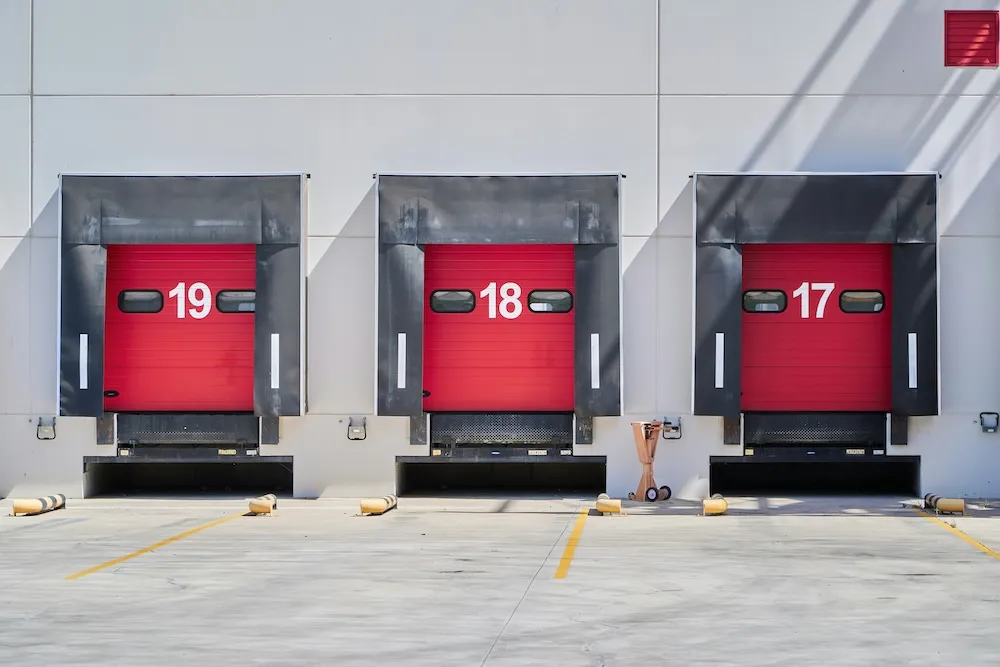
Loading dock access is one of the most underrated factors in choosing a space. Without a dock, every pallet delivery needs a liftgate, and those fees stack up fast. A dock also speeds receiving: a pallet jack moves 2,000 pounds from truck to shelf in minutes, versus the hour-plus it takes to hand-unload boxes in a driveway.
Equipment goes beyond the dock. Industrial shelving lets you organize by SKU velocity, fast movers at arm height. Commercial scales keep shipping weights accurate and head off carrier surcharges. Thermal label printers kill the jamming and waste of inkjet labels. Each tool shaves seconds off every order, and at scale, seconds compound into hours.
Set a pick accuracy target of 99.5% and track it weekly. Post “perfect pack” photos at every station so your team has a visual reference for how each product should be boxed. Small standards like these prevent the errors that turn into returns, refunds, and bad reviews.
Streamline carrier pickups and rate shopping
Your carrier strategy drives both cost and speed. A brand shipping from Dallas to a customer in New York crosses five or six zones, which means higher rates and longer transit than a brand shipping from New Jersey. If a big share of your buyers sit on the East Coast, positioning inventory closer to them can cut shipping cost meaningfully.
Daily carrier pickups from all major carriers are non-negotiable for any serious operation. Late pickups mean delayed shipments, which mean unhappy buyers. The best facilities offer pickup windows that run into the evening, giving you more hours to process orders.
Ecommerce shipping volumes have grown year over year, and carriers are increasingly willing to offer competitive rates to facilities with consistent daily volume. Rate shopping across carriers for each shipment is another easy win: a two-zone package might be cheapest via USPS, while a heavy cross-country box is better on UPS Ground.

Walk a Saltbox before you decide
The fastest way to know if flexible warehouse space fits your brand is to see the dock, the suites, and the on-site team for yourself.
Book a tour at Saltbox7. Future-proof with month-to-month flexibility
The last way to scale order fulfillment is to refuse to lock yourself into infrastructure you can’t adjust. The one constant in ecommerce is change. A viral launch can triple your volume overnight. A supply chain disruption can leave you with six months of inventory and nowhere to put it. Your January needs look nothing like your November ones.
Rigid infrastructure can’t absorb those swings. A five-year lease doesn’t care that Q1 sales dropped 40%. A 3PL contract with minimum volume commitments penalizes you for a slow month. The brands that thrive through volatility are the ones whose fulfillment flexes with demand.
Month-to-month memberships at co-warehousing facilities give you that flex. Scale from a small suite to a larger one as volume grows, or contract during off-peak months without breaking a lease. Daily carrier pickups, dock access, and on-site support stay constant no matter your suite size. This aligns your fulfillment cost with your revenue, protecting margins when things are slow and giving you room to expand when they’re not.
Whether you’re shipping 20 orders a day or 200, the principles hold: control your packing quality, minimize your per-order cost, and never lock yourself into infrastructure you can’t change. If you’re ready to move beyond the garage and see what a purpose-built ecommerce fulfillment space looks like, book a tour at a Saltbox location near you. Walking a facility and talking to the on-site team will give you a clear picture of your next operational chapter.
Frequently asked questions
Most brands hit the ceiling between 30 and 50 orders a day. The clearest signals are rising packing errors, missed carrier cutoffs, and inventory crowding out your living space. If those are showing up weekly, it’s time to scale order fulfillment into a dedicated space.
A 3PL takes your inventory and packs your orders for you, so you trade control for convenience. Fractional warehousing gives you dedicated space and shared infrastructure inside a larger facility while your team keeps doing the packing. You hold onto brand control and still offload the heavy infrastructure costs.
Not if you keep control of the packing. With self-fulfillment or fractional warehousing, your team handles the inserts, tissue paper, and product-specific packaging. With Saltbox Fulfillment, you set the packing standards the on-site team follows, so the unboxing stays yours.
Use flexible, month-to-month warehouse space instead of a traditional industrial lease. You get dock access, enterprise-grade equipment, and daily carrier pickups without committing to three to five years, and you can size up or down as your volume shifts.
It varies by model. Self-fulfillment carries build-out and equipment costs; 3PLs charge per order plus storage and handling fees; flexible warehouse space is a monthly membership sized to the square footage you need. The right answer depends on your order volume and how much control you want over the customer experience.