


Key takeaways
- Fulfillment determines D2C margins more than marketing does. Poor shipping operations leak $3 to $8 per order through wrong-zone shipments, packaging waste, and pick errors. At 1,000 monthly orders, that adds up to $3,000 to $8,000 in avoidable cost every month, plus retention damage from the over 60% of shoppers who expect three-day delivery and abandon longer windows.
- Your physical space is the real foundation, not your software. A dedicated 500 to 2,000 square foot fulfillment area with loading dock access, daily carrier pickups, and room to grow outperforms any home setup, no matter how disciplined the founder. Traditional industrial leases lock founders into long terms and heavy buildouts. Co-warehousing models like Saltbox give you a private suite on month-to-month terms with built-in carrier pickups across UPS, FedEx, USPS, and Amazon.
- Three fulfillment models cover almost every D2C brand: in-house, 3PL, and hybrid. In-house ($3 to $7 per order) protects your unboxing experience. 3PLs ($5 to $12 per order) trade control for capacity. Hybrid is where most $1M to $20M D2C brands land: in-house for high-value or branded orders, outsourced for standard replenishment. Match the model to your volume, SKU complexity, and how much control you need over the customer experience.
- Distributed inventory is the single biggest cost lever most D2C brands ignore. Shipping from one location across four or five zones costs $3 to $8 more per package than shipping locally and adds three to four days to delivery. Brands that move from one fulfillment center to two cut average shipping costs 15% to 25%. A third location can push savings past 30%. Pull 90 days of order data, look for metro clusters, and place inventory close to where 80% of orders are landing.
You built a product people want. Your website converts. Orders are coming in. And now you are staring at a growing pile of inventory in your living room, wondering how professional brands actually get packages out the door on time, every single day.
Fulfillment is where most direct-to-consumer brands either build a real operational foundation or start bleeding money through inefficiency. The gap between a brand shipping 20 orders a day from a spare bedroom and one shipping 200 from a proper setup is not just volume. It is systems, space, and strategy.
This guide is written for founders who are past the scrappy startup phase but not yet running a warehouse with a forklift and a staff of 15. If you are somewhere between "I need to stop packing orders on my kitchen table" and "I need a national distribution network," these proven order fulfillment strategies for D2C brands will give you a clear framework for what to do next and when to do it.
Why fulfillment deserves your attention before marketing does
Most ecommerce founders pour energy into customer acquisition. Paid ads, influencer partnerships, email campaigns: the growth playbook is well documented. But fulfillment is where your margins live. A poorly run shipping operation can cost you $3 to $8 extra per order in wasted zone shipping, incorrect packaging, or returns caused by picking errors. Across 1,000 monthly orders, that is $3,000 to $8,000 in avoidable cost.
Customer retention also ties directly to the delivery experience. Over 60% of online shoppers expect delivery within three days. A significant portion will abandon their cart entirely if the estimated window exceeds five days. Your fulfillment setup determines whether you can meet those expectations profitably or whether you are paying premium rates for expedited shipping just to keep up.
The decisions you make about where to store inventory, who picks and packs your orders, and how you route shipments will shape your unit economics for years. Getting these right early prevents expensive course corrections later.
Start with your space: the physical foundation of fulfillment
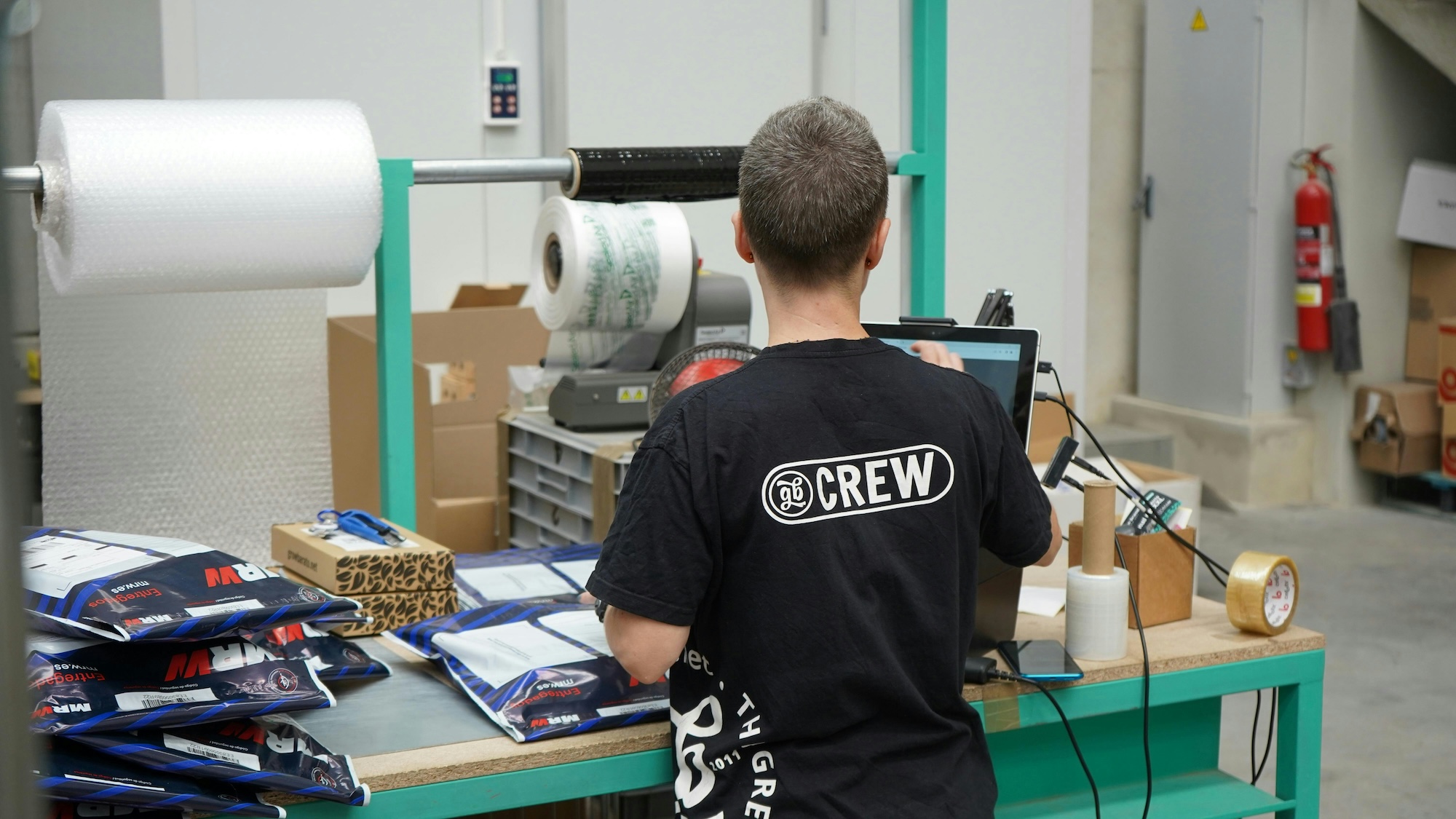
Before you think about logistics software or carrier negotiations, you need a space that works. A dedicated fulfillment area is not a luxury: it is the minimum requirement for consistent, accurate shipping.
Many growing brands operate effectively from spaces between 500 and 2,000 square feet. Vertical shelving, labeled bin systems, and a clear workflow from receiving to packing to outbound staging can produce surprising throughput from a modest footprint. The key is that the space must be designed for ecommerce operations. A cramped garage with no loading access and poor lighting will cap your daily output regardless of how hard you work.
What to look for in a fulfillment space
Your space needs a few non-negotiable features:
- Loading dock or ground-level access for receiving pallets and bulk inventory
- Daily carrier pickups so you are not making trips to the post office
- Climate control appropriate for your product category
- Room to grow without signing a five-year industrial lease
Traditional warehouse leases lock you into long commitments and require significant upfront investment: buildouts, utility deposits, insurance, equipment. For a brand doing $500K to $5M in annual revenue, that financial exposure can be dangerous.
Co-warehousing is a model worth understanding here. Saltbox, for example, provides dedicated warehouse suites on month-to-month terms with loading docks, daily pickups from UPS, FedEx, USPS, and Amazon, and on-site staff who handle receiving and inventory support. With 11 locations across nine major U.S. markets and over 1,000 active members, it is built specifically for product-based businesses that have outgrown home operations but are not ready for a traditional warehouse commitment. The flexibility to scale your space up or down as your business changes removes one of the biggest financial risks in early-stage fulfillment.
The three fulfillment models every founder should understand
There is no single correct way to fulfill orders. Your choice depends on your volume, your product complexity, and how much control you need over the customer experience. Here are the three primary models.
Model 1: In-house fulfillment
You rent or own a space. Your team picks, packs, and ships every order. You control every detail of the unboxing experience.
Best for: Brands with custom packaging, subscription boxes, high-value items, or products requiring quality inspection before shipping. Also ideal for founders who want hands-on visibility into their operations.
Typical cost: $3 to $7 per order, including labor, materials, and space. This assumes you have an efficient layout and trained staff. Costs rise quickly if your process is disorganized.
The trade-off: You own all the complexity. Hiring, training, managing inventory, negotiating carrier rates, handling returns: it all falls on your team.
Model 2: Outsourced fulfillment (3PL)
A third-party logistics provider stores your inventory, picks and packs orders, and ships them on your behalf. You send them product; they handle the rest.
Best for: Brands with straightforward packaging, high volume, and standard SKUs. Also useful if you want to focus entirely on product development and marketing.
Typical cost: $5 to $12 per order, depending on SKU complexity, packaging requirements, and the 3PL's pricing structure. Most charge separately for storage, pick and pack, and shipping.
The trade-off: You lose direct control over the unboxing experience. Incorrect inserts, sloppy packaging, or generic boxes can erode the brand identity you have built. Vetting a 3PL thoroughly before signing is essential.
Model 3: Hybrid fulfillment
You handle certain orders or processes in-house and route others to an external partner. This is the model gaining the most traction among D2C brands in the $1M to $20M revenue range.
Best for: Brands that want to protect their unboxing experience on high-value or subscription orders while offloading standard replenishment shipments to a partner.
Typical cost: A blend of in-house and outsourced rates. You might spend $4 per order on the items you pack yourself and $8 per order on those handled externally.
The trade-off: More operational complexity than either pure model. You need systems that can route orders intelligently based on rules you define: order value, destination, product type, or available inventory.
The hybrid approach is where most successful D2C brands land as they grow. It preserves brand control during the moments that matter most while giving you the capacity to handle volume spikes and geographic expansion.
Distributed inventory: the single biggest cost lever you are probably ignoring
If you ship every order from one location, your shipping costs are determined by how far each package travels. A package shipped from Dallas to New York crosses four or five USPS/UPS zones. That same package shipped from a facility in New Jersey crosses one zone. The cost difference per package ranges from $3 to $8. The transit time drops from four or five days to one or two.
This is the core argument for distributed inventory: storing products in multiple locations closer to your customers. It is the most direct way to reduce shipping costs and speed up delivery without paying for express service on every order.
How to know if you are ready for distributed inventory
Pull your last 90 days of order data. Export it by destination zip code and look for clusters. Most D2C brands find that their orders concentrate in three to five metro regions. If 80% or more of your orders ship to areas far from your single fulfillment location, you are paying a geographic penalty on nearly every package.
A brand selling apparel might discover that 35% of orders go to the Northeast, 25% to California, and 20% to the Southeast. A three-location setup with facilities in New Jersey, Southern California, and Georgia would cover the vast majority of that volume at lower zone rates.
The financial impact
Brands that move from one fulfillment center to two typically reduce average shipping costs by 15% to 25%. A third location can push savings to 30% or more, though each additional node delivers diminishing returns. You also need to account for the cost of maintaining inventory in multiple places: storage fees, inbound freight, and the technology to manage stock across locations.
For brands testing this approach without heavy upfront commitment, a co-warehousing network offers a practical entry point. Saltbox's footprint across nine U.S. markets means you could maintain your primary picking operation at one location while using another for regional fulfillment, all on flexible terms. This lets you validate a multi-node strategy with real data before committing to permanent infrastructure in a new market.
Demand planning: stop guessing where to put your inventory
Distributed inventory only works if you put the right products in the right locations at the right time. Static allocation, splitting inventory evenly across locations regardless of demand, leads to stockouts where you need product and excess where you do not.
Start with a simple monthly review. Look at sales velocity by location. If your West Coast node sells through inventory 40% faster than your East Coast node, adjust your next inbound shipment to reflect that. This single habit prevents most of the common inventory imbalance problems.
Tools that help
Several affordable platforms serve mid-market D2C brands:
- Inventory Planner (starting around $249/month) integrates with Shopify and provides demand forecasting by location
- Flieber offers multi-channel, multi-warehouse demand planning with automated reorder recommendations
- A well-structured spreadsheet model can work for brands with fewer than five SKUs and two locations, though it requires discipline to maintain
Build a two-week safety stock buffer at each location based on average daily sales velocity. Set automated alerts when any SKU at any node drops below that threshold. This gives you enough lead time to transfer inventory between locations before a stockout occurs.
The cost of getting this wrong is real. Excess inventory in a slow location ties up cash and racks up storage fees. Stockouts in a high-demand location force shipments from a farther node, which erases the cost and speed benefits you set up distributed fulfillment to capture.
The unboxing experience: your most underrated retention tool
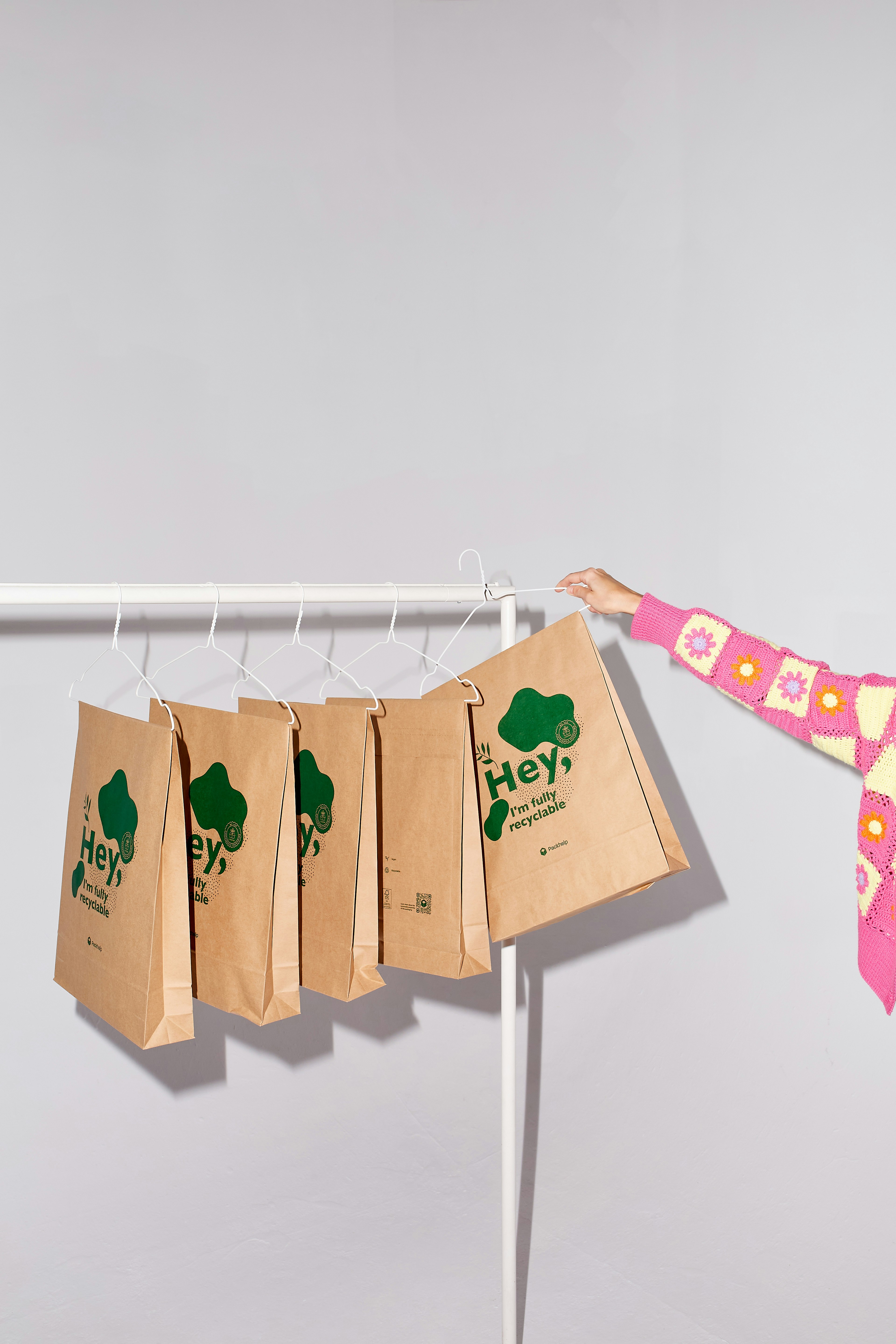
The moment a customer opens your package is one of the only physical touchpoints your brand controls. Every other interaction, your website, your emails, your social media, is digital. The box is tangible. It creates an impression that sticks.
This is one of the strongest arguments for keeping at least some of your fulfillment in-house, especially for high-value orders. When a third party packs your orders, you introduce variables you cannot fully control: incorrect inserts, inconsistent tissue paper placement, a generic brown box where your branded packaging should be.
Building a repeatable packing process
Create a standard operating procedure for every SKU. Document the packaging materials, insert placement, tape style, and any quality checkpoints. Photograph the "perfect pack" for each product and post those images at your packing stations.
Track your pick accuracy rate weekly. The target is 99.5% or higher. Even a 1% error rate means 10 incorrect orders per 1,000 shipments. Each one is a potential negative review, a customer service ticket, and a return that costs you twice: the original shipping plus the return processing.
Train every team member on the same standard. Consistency matters more than speed in the early stages. A beautifully packed order that arrives correctly builds the kind of trust that turns a first-time buyer into a repeat customer.
4PL networks: an orchestration layer for growing brands
A fourth-party logistics provider acts as a coordination layer between your brand and multiple 3PL warehouses. Instead of managing separate relationships with fulfillment centers in different regions, you work with one 4PL that handles inventory placement, order routing, and performance monitoring across its network.
This model makes sense for brands experiencing rapid geographic growth. If your customer data shows rising demand in the Southeast but your warehouse is in Los Angeles, a 4PL can place inventory in an Atlanta-area fulfillment center and route regional orders accordingly. You avoid the capital expense of opening your own facility in a new market.
4PL pricing typically includes a coordination fee of $0.50 to $2.00 per order on top of the underlying 3PL costs. Total per-order costs through a 4PL network usually range from $6 to $15, depending on order complexity and shipping zones. The premium buys you national reach without building your own infrastructure.
When evaluating 4PL partners, focus on technology integration. Your order management system must communicate in real time with every node in the network. Delays in inventory data or order routing cause overselling, split shipments, and frustrated customers. The best 4PL relationships function as an extension of your operations team, not a disconnected vendor you check in with monthly.
Picking the right strategy for your stage
The fulfillment strategies for D2C brands outlined here are not a checklist to complete all at once. They are options that match different stages of growth.
Shipping fewer than 50 orders per day? Focus on getting your in-house operation right. Find a proper space, build your SOPs, and nail your unboxing experience. This is your foundation.
Shipping 50 to 200 orders per day? Start analyzing your order data for geographic patterns. Consider a hybrid model where you handle high-touch orders yourself and route standard shipments to a partner or second location.
Shipping 200+ orders per day? Distributed inventory and multi-node fulfillment become financially compelling. Evaluate 4PL networks or co-warehousing options that give you regional presence without long-term lease risk.
The common thread across every stage is intentionality. Fulfillment decisions made by default, shipping everything from one location because that is where you started, cost you money every single day. Fulfillment decisions made with data behind them compound into a real competitive advantage.
Your next step
The best time to fix your fulfillment is before it breaks. If you are packing orders from home, running out of space, or watching your shipping costs climb, a dedicated warehouse suite with built-in logistics support might be the right move. Book a tour at any of Saltbox's 11 locations to see how a space designed for ecommerce operations can change the way you ship.
Frequently asked questions
In-house fulfillment typically runs $3 to $7 per order, including labor, materials, and space, assuming an efficient layout and trained staff. 3PL fulfillment runs $5 to $12 per order depending on SKU complexity, packaging requirements, and the provider's pricing structure. Most 3PLs bill storage, pick and pack, and shipping separately. Hybrid models blend both: roughly $4 per order for items packed in-house and $8 for those handled by a partner. The right choice depends less on price and more on whether you need direct control of the unboxing experience.
Pull your last 90 days of order data and export it by destination zip code. If 80% or more of your orders ship to areas far from your single fulfillment location, you are paying a geographic shipping penalty on nearly every package. Most D2C brands find their orders concentrate in three to five metro regions. Once you cross that threshold, a two or three-node setup typically pays for itself. Brands that move from one fulfillment center to two cut average shipping costs 15% to 25%, with a third location pushing savings past 30%.
At minimum: a loading dock or ground-level access for receiving pallets, daily carrier pickups so you are not driving to the post office, climate control appropriate for your product category, and room to scale up or down without signing a five-year industrial lease. A 500 to 2,000 square foot space with vertical shelving, labeled bin systems, and a clear receiving-to-packing-to-outbound workflow can support surprising throughput. Co-warehousing networks like Saltbox bundle these features into private warehouse suites on month-to-month terms, with on-site logistics staff who handle inbound receiving.
A fourth-party logistics provider (4PL) acts as a coordination layer between your brand and multiple 3PL warehouses. Instead of managing separate relationships in different regions, you work with one 4PL that handles inventory placement, order routing, and performance monitoring across its network. 4PL pricing typically adds a $0.50 to $2.00 per-order coordination fee on top of underlying 3PL costs, putting total per-order spend in the $6 to $15 range. It makes sense for brands experiencing rapid geographic growth where opening your own facility in a new market is too capital-intensive.
Track pick accuracy rate weekly. The target is 99.5% or higher. Even a 1% error rate translates to 10 incorrect orders per 1,000 shipments, each one a potential negative review, a customer service ticket, and a double-cost return. Other indicators worth tracking: cost per order versus your modeled rate, percentage of shipments going beyond Zone 4, on-time shipping rate against your SLA, and inventory turn by location. Document a standard operating procedure for every SKU and post a "perfect pack" photo at each packing station to keep accuracy consistent across team members.
Inventory Planner (starting around $249 per month) integrates with Shopify and forecasts demand by location. Flieber offers multi-channel, multi-warehouse demand planning with automated reorder recommendations. For brands with fewer than five SKUs and two locations, a well-structured spreadsheet can work, though it requires discipline. Whatever tool you use, build a two-week safety stock buffer at each location based on average daily sales velocity and set automated alerts when any SKU drops below that threshold. That lead time lets you transfer inventory between nodes before a stockout hits.
For Her
For Him
For Pets
For Anyone




Related posts
Learn from businesses improving their operational efficiency. Explore how Saltbox’s expert support and flexible spaces drive their growth.


2026 peak season shipping surcharges: what FedEx, UPS, USPS, and Amazon are charging
Additional handling went up about 6%. The fee on every single order went up 25%. Here’s the full 2026 surcharge picture, and what it costs you per order.
10 best 3PL companies in Atlanta, GA (2026)
Ten Atlanta 3PL providers compared on buildings and certifications, plus the case for keeping fulfillment in a suite you control.
10 best 3PL companies in Tempe, AZ (2026)
Ten 3PL providers serving Tempe, what each one is built to handle, and the case for keeping your pallets somewhere you can walk in.
Related terms
Learn from businesses improving their operational efficiency. Explore how Saltbox’s expert support and flexible spaces drive their growth.