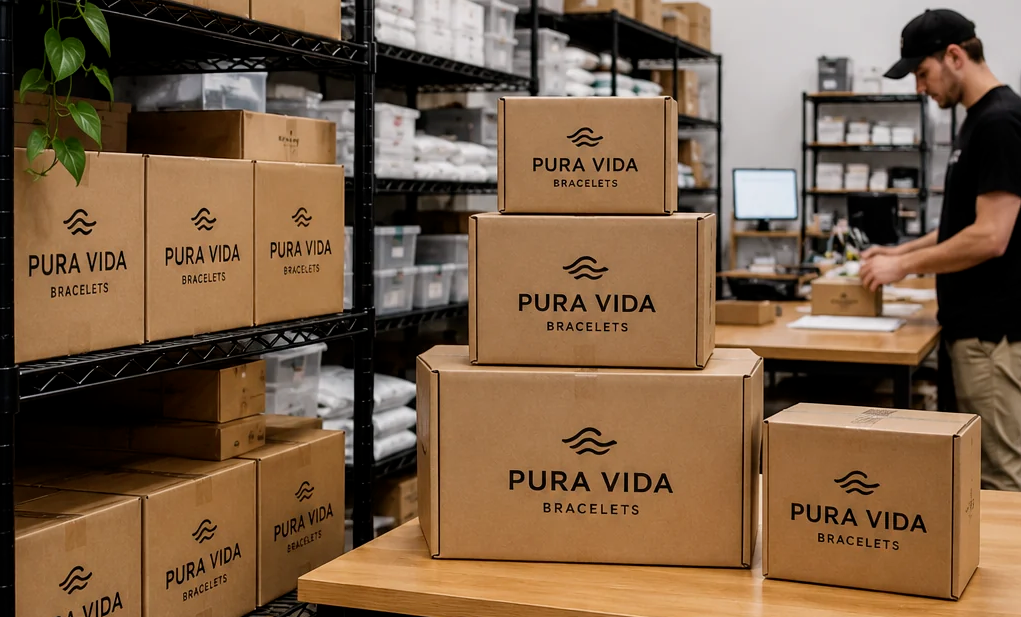



Key takeaways
- Setting up a warehouse successfully starts with defining your order volume, inventory profile, and staffing needs before committing to a space.
- Brands that design their warehouses around workflow rather than inventory levels scale faster, with less disruption and fewer costly bottlenecks.
- Building for scalability from day one through flexible leasing and right-sized space is what separates brands that scale smoothly from those that outgrow their operations too quickly.
Every year, we work closely with hundreds of members to design warehouse spaces built to run efficiently from day one.
As an ecommerce brand, you typically have to consider whether DIY fulfillment from home can sustain your business. For most online sellers, there’s a moment when order volume increases to the point that operations out of the garage become inefficient and the ability to meet customer expectations disappears.
The move to a warehouse environment can feel daunting, especially if it’s your first time operating an ecommerce company. However, there are many options available, such as co-warehousing models and small-bay spaces, that can make the move more manageable.
Ultimately, successfully setting up a warehouse comes down to systems, layout, and workflow. Brands that get the setup right from the start spend less time fixing operational problems and more time focused on growth.
In the following guide, we’ll walk you through, step by step, how to set up a warehouse to fuel growth for your ecommerce brand.
How do you set up a warehouse?
In order to set up a warehouse, first you must understand your needs before you can build a system that grows with your business. In between, you’ll do the following:
- Choose space and layout
- Organize inventory and workflows
- Set up processes for packing, shipping, and fulfillment
- Stress-test your setup for common mistakes
Step 1: Define your warehouse needs
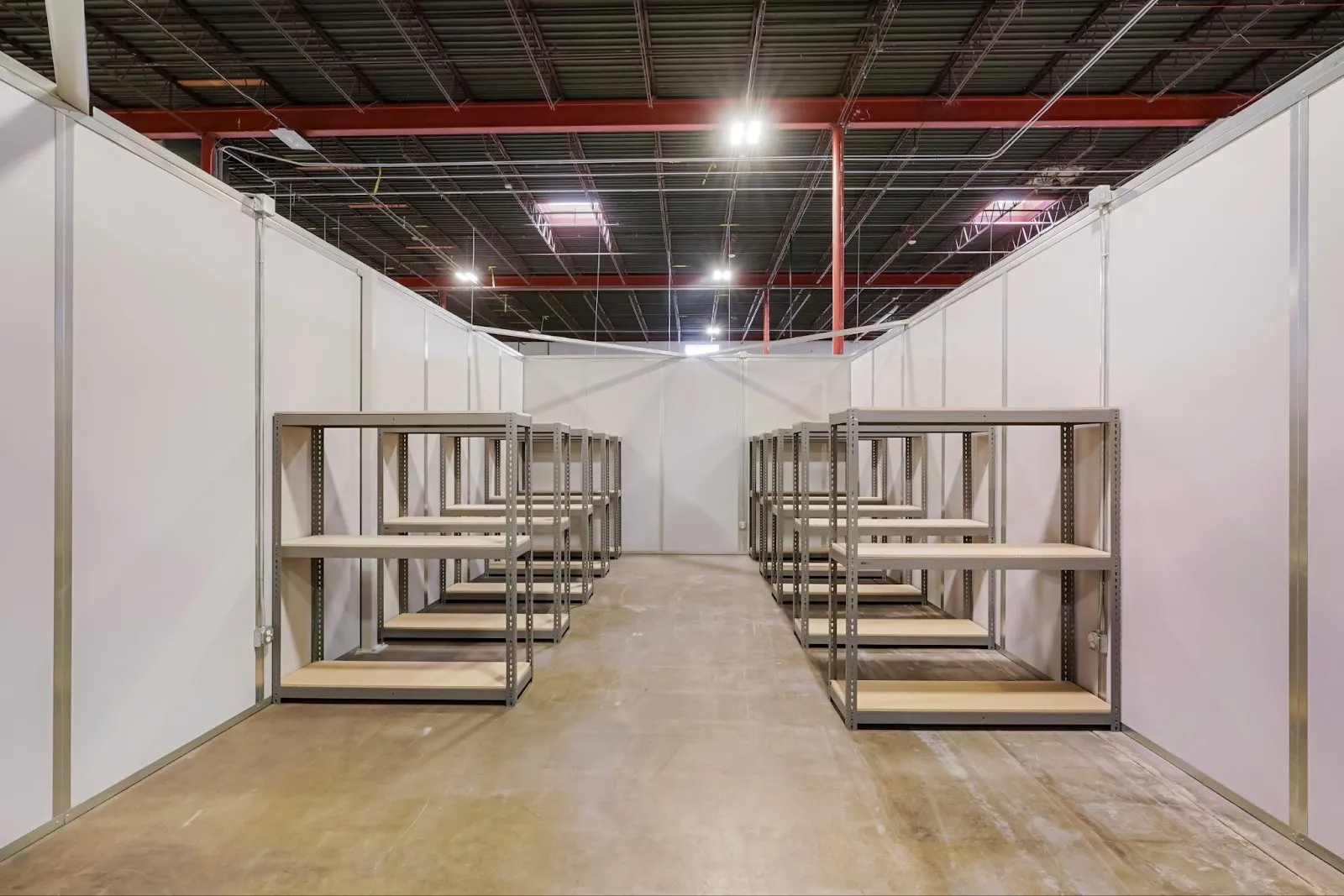
The first step in how to set up a warehouse is to define your warehouse needs, including:
- Order volume
- Inventory profile
- Staffing requirements
As order volume and customer demand begin increasing, it’s important to establish key data points. Without historical data, it can be challenging to determine how much space you’ll need for operations. In many instances, ecommerce owners rely on gut feeling or unrealistic growth goals to drive these decisions, resulting in restricted cash flow.
Once you have a solid understanding of your current throughput, you should begin creating a product profile. Elements like inventory size, turnover rate, and pick complexity all shape what your warehouse actually needs to look like.
For example, if you quickly turn over inventory, then you may need a slightly larger space to accommodate safety stock. Likewise, some online sellers need a staging area for their products, which requires a different type of warehouse configuration.
Lastly, as you define your ideal warehouse environment, consider whether you’ll be operating solo or with a small team. Both options will define the amount of space you need and whether you’ll want to consider co-warehousing options like Saltbox, which offer dedicated office space.
Step 2: Choose the right space and layout
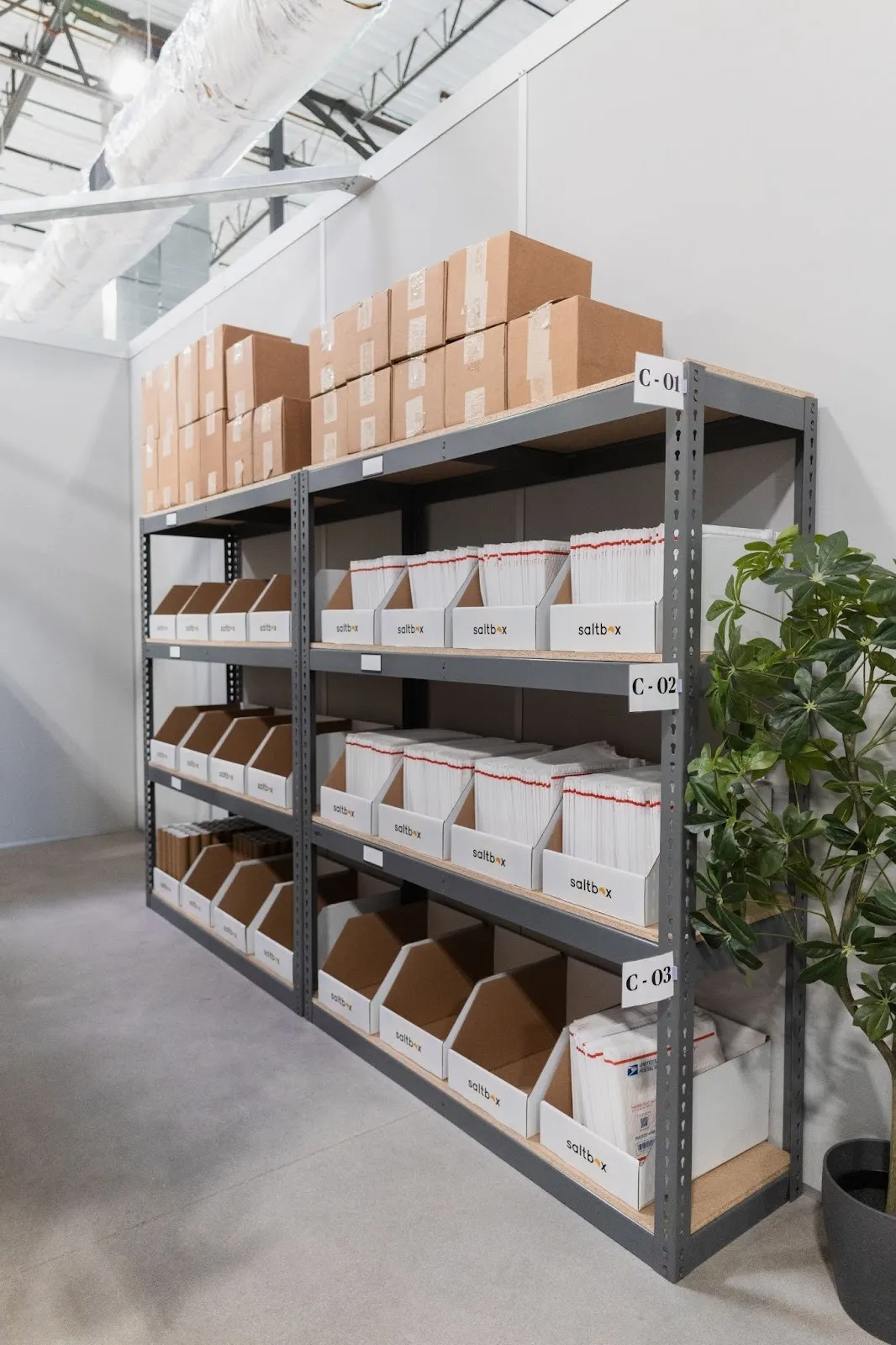
After you have your list of warehouse needs, it’s important to tour multiple locations to ensure you have the right space and layout. Every warehouse is a little different in the way it’s structured, making it all the more important to consider things like:
- Square footage
- Ceiling height
- Storage options
- Zoning for receiving, storage, packing, and outbound
When considering warehouses, you’ll find that vertical space often matters more than square footage for growing brands. Many first-time online sellers underestimate how much they can store, and as a result, don’t emphasize ceiling height enough during the evaluation process.

Pro tip: When evaluating space, don’t just look at the square footage — take time to envision your process in the space.
Transitioning from a home-based operation to a professional warehouse space comes with more moving parts than most ecommerce brands expect. To make sure you’re getting the space you need, our team is happy to walk through your current operations and growth goals.
Speak to an expert
Layout should also be another crucial component of your review process. If the space you’re looking at doesn’t allow for designated areas for receiving, storage, packing, and outbound shipping, your functional warehouse becomes cluttered.
In some cases, a purpose-built ecommerce warehouse environment like Saltbox can assist with zoning and infrastructure in your space, helping improve efficiency.
Step 3: Organize your inventory and workflows
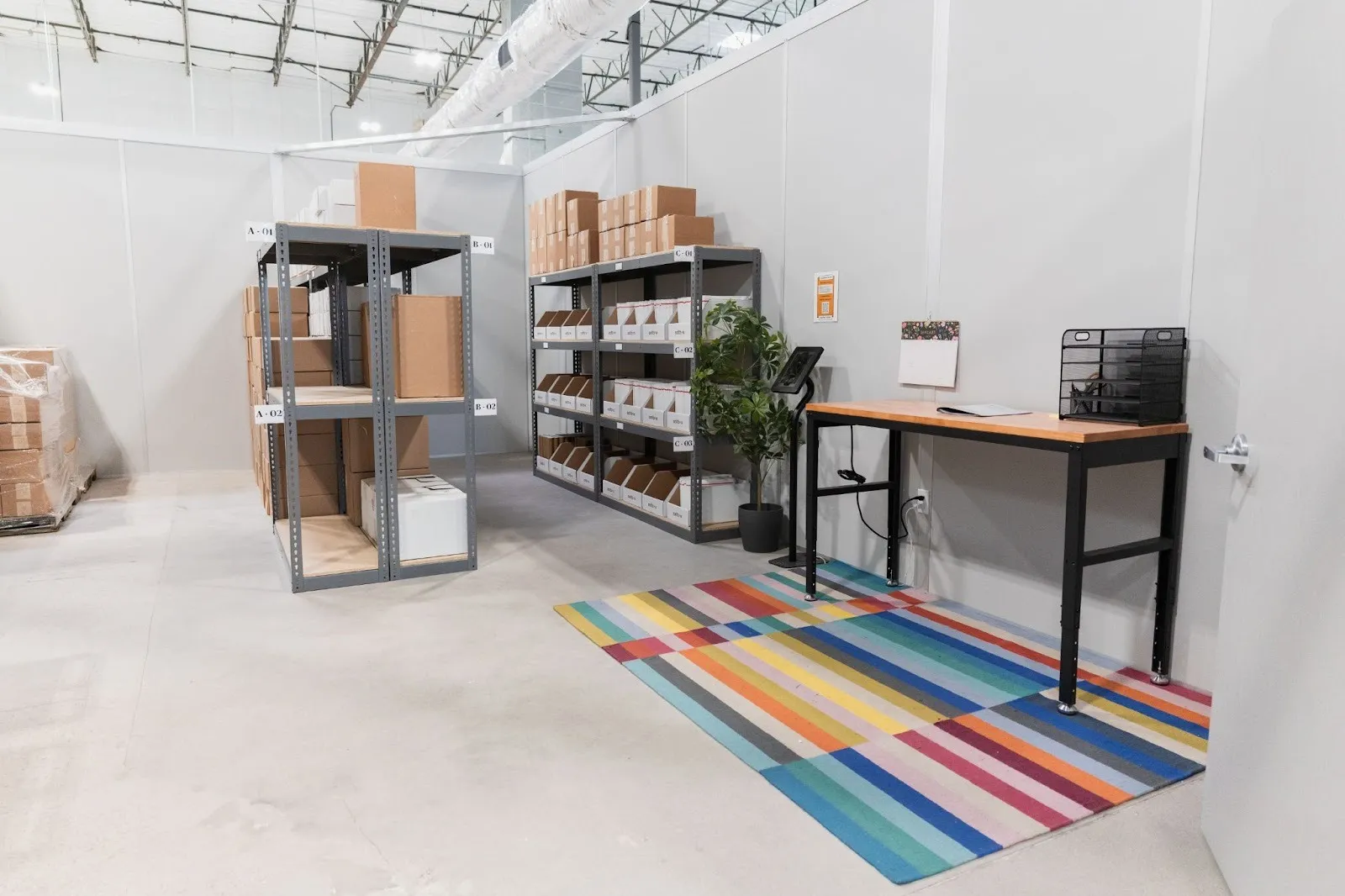
Now that you have your warehouse selected, you should spend considerable time planning the best way to organize your inventory and workflows. Many entrepreneurs are eager to move everything in now that they have a professional environment, but without organization, bottlenecks can quickly pop up.
You’d be surprised how something as simple as labeling or creating a location system can drastically improve accuracy and onboarding speed.
Another good place to start, as you decide where to house your inventory in the warehouse, is product grouping. For instance, instead of placing all your products in a single location, try to create subgroups based on:
- Velocity
- Category
- Order frequency
These smaller groupings will help reduce pick times and errors during fulfillment. And while it may seem silly, even planning how you move through your warehouse can help reduce wasted steps and speed up fulfillment.

Pro tip: Strategically moving from a home-based setup to a professional warehouse can accelerate growth
The transition from a home-based warehouse to a larger space can feel exciting and a little daunting. This guide walks you through everything you need to know about structuring the transition thoughtfully.
Get the guideStep 4: Set up packing, shipping, and fulfillment processes
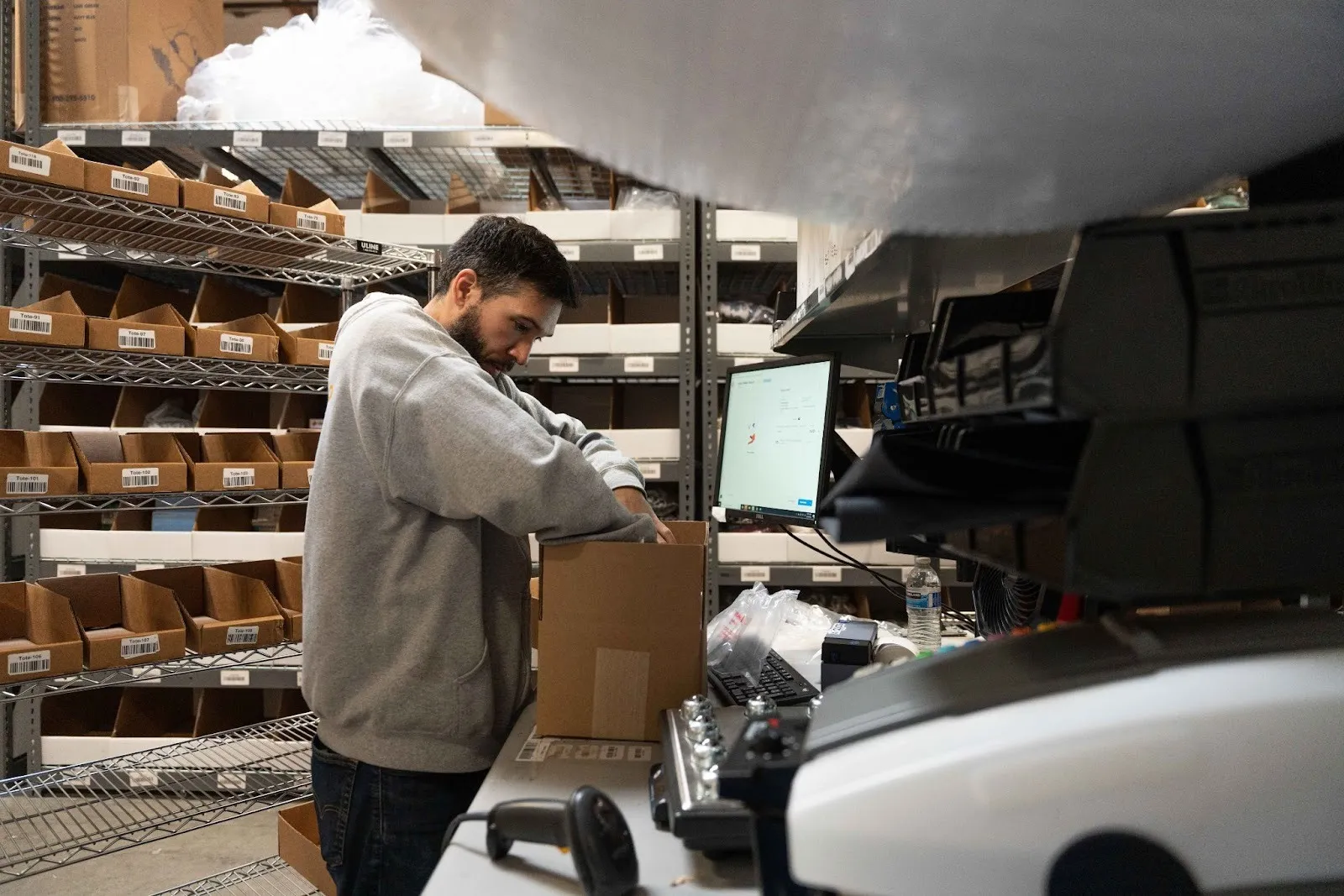
Beyond the basic organization of your inventory and workflows, you should also create processes for packing, shipping, and fulfillment.
Even if you’re still in the early stages of your growth, building a consistent outbound process lays the foundation for accuracy at higher volumes.
Having shipping workflows also allows you to obtain accurate data at different parts of the fulfillment process and make improvements before order volume increases. For example, you don’t want to realize that your packing stage is a bottleneck for the process during the middle of peak season.
Instead, once you set up each station, continue to stress test it to see how it’s performing. If you notice that it’s still taking longer to get orders out the door, you may need to improve the process or add labor.
Step 5: Analyze (or stress-test) your current setup for common mistakes
Often, the first attempt at setting up your warehouse space won’t be optimal, and that’s okay. What’s important is to continually analyze and stress-test your current processes to identify opportunities for improvement. Even with the best intentions, warehouse setup mistakes are common and can be costly to fix afterward.
The table below outlines the most frequent missteps ecommerce brands make and what to do instead.
Step 6: Build for scalability from day one

Building for scalability from day one provides the structure you’ll need to grow in the future. What often happens is that small business owners get excited and fill every inch of their warehouse at launch, only to run into problems within months.
Without flexibility in your storage space, you could miss out on opportunities to sell more of a particular product because your warehouse is filled with stale inventory.
It’s easy to get excited or even overwhelmed with a new warehouse space. However, it’s important to not only think about current operations but also where your ecommerce brand could grow.
One option to help maintain flexibility is to use a small bay warehouse like Saltbox. These models offer month-to-month plans that let you expand or reduce your space as needed to match order volume, which can be important when growing your business.
How does Saltbox support ecommerce brands setting up a warehouse?
Determining how to set up a warehouse is as much about preparation as it is about finding the right location and partner. At Saltbox, our goal is to support ecommerce brands beyond simply providing a space to store inventory.
Instead, we empower our members to reach their growth goals through on-site support, flexible leasing terms, and transparent pricing. With Saltbox, you get:
- Your own private suite with full visibility into your inventory at all times. No shared shelves, no uncertainty about where your products are. Just complete control over your space and your stock.
- Carrier pickups directly from our loading docks, which means no more post office runs.
- An on-site team to help when you need additional support, such as FBA prep, inventory organization, or space optimization.
You own your business; we run your operations, so you can have a life outside your business.
If your ecommerce brand is ready for the next step in warehousing, our team is ready to help. Book a tour today at one of our 11+ locations.
Frequently asked questions
The first step in setting up a warehouse is defining your needs, including order volume, SKU count, inventory profile, and staffing requirements. Having this data on hand before committing to a space saves time and prevents costly mistakes early on.
The amount of space you need to set up a warehouse depends on your order volume, inventory size, and growth projections. A good rule of thumb is to avoid filling your space to capacity at launch — leaving room to grow prevents operational bottlenecks down the line.
When choosing a warehouse space, look beyond square footage and evaluate ceiling height, zoning options, loading dock access, and whether the space can accommodate designated areas for receiving, storage, packing, and outbound shipping.
To organize inventory in a new warehouse, start by grouping products by velocity, category, or order frequency. Pair that with a clear labeling and location system and defined pick paths to reduce errors and speed up fulfillment from day one.
The most common warehouse setup mistakes include designing around current inventory instead of workflow, overcrowding storage areas, underestimating staffing needs, and locking into a lease before fully understanding operational requirements.
Small bay warehousing is a strong option for ecommerce brands setting up their first warehouse, offering professional infrastructure without a long-term lease commitment. Models like Saltbox provide month-to-month plans, on-site support, and flexible space that grows with your business.