


Key takeaways
- You have outgrown home once you process more than 10 to 20 orders per day, miss carrier pickups, or pay liftgate fees on every inbound pallet. If you are already spending $500+ per month on a self-storage unit without loading docks or climate control, you are paying for space that does not serve your operation.
- Traditional industrial leases punish small businesses with three to five-year terms, triple-net structures that add 20% to 40% on top of rent, and $15,000 to $50,000 in upfront build-out costs. For a founder doing 50 to 200 orders per day, that commitment is disproportionate to current revenue.
- Flexible warehouse memberships replace leases with month-to-month terms, predictable all-in pricing, and the ability to scale your suite up or down without penalties. Saltbox starts at $99/month for virtual memberships and $349/month for access tiers, with dedicated suites custom-priced. First month payment replaces the $5,000 to $10,000 deposit traditional leases require.
- The right space combines warehouse, office, and community under one roof: loading dock access, daily UPS/FedEx/USPS/Amazon pickups, on-site receiving, conference rooms, content studios, and a peer network of 1,000+ ecommerce founders. The all-in-one model removes the friction of stitching together a storage unit, coworking desk, and meeting space across multiple bills.
Your ecommerce business has outgrown its current setup. The spare bedroom is stacked floor to ceiling, the garage smells like packing tape, and your partner is losing patience with the inventory creeping into the living room. You know you need warehouse space, but the idea of signing a three-year industrial lease with tens of thousands in upfront costs feels like trading one problem for another. The good news: you do not have to. A growing number of flexible options now let you secure a short-term warehouse lease - or more accurately, a membership - that matches the pace and unpredictability of a growing product business. This guide walks through exactly how to find, evaluate, and lock in the right space without overcommitting your capital or your sanity.
Moving your ecommerce business beyond the garage
There is a specific moment most ecommerce founders recognize in hindsight. It is the moment your home stops feeling like a home and starts feeling like a distribution center. Orders are shipping from your kitchen table, inventory is organized in bins across three rooms, and your daily carrier pickup involves hauling boxes to the front porch. The transition from hobby to real business happens gradually, but the need for professional space often hits all at once.
Identifying the need for professional warehouse space
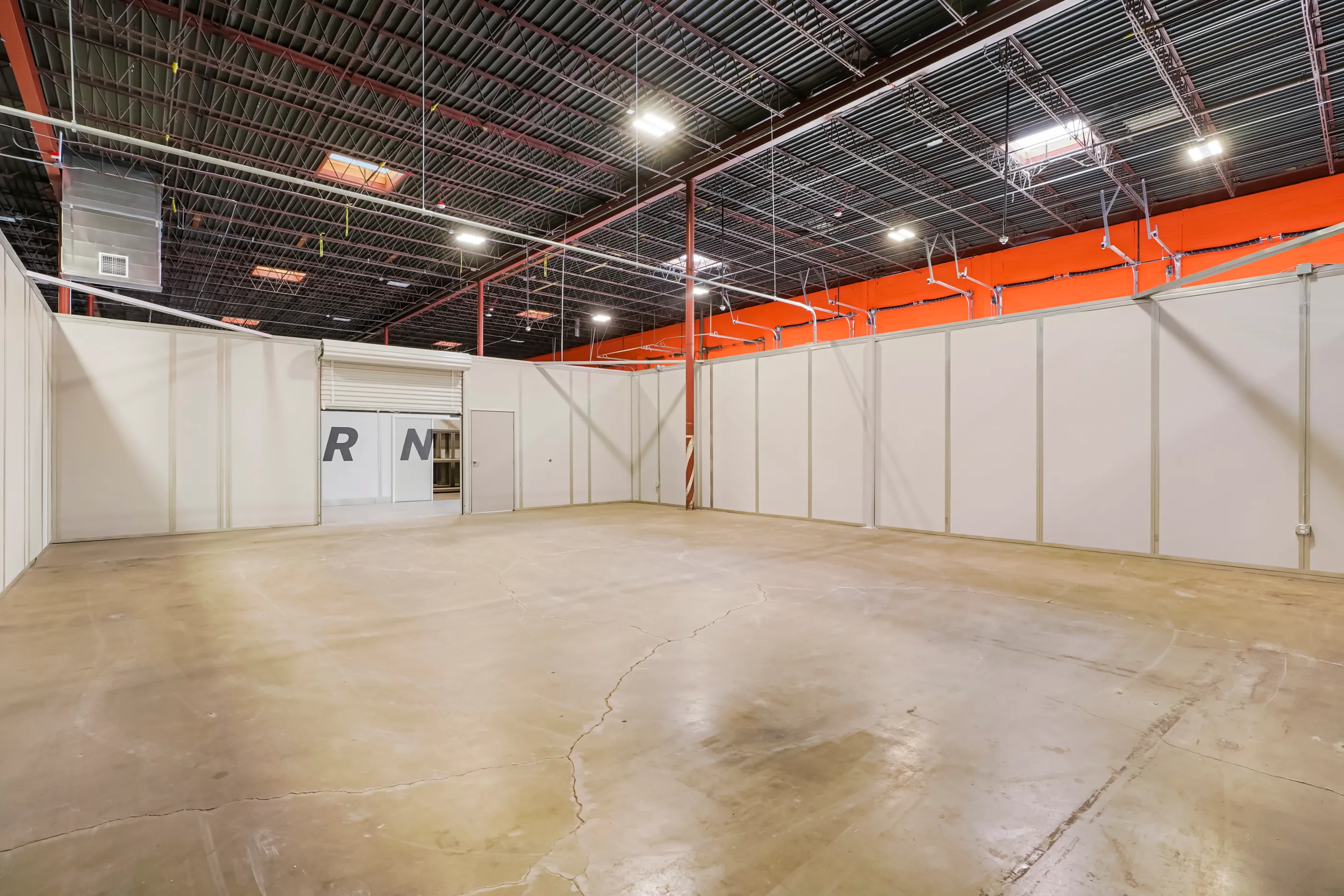
Several signals indicate you have crossed the threshold. If you are processing more than 10 to 20 orders per day from a residential setup, you are likely spending more time on logistics friction than on growth. Missed carrier pickups, limited staging area, and the inability to receive palletized shipments from suppliers all create bottlenecks that cost real money.
There is also a credibility factor. Suppliers and retail partners take you more seriously when you operate from a commercial address. Some wholesale accounts and marketplace programs require a verifiable business location. Running your brand from a residential ZIP code can quietly limit your opportunities.
The emotional toll matters too. Blurred boundaries between work and personal life wear founders down. When your bedroom doubles as a fulfillment center, there is no "off" switch. A dedicated workspace creates the physical separation that lets you think strategically rather than reactively.
If you are spending more than $500 per month on self-storage units that lack loading docks, climate control, or even basic electrical outlets, you are already paying for space that does not serve your operations. That money could go toward a facility that actually helps you ship faster and grow.
The limitations of traditional industrial leases
The conventional path to warehouse space involves a commercial real estate broker, a multi-year lease, and a significant capital outlay before you ship a single package from the new location. Traditional industrial leases typically run three to five years, with some landlords requiring even longer commitments.
The financial structure is often punishing for small businesses. Most industrial leases use a triple-net (NNN) format, meaning you pay base rent plus property taxes, insurance, and common area maintenance (CAM) charges. These variable costs can add 20% to 40% on top of your quoted rent, and they fluctuate annually. A space advertised at $8 per square foot might actually cost $11 or $12 once NNN charges are factored in.
Then there is the build-out. Empty warehouse shells rarely come ready for ecommerce operations. You will need to install racking systems, set up packing stations, run electrical for equipment, and potentially add climate control. These capital expenditures can run $15,000 to $50,000 or more, depending on the size of the space. If your lease ends or your business pivots, that investment stays behind.
For a founder doing 50 to 200 orders per day, this level of commitment is disproportionate to the business's current revenue. You need flexibility, not a five-year bet on a single location.
Key features to look for in a flexible warehouse
Not all warehouse options are created equal. A self-storage unit with a roll-up door is not the same as a purpose-built fulfillment environment. When evaluating short-term warehouse spaces, focus on the infrastructure that directly affects your ability to receive, store, and ship product efficiently.
Essential operational infrastructure and loading docks
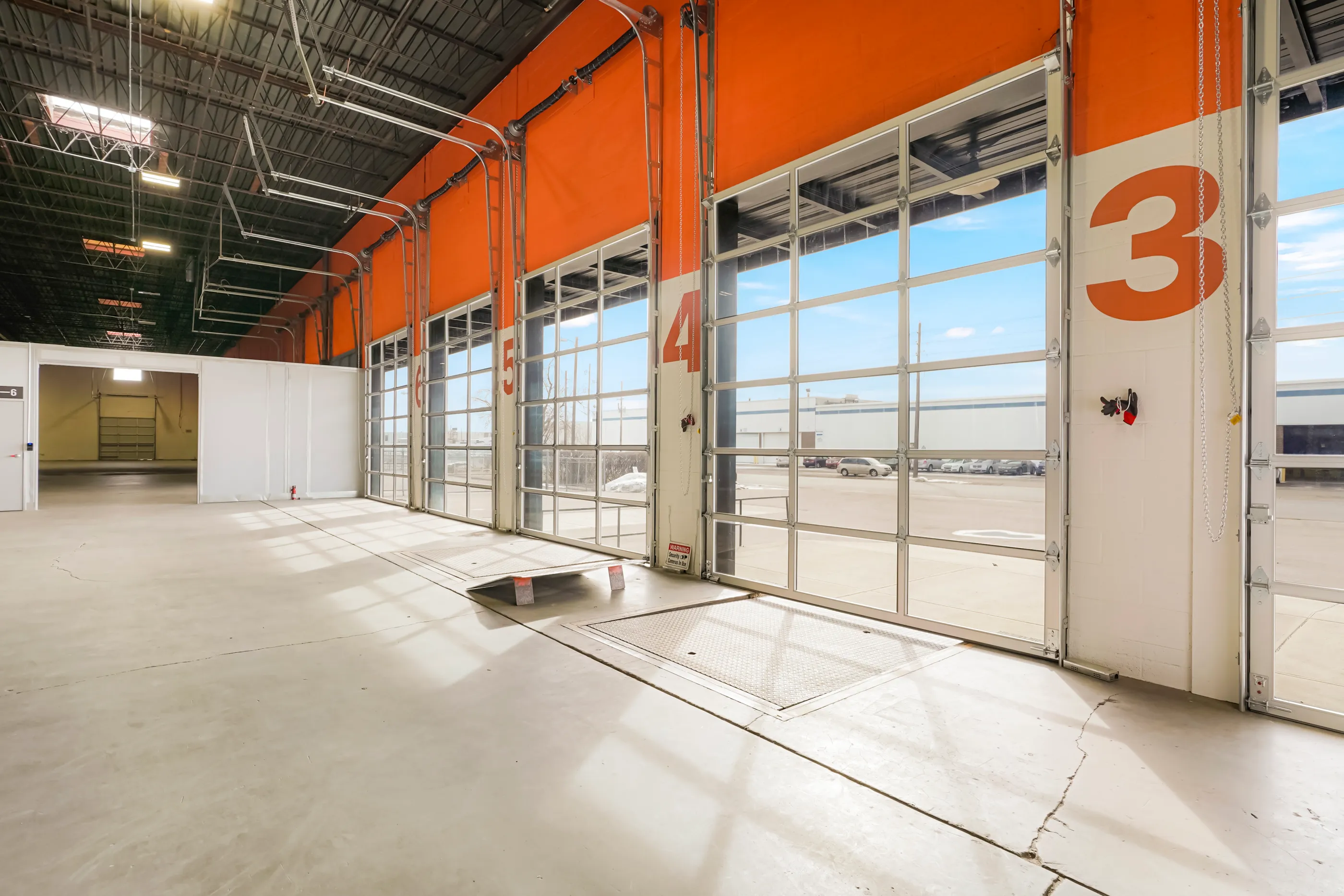
Loading dock access is one of the most underappreciated features for growing ecommerce brands. Without a dock, you are limited to ground-level deliveries, which often means paying liftgate fees of $75 to $150 per delivery. If you receive freight shipments from manufacturers even twice a month, those fees add up to over $1,800 annually for a cost that a proper loading dock eliminates entirely.
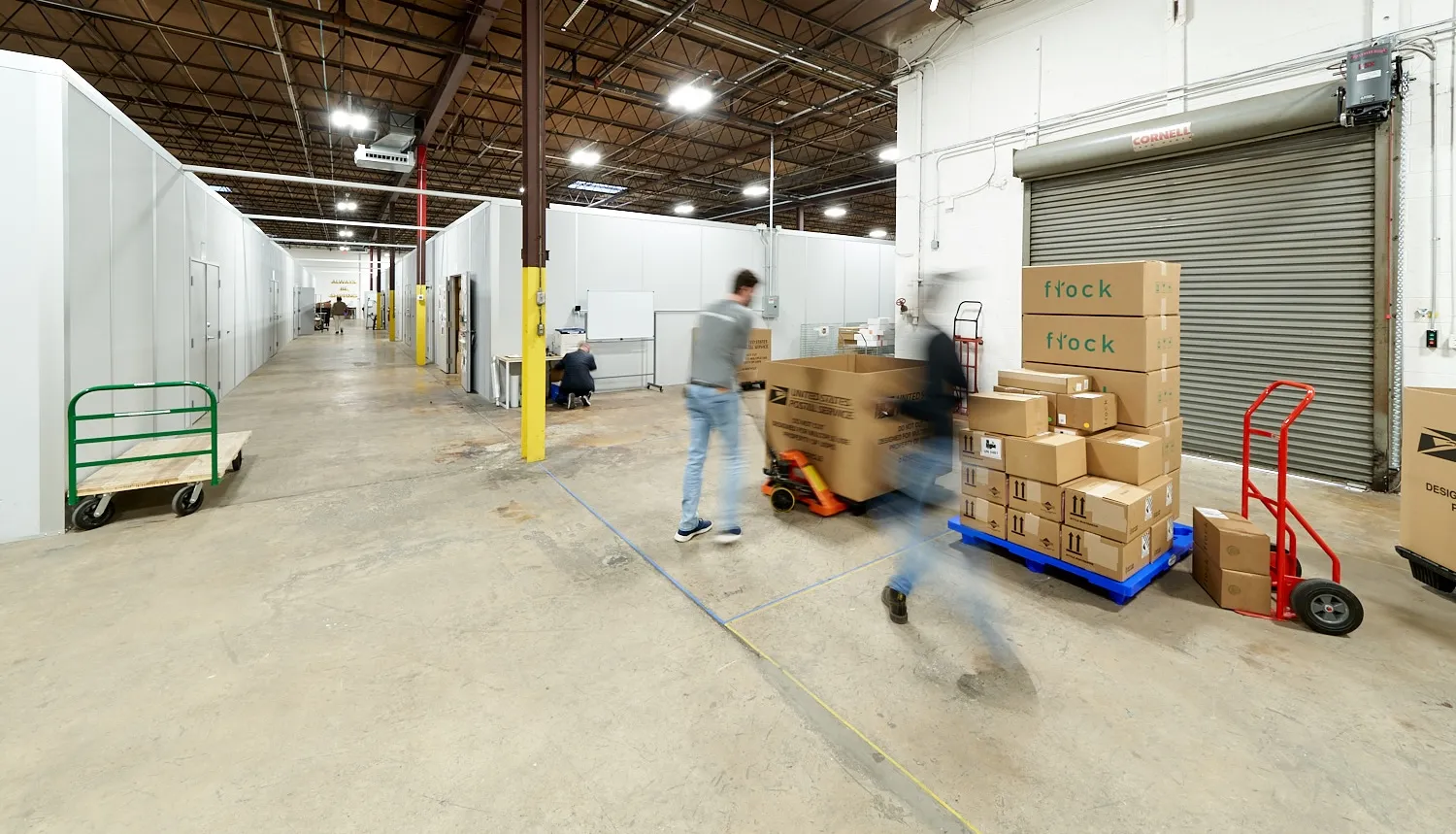
Look for facilities that offer enterprise-grade equipment: pallet jacks, dock plates, and staging areas large enough to break down incoming shipments without blocking your packing stations. The physical layout of your space directly affects your pick-and-pack speed. A well-organized warehouse suite with clear zones for receiving, storage, and outbound staging can help you maintain pick accuracy targets above 99.5%.
Climate considerations also matter. If you sell supplements, cosmetics, food products, or anything sensitive to temperature, you need a space with adequate HVAC. Ask about temperature ranges and whether the facility monitors conditions across different zones.
Power availability is another practical concern. You will need outlets for label printers, heat sealers, computers, and potentially light assembly equipment. Facilities designed for ecommerce operations will have these basics covered. Traditional warehouse shells often do not.
Integrated carrier services and package receiving
Your warehouse is only as good as its connection to carriers. The single most important logistical question to ask any potential warehouse provider: what are the daily carrier pickup cutoff times?
A facility with daily pickups from UPS, USPS, and FedEx - scheduled at consistent times - lets you ship later in the day and still hit next-day transit windows. This is a meaningful competitive advantage. If you are currently driving packages to the post office or a UPS Store, you are burning hours that should go toward product development or marketing.
Saltbox, for example, builds carrier pickups into every location. Members drop off outbound packages at designated areas, and on-site staff coordinate with carriers for daily collection. This eliminates the logistical headache of scheduling your own pickups or negotiating minimum volume requirements with individual carriers.
Inbound receiving is equally important. When your supplier ships a pallet of new inventory, someone needs to be there to accept it, inspect it, and move it to your storage area. Facilities with on-site teams that handle receiving and secure package storage save you from having to be physically present for every delivery. That flexibility is worth far more than the line item suggests on a monthly invoice.
Understanding month-to-month membership models
The warehouse industry is slowly catching up to the flexibility that ecommerce businesses actually need. Month-to-month membership models represent a fundamental shift from the traditional landlord-tenant relationship. Instead of a lease with escalation clauses and early termination penalties, you get a membership that you can adjust as your business changes.
How to scale your space as your inventory grows
Ecommerce inventory needs are rarely static. You might carry 200 SKUs in January and 400 by October if a product line takes off. Seasonal businesses face even more dramatic swings: a holiday-focused brand might need three times the storage space in Q4 compared to Q2.
Month-to-month memberships let you scale your footprint without renegotiating a lease. If your sales double after a successful product launch, you can move into a larger suite at the same facility. If a product line underperforms and you need to consolidate, you can downsize without paying penalties. This kind of flexibility is not a luxury for growing brands - it is a financial necessity.
The math is straightforward. A founder doing 50 orders per day might need a 200-square-foot suite. At 200 orders per day, that requirement might jump to 800 square feet or more. With a traditional lease, you would either overpay for space you do not need yet or face a costly move when you outgrow your original footprint. Membership models eliminate this guessing game.
Some providers also offer tiered membership levels. Saltbox, for instance, starts with virtual memberships at $99 per month for founders who need a business address and mail receiving but not physical space. Access memberships begin at $349 per month, and dedicated warehouse suites are custom-priced based on your specific square footage and service needs. This tiered approach means you are not paying for capacity you have not grown into.
Eliminating upfront chaos with predictable pricing
One of the hidden stresses of a traditional warehouse lease is the unpredictability of total monthly costs. Base rent is just the starting point. CAM charges adjust annually. Utility costs spike in summer. Insurance premiums increase. A maintenance assessment hits because the parking lot needs repaving.
Membership models consolidate these variables into a single predictable monthly rate. Your membership typically includes the space itself, shared infrastructure like loading docks and equipment, utilities, Wi-Fi, and common area access. There are no surprise CAM reconciliations at year-end.
This predictability matters enormously for unit economics. If you know your warehousing cost is a fixed monthly number, you can accurately calculate your per-order fulfillment cost. For most small ecommerce operations, fulfillment costs run between $3 and $8 per order. When your facility costs fluctuate unpredictably, that range becomes impossible to pin down, and your margins suffer.
The absence of a large upfront deposit also preserves working capital. Traditional leases often require first month, last month, and a security deposit equal to one or two months' rent. For a 2,000-square-foot space at $10 per square foot, that is $5,000 to $10,000 tied up before you even move in. Membership models typically require only the first month's payment, freeing that capital for inventory purchases or marketing spend.
Combining workspace with fulfillment and logistics
The most effective warehouse setups for ecommerce founders are not just storage facilities. They are operational headquarters that combine multiple business functions under one roof. Fragmenting your operations across a storage unit, a coworking space, a coffee shop for meetings, and your home for everything else creates inefficiency and mental overhead.
The value of on-site office and meeting rooms
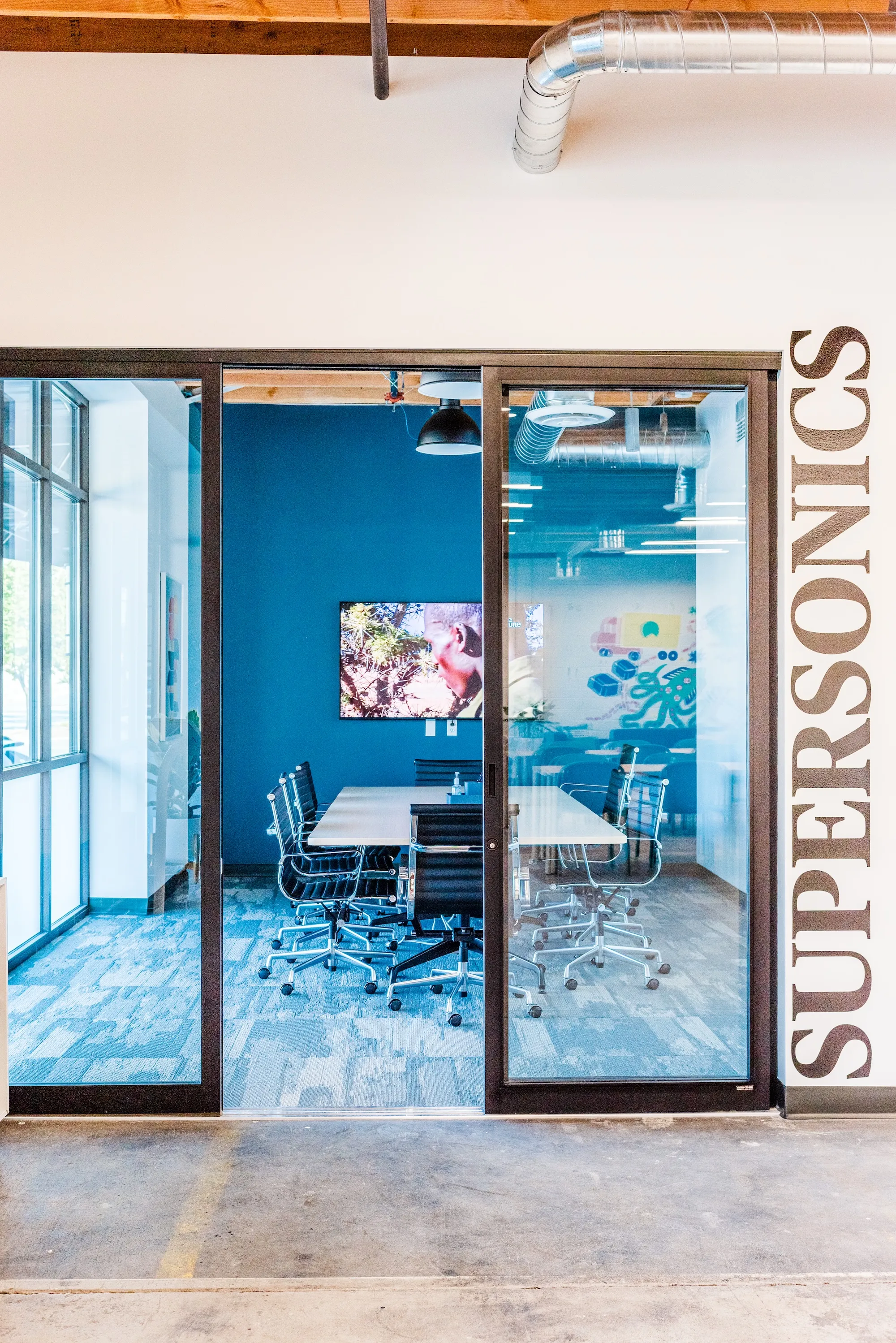
A warehouse suite paired with professional workspace changes how you operate day to day. Instead of packing orders in the morning and then driving to a coffee shop to take a supplier call, you handle both in the same building. Conference rooms let you meet with potential retail partners or investors in a professional setting rather than a cramped apartment.
Content creation is another practical consideration. Many ecommerce brands need to photograph products regularly for website updates, social media, and marketplace listings. Facilities that include content studios or well-lit common areas save you from renting studio space separately. The cost of a dedicated product photography studio in a major metro can run $50 to $100 per hour. Access to an on-site studio as part of your membership eliminates that recurring expense.
High-speed internet, printing, and mail services round out the professional infrastructure. These might seem like small details, but they add up. A founder who can receive business mail at a commercial address, print shipping labels at a shared workstation, and take a video call in a private meeting room - all within steps of their inventory - operates with far less friction than one stitching together five different services.
Leveraging a community of founders and operators
Operating in isolation is one of the underappreciated challenges of running a product business. When you work from home, your peer network is limited to online forums and occasional industry events. A shared warehouse facility puts you in daily proximity with other founders solving similar problems.
This peer network has tangible business value. A fellow member might share their experience negotiating better carrier rates, recommend a reliable freight forwarder, or alert you to a supplier quality issue before it affects your inventory. These informal exchanges often deliver more practical value than formal consulting engagements.
Saltbox, which was recognized as one of Fast Company's Most Innovative Companies in 2022, has built this community element into its model with over 1,000 active members across 11 locations. The company facilitates connections through an upstream community that includes webinars, playbooks, and peer networking events specifically designed for ecommerce operators. When you are trying to figure out whether to expand into wholesale or how to handle a sudden spike in returns, having access to founders who have already solved those problems is extraordinarily useful.
The community also creates informal accountability. Seeing other founders working hard on their businesses, shipping orders, and hitting milestones creates a productive energy that a home office simply cannot replicate. That psychological shift - from solo operator to member of a professional community - often correlates with faster business growth.
Steps to secure your short-term warehouse membership
Finding and locking in the right flexible warehouse space follows a clear sequence. Here is how to approach it:
- Audit your current operations. Count your SKUs, measure your average daily order volume, and calculate the square footage you currently use for inventory and packing. This baseline determines the size of suite you need.
- Define your geographic priorities. Your warehouse location affects shipping costs directly. A facility in Dallas, for example, can reach most of the continental U.S. within three shipping zones, while a location in New Jersey gives you one-day ground access to the entire Northeast corridor. Choose based on where your customers are concentrated.
- List your non-negotiable infrastructure requirements. Loading docks, daily carrier pickups, climate control, and receiving services should be at the top. Rank everything else as a preference rather than a requirement.
- Tour multiple facilities. Photos and floor plans do not tell the full story. Visit during operating hours to see how the space functions when other members are actively shipping. Pay attention to noise levels, cleanliness, and how staff interact with members.
- Ask about scaling options. Confirm that the facility can accommodate your growth. If you expect to double your order volume within 12 months, make sure a larger suite will be available when you need it.
- Review the membership agreement carefully. Understand the notice period for cancellation, any rate adjustment policies, and exactly what is included in the monthly fee. A predictable monthly rate should mean no hidden charges.
- Plan your move strategically. Schedule the transition during a slower sales period if possible. Set up your racking and packing stations before redirecting inbound inventory to the new address. Update your shipping origin address with all carriers and marketplaces simultaneously.
- Establish your operational SOPs from day one. Post visual aids like "perfect pack" photos at each packing station. Set a pick accuracy target of 99.5% and track it weekly. Build your processes correctly from the start rather than retrofitting them later.
The entire process, from initial research to your first shipment from the new space, can take as little as two to four weeks with a membership model. Compare that to the three to six months typical for a traditional industrial lease, and the advantage is clear.
Your product business deserves infrastructure that matches its ambition without demanding a five-year commitment. The right short-term warehouse membership gives you professional space, carrier access, and room to grow - all on terms that respect the reality of building a business one order at a time. If you are ready to see what a purpose-built ecommerce facility looks like in person, book a tour at a Saltbox location near you and find out whether it fits your operation.
Frequently asked questions
Several signals: processing more than 10 to 20 orders per day from a residential setup, missed carrier pickups limiting your fulfillment hours, no loading dock for palletized inbound shipments, and credibility friction with suppliers or wholesale partners who expect a commercial address. If you are already spending $500+ per month on a self-storage unit without loading docks, climate control, or basic electrical, you are paying for space that does not serve your operation.
More than the headline rent. Most industrial leases run three to five years on a triple-net structure where you pay base rent plus property taxes, insurance, and common area maintenance, typically adding 20% to 40% on top of quoted rent. A space advertised at $8 per square foot can effectively cost $11 to $12. Build-out for racking, electrical, and climate control usually runs $15,000 to $50,000 before you ship a single package.
A flexible warehouse membership replaces the traditional landlord-tenant lease with a monthly subscription to a private warehouse suite inside a shared facility. You get the space plus shared infrastructure (loading docks, daily carrier pickups, on-site staff, utilities, Wi-Fi) bundled into one predictable rate. You can scale your suite up or down each month without penalties, and only the first month's payment is required upfront.
Loading dock or ground-level access for inbound pallets, daily carrier pickups from UPS, FedEx, USPS, and ideally Amazon, climate control matched to your product category, and adequate power for label printers and packing equipment. Beyond the basics: on-site staff who handle receiving, conference rooms and content studios for the work that does not happen on the warehouse floor, and a community of operators you can learn from.
Two to four weeks versus three to six months. Membership facilities have spaces ready to occupy, so the timeline is determined by how quickly you can audit your operations, tour a few locations, and execute the move. Traditional industrial leases require commercial real estate brokers, lease negotiation, build-out work, equipment installation, and utility setup before you can ship your first order from the new space.
Audit your current operations (SKU count, daily order volume, square footage in use), define geographic priorities based on where your customers are concentrated, list your non-negotiable infrastructure requirements, tour multiple facilities during operating hours, ask about scaling options for projected growth, review the membership agreement closely, and plan your move during a slower sales period. Set up SOPs from day one rather than retrofitting them later.
For Her
For Him
For Pets
For Anyone


Related posts
Learn from businesses improving their operational efficiency. Explore how Saltbox’s expert support and flexible spaces drive their growth.


How your box design should grow with your business
Packaging isn't one decision, it's four handoffs. Here's what to change at each stage, and the mistakes that cost the most at each one.
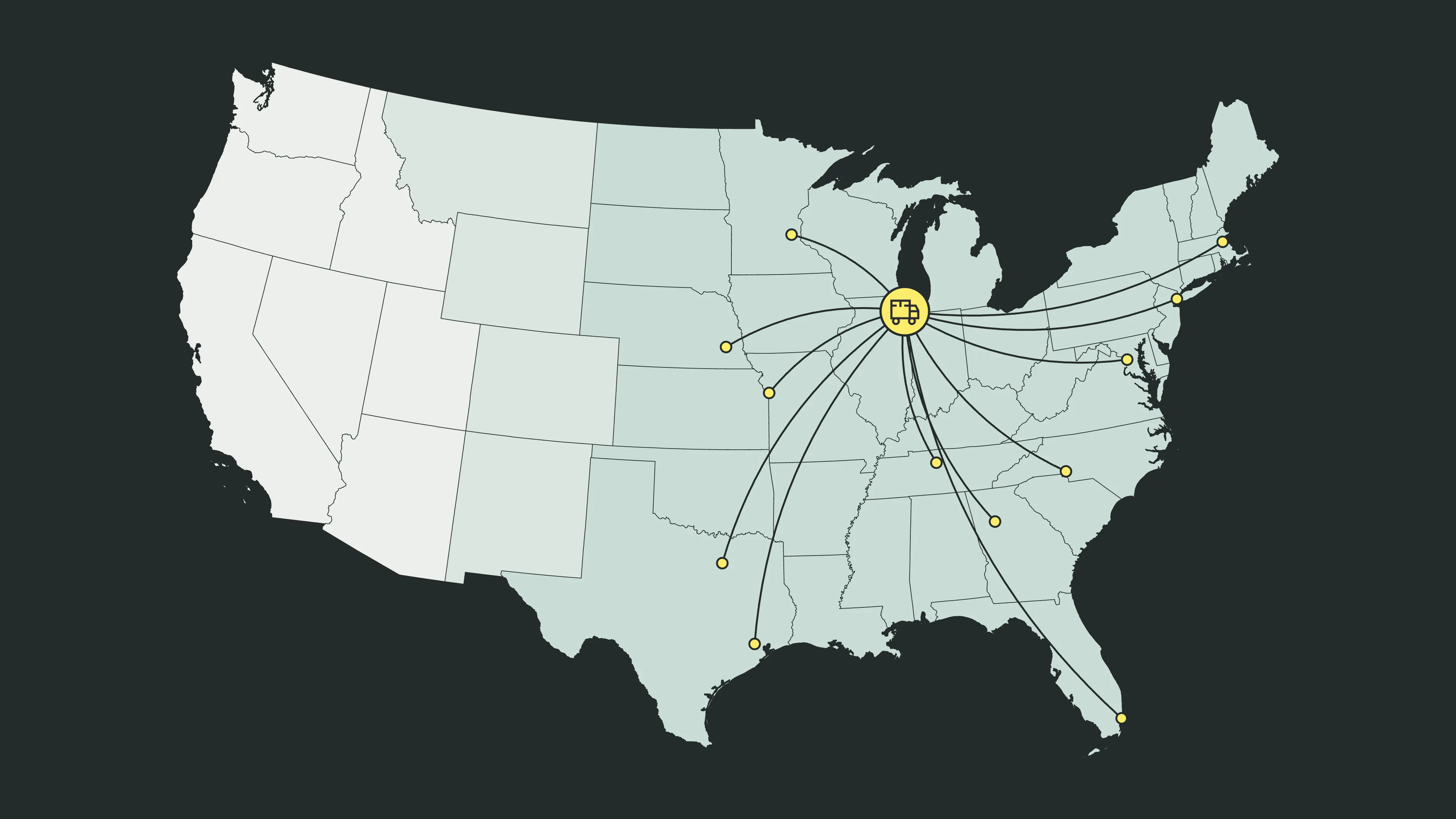
How much of the U.S. can you reach in two days from Chicago?
One Midwest node covers about 68% of the country in two days of ground transit. Here's exactly which two-thirds, and which third it misses.
2026 peak season shipping surcharges: what FedEx, UPS, USPS, and Amazon are charging
Additional handling went up about 6%. The fee on every single order went up 25%. Here’s the full 2026 surcharge picture, and what it costs you per order.
Related terms
Learn from businesses improving their operational efficiency. Explore how Saltbox’s expert support and flexible spaces drive their growth.