.webp)


Key takeaways
- As of January 1, 2026, Amazon has officially ended all in-house FBA prep and item labeling services in the U.S. Sellers are now fully responsible for prepping and labeling their inventory before shipment.
- This change applies to all shipments created on or after January 1, 2026, across all Amazon fulfillment programs, including AWD, AGL, Amazon SEND, and the Supply Chain Portal.
- Proper prep includes inspection, labeling with FNSKU barcodes, packaging (such as poly bagging and bubble wrapping), bundling, and carton labeling according to Amazon’s strict requirements.
- Sellers must choose between building in-house prep capabilities or outsourcing to specialized third-party FBA prep service providers who can ensure compliance and fast turnaround.
- Failing to meet Amazon’s prep requirements can lead to rejected shipments, costly penalty fees, delays in inventory availability, and potential account health issues.
- Early preparation and auditing your product catalog for current prep needs are critical to avoid disruptions, especially during peak selling seasons like Q4.
- Partnering with a reputable third-party prep service can provide scalability, expertise in Amazon compliance, and operational efficiency, allowing sellers to focus on growing their Amazon business.
- Staying up to date with Amazon’s packaging and prep guidelines is essential, as these requirements are updated frequently and non-compliance can harm your sales and reputation.
If you’ve been relying on Amazon to handle your labeling, poly bagging, or other prep work before inventory hits the shelf, that era is officially over. For years, Amazon’s in-house FBA prep service acted as a safety net for sellers who didn’t have tight operations. That safety net disappeared on January 1, 2026. Now, every unit you send to an Amazon fulfillment center must arrive fully prepped, compliant, and ready to sell.
For sellers who’ve been coasting on Amazon’s willingness to fix their mistakes for a fee, this is a wake-up call. For everyone else, it’s an opportunity to tighten operations, reduce errors, and potentially save money by taking control of your own prep, or partnering with a third-party service provider who knows what they’re doing.
Here’s what changed, what it means for your business, and exactly what you need to do before the deadline hits.

[Free Resource] FBA prep compliance checklist
A printable, no-nonsense checklist to help you catch FBA prep issues before it reaches Amazon warehouses.
Grab your copy
What changed with Amazon FBA Prep services (and when)?
Amazon ended in-house FBA prep and labeling services in the U.S. Sellers must now handle all FBA prep themselves or use third-party FBA prep services. There’s no workaround, no exception process, and no grandfathering for existing sellers.
Here’s the timeline you need to know:
- For all U.S. FBA shipments created on or after January 1, 2026, Amazon will no longer provide prep or labeling. This applies across the board; shipments via AWD, AGL, Amazon SEND, and the Supply Chain Portal are all affected.
- Shipments created before January 1, 2026 may still receive prep and labeling services until that cutoff date, but do not rely on this grace period for ongoing operations.
- Every unit arriving at a U.S. Amazon fulfillment center after the deadline must already be fully prepped, compliant, and have a scannable label visible after prep is complete.
"No more FBA prep from Amazon. As of January 1, 2026, prepping inventory for Amazon warehouses is 100% the seller's responsibility."
This means if you’re currently clicking that checkbox to have Amazon handle prep for a fee, that option is gone. You’ll need an alternative in place well before Q4 to avoid disrupting your holiday selling season.
Your immediate to-do list:
- Review your entire catalog for current prep needs
- Confirm which SKUs are currently using Amazon’s prep services
- Decide whether to build in-house prep capability or partner with a third-party prep center
What did Amazon FBA Prep services used to include?
Amazon FBA Prep services used to include FNSKU/Barcode Labeling, Poly Bagging, Bubble Wrapping, Kitting & Bundling, Suffocation Warning Labels, and Re-boxing. For years, Amazon’s FBA Prep service acted as a safety net for sellers by handling these basic compliance tasks for an added fee. If you shipped in unprepared inventory, Amazon would take care of the details—for a price.
This applied to many everyday categories like beauty, home goods, toys, and small electronics, and helped less-experienced sellers avoid failed check-ins and non-compliance flags. For many Amazon sellers, it was the difference between a successful launch and inventory stuck in receiving limbo.
Amazon’s rationale for ending these services? According to their July 2025 announcement, “most sellers now handle prep and labeling themselves,” and Amazon wants to streamline efficient fulfillment center operations.
Translation: Amazon wants inbound inventory to arrive “FC-ready” so they can move it faster and cheaper through their network with no extra handling steps. Your prep mistakes are no longer their problem.
“If you relied on Amazon to fix your prep mistakes, that safety net disappears on January 1, 2026.”
What does FBA prep actually include?
FBA prep services include:
- Product inspection: Checking for defects, damage, or discrepancies before shipping
- Barcode/FNSKU labeling: Applying correct, scannable labels to each unit (not the manufacturer UPC)
- Packaging: Boxes, poly bags, bubble wrap, or other protection appropriate to the product
- Bundling and kitting: Combining multiple items into single sellable units with proper “Sold as Set” labeling
- Carton labeling: Applying FBA shipment labels to outer boxes with accurate content information
- Shipment prep: Following Amazon’s FBA shipping rules for box weight, dimensions, and placement
Each element ties directly to FBA compliance. Skip any step, and you risk rejected shipments, stranded inventory, or worse—account health warnings.The correct FNSKU prevents commingling with other sellers’ inventory. Suffocation warnings on poly bags are legally required above certain sizes. Opaque packaging is mandatory for certain products. And secure packaging prevents damage in Amazon’s highly automated (and sometimes brutal) handling systems.
Amazon’s Packaging and Prep Requirements and FBA Product Barcode Requirements pages inside Seller Central are your source of truth. Review them quarterly, because Amazon updates these rules more often than most sellers realize.
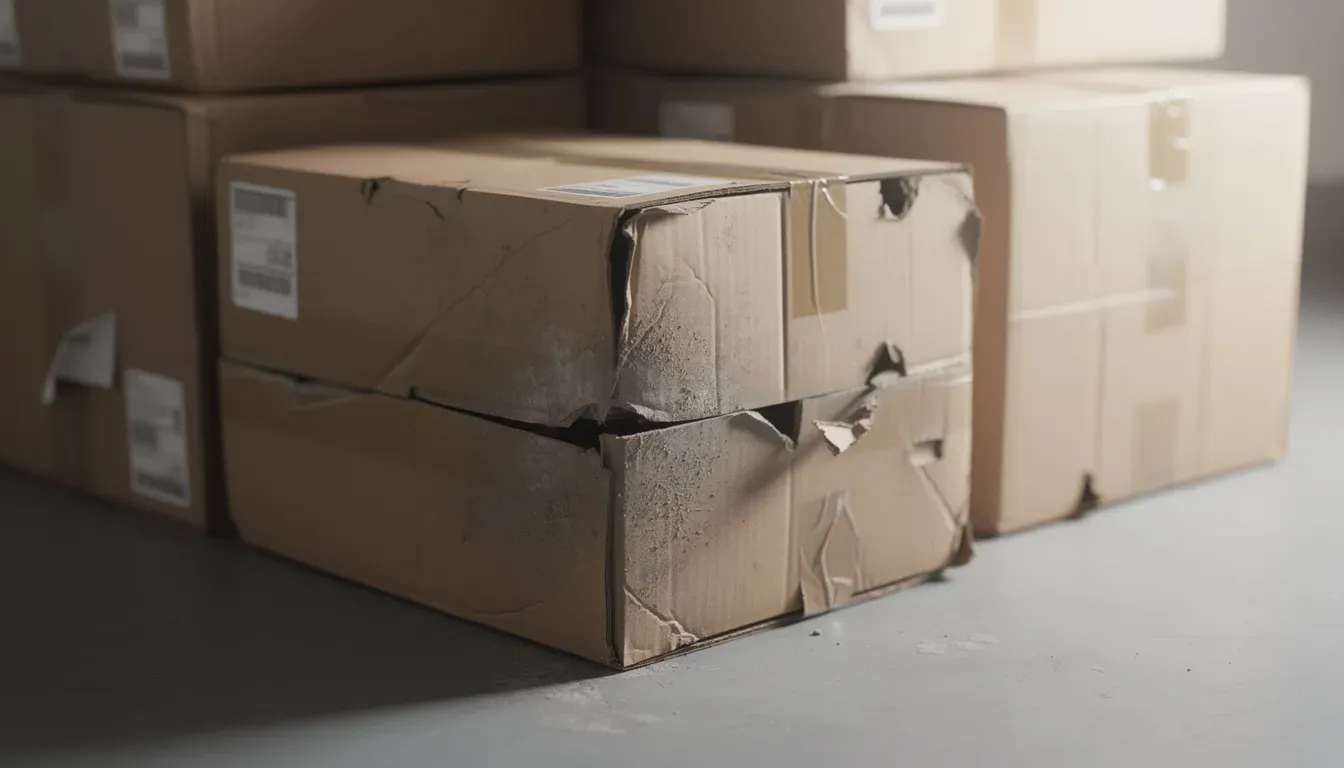
Risks of skipping or guessing on prep:
- Units flagged as unsellable upon arrival
- Inventory stranded in receiving for 7-14 days
- Relabeling fees of $0.25-$1 per unit
- Listing delays during critical selling periods like Prime Day and Q4
- Potential account health warnings if rejection rates climb
Micro-checklist for every SKU:
- [ ] Correct FNSKU barcode (not UPC/EAN)
- [ ] Compliant packaging for product type
- [ ] Accurate case pack counts
- [ ] Clear, scannable carton labels
Saltbox as your FBA prep partner in 2026 and beyond
Saltbox is built for modern Amazon sellers navigating exactly this kind of shift in the FBA program rules.
What Saltbox offers for Amazon FBA prep:
- Expert teams trained on Amazon’s latest prep and packaging rules
- Flexible warehouse and workspace options in multiple U.S. cities (ideal for sellers not ready for a long-term lease)
- Full suite of FBA prep services: receiving, inspection, labeling, kitting, packing, and compliant FBA shipping
- Providing faster turnaround times than most sellers can achieve in-house
Beyond Amazon, Saltbox supports multi-channel fulfillment for Shopify, direct-to-consumer, and wholesale, so the same inventory hub serves all your Amazon sales and other channels efficiently.

Speak with an expert about your FBA Prep needs
Request a call
The transition away from Amazon-managed prep is significant, but it’s also an opportunity. Sellers who use this moment to professionalize their supply chain operations, build reliable fulfillment services partnerships, and lock in compliant processes will have a competitive advantage over those scrambling at the last minute.
Amazon's prep service ending isn’t flexible. Your prep strategy shouldn’t be either.
Why is the end of Amazon FBA Prep a big deal for small and mid-size sellers?
Large brands with dedicated operations teams and established warehouse processes? They’ll barely notice this change. They already have proper prep workflows locked in.
But for solo entrepreneurs and SMB sellers (aka the vast majority of Amazon’s marketplace), this shift is significant. Many of these sellers depended on Amazon’s in-house prep as a backup, knowing that even if their own manufacturing partners shipped imperfect inventory, Amazon would clean it up.
That backstop is gone.
The operational burden shift looks like this:
Instead of clicking a box and paying Amazon a fee, sellers sending downstream inventory to Amazon fulfillment centers are now responsible for:
- Labor (yours or hired)
- Physical space for prep work
- Training on Amazon’s specific requirements
- Materials (labels, poly bags, bubble wrap, boxes)
- Process design and quality control
- Staying current on Amazon’s bi-monthly requirement updates
For smaller sellers, this creates real constraints:
- Limited warehouse space (many are working from garages or spare bedrooms)
- No dedicated ops staff
- Inconsistent processes that vary shipment to shipment
- Reliance on manufacturers or own manufacturing partners who don’t understand Amazon compliance
Real-world consequences:
Consider a toy brand or other ecommerce businesses shipping 2,000 units in November 2025 for holiday sales. Non-compliant packaging triggers a receiving hold. By the time they re-work and re-ship, it’s mid-December. Prime eligibility is gone. Lost sales during the most important selling window of the year.
Or a beauty brand that mislabels FNSKUs on a new product launch. Inventory sits in “receiving” for weeks while Seller Central shows zero available units. The listing loses algorithmic momentum. Competitors take the ranking.
“For smaller sellers, bad prep doesn’t just hurt margins; it stops the cash flow entirely.”
What common FBA prep mistakes are sellers making right now?
Common FBA prep mistakes sellers may make include:
DIY labeling errors:
- Using the wrong barcode type (manufacturer UPC/EAN instead of FNSKU)
- Printing labels at incorrect sizes (must be 1.8” x 1.1” minimum with 100% scan accuracy)
- Placing labels over seams, curves, or areas that can’t be scanned
- Missing suffocation warnings on poly bags (required for bags with openings larger than 5 inches)
- Using clear packaging where Amazon requires opaque wrapping
Packaging issues:
- Under-protected fragile items that break in automated handling (10-15% damage claim rates are common)
- Mixed SKUs in a single carton
- Inaccurate case pack counts that trigger receiving discrepancies
- Missing “Sold as Set” or “This is a Set” markings on bundles
- Non-compliant packaging that fails Amazon’s inspection protocols
Process issues:
- Trying to scale prep from a living room or small office
- No documented SOPs for prep work
- Inconsistent quality checks missing 5-20% of defects
- No one is formally accountable for Amazon compliance
- Not tracking Amazon’s frequent requirement updates via Seller Central alerts
Misunderstanding updated FBA shipping rules:
Amazon regularly updates requirements for box content information, carton-level labels, and inbound placement options. Sellers who don’t stay current end up with rejected shipments; and each rejection delays your inventory flow by days or weeks.
An experienced third-party prep partner can diagnose and fix these issues before they become account health problems. If your current process feels held together with tape and hope, it’s time to consider alternatives.
What should FBA sellers do now?
Waiting until Q4 2026 to react is too late. Sellers should start building or upgrading their FBA prep strategy in early to mid-2026.
Immediate Action Checklist for 2026:
- [ ] Audit all active and seasonal SKUs for current prep needs
- [ ] Map which SKUs are currently relying on Amazon’s in-house prep
- [ ] Review Amazon’s FBA prep and packaging requirements page line by line
- [ ] Identify gaps in your existing warehouse or 3PL capabilities
Suggested timeline:
- By February 2026: Decide on your prep model and start test shipments
- By March 2026: Fully transition off Amazon prep and validate compliance
- Immediately: Treat Amazon as fulfillment-only, not prep
Need help navigating this transition?
Saltbox offers Amazon FBA prep support designed specifically for sellers facing this deadline. Our teams handle receiving, inspection, labeling, kitting, and compliant FBA shipping, so you can focus on growing your Amazon business instead of mastering prep logistics.
Check out Parsel for streamlined shipping solutions, or watch our on demand webinar, “How to keep your Amazon inventory moving in 2026 without FBA Prep services" to get your questions answered by experts who live and breathe this stuff.

[Free Webinar] How to keep your Amazon inventory moving in 2026 without FBA Prep services
Join us for a practical, no-fluff discussion on how to keep inventory flowing into Amazon without disruptions.
Watch on demand
How do FBA prep services work with a third-party prep partner?
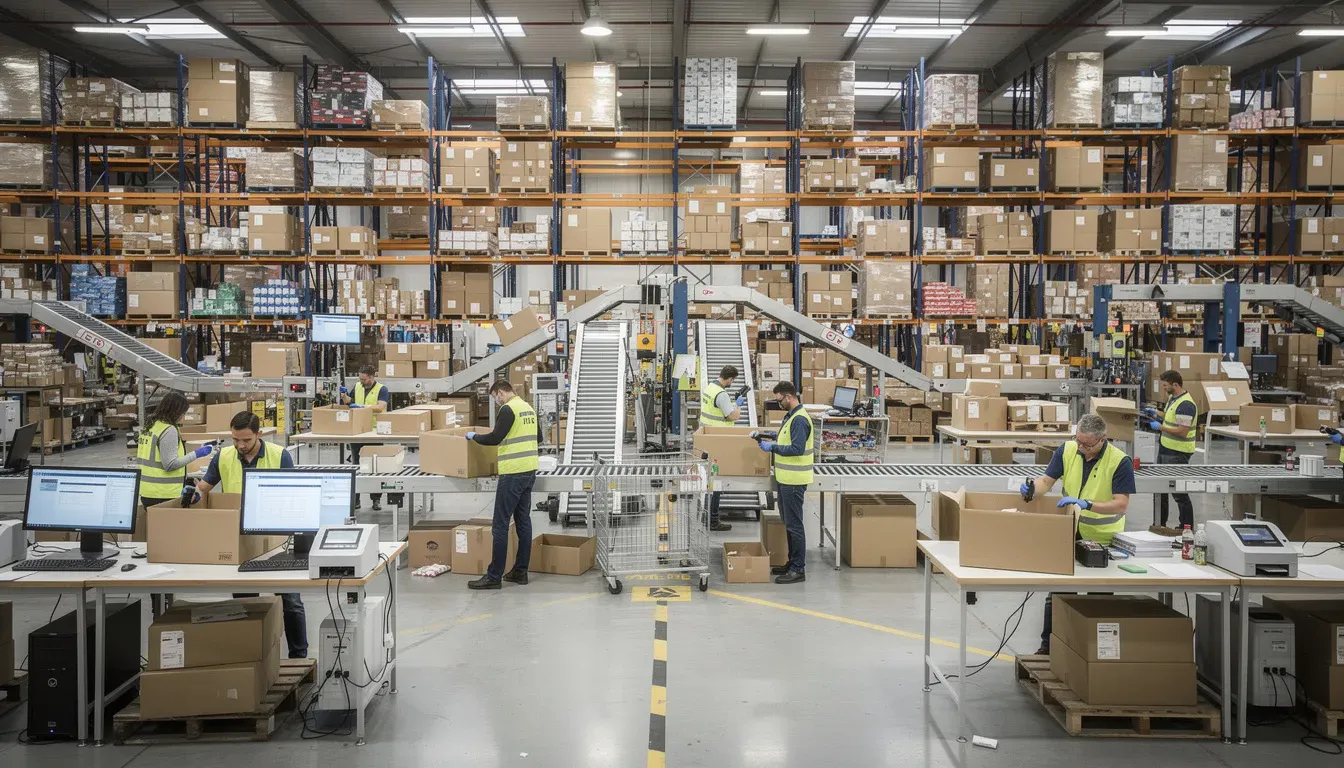
A specialized FBA prep service acts as your off-site operations team. They receive, inspect, prepare, and ship inventory to Amazon on your behalf, handling the operational efficiency you need but can’t build overnight.
Typical workflow:
- Inbound receiving: Your inventory arrives at the prep center from your supplier or own packaging facility
- Inspection and quality control: Units checked for defects, damage, or discrepancies
- Labeling and repackaging: FNSKU labels applied, products repackaged if needed
- Kitting/bundling: Multiple items combined into sellable sets with proper marking
- Carton building and labeling: Products packed into compliant cartons with accurate labels
- Creating compliant FBA shipments: Shipping plan created, LTL shipments or small parcel shipped to Amazon warehouses
Operational advantages:
- Handle seasonal volume spikes (Q4, Prime Day) without hiring temporary staff
- Standardized processes that protect products consistently
- Trained staff who understand FBA compliance inside and out
- Fast turnaround: Often 24-72 hours from receiving to ship-out
- Carton forwarding options that optimize inbound placement
Location matters. Prep centers near major ports or parcel hubs (Dallas, Atlanta, Los Angeles) can cut transit times and costs into Amazon fulfillment centers by 30% or more.
Saltbox locations combine flexible warehouse space, on-site labor, and Amazon-ready prep services. This is especially attractive for sellers not ready to sign a long-term warehouse lease but who need professional prep capabilities immediately.
How can I choose the right FBA prep partner?
This is a strategic decision. The right partner keeps your account healthy and inventory flowing. The wrong one creates more problems than it solves.
Vetting checklist for evaluating an FBA prep service:
- [ ] Proven experience with Amazon FBA prep and FBA compliance (ask for references and sample SOPs)
- [ ] Capacity and scalability for your forecasted volumes (including Q4 spikes)
- [ ] Clear SLAs for receiving and turnaround times (e.g., 24-72 hours)
- [ ] Transparent, itemized pricing (per-unit prep, storage, value-added services)
Important operational questions to ask:
- Do they integrate with your existing tools and Seller Central?
- Can they support AWD, Vendor Central, and other Amazon inbound programs?
- How do they handle errors or Amazon rejections?
- What’s their process for staying current on Amazon’s requirement updates?
Look for value-add capabilities:
- Returns processing
- Light assembly or kitting
- Cross-channel fulfillment (Shopify, Walmart, direct-to-consumer)
- Basic inventory management dashboards
Saltbox fits this profile well: modern facilities, human support teams, Amazon-literate staff, and flexible terms suitable for both solo sellers and growing brands.
Ready to explore your options?
Talk to a Saltbox specialist about your prep needs and get a custom assessment for your catalog.
Request a call
In-house FBA prep vs outsourced FBA prep services
Most sellers will land on a hybrid between in-house and outsourced prep, but understanding the trade-offs clearly helps you make the right call.
In-house prep advantages:
- Direct control over quality and process
- Closer coordination with product and marketing teams
- Potential cost savings at high volume
- Faster feedback loops when something goes wrong
In-house prep drawbacks:
- Upfront investment in space, racking, equipment, and staffing
- Ongoing training to keep up with Amazon’s evolving rules
- Risk of tying founder time to low-leverage operational work
- Difficulty scaling for seasonal peaks without excess capacity year-round
Outsourced FBA prep services benefits:
- Professional processes developed over thousands of shipments
- Dedicated space and labor without capital investment
- Ability to flex volume up or down based on demand
- Reduced compliance risk from specialized expertise
- Save time for higher-value activities like product development and marketing
Outsourced potential downsides:
- Less direct control over day-to-day operations
- Per-unit fees that affect margins
- Need to manage the relationship with SLAs and regular performance reviews
Consider a phased approach: Start with a third-party prep center for complex or high-volume SKUs while keeping simple, low-risk SKUs in-house. As you see actual performance and true costs, evolve your model accordingly.
Mini FBA prep compliance checklist for 2026
Pre-shipment verification:
- [ ] Confirm every ASIN has a valid and scannable FNSKU label placed on a flat, visible surface
- [ ] Ensure all poly bags over 5” opening have printed suffocation warnings and meet thickness requirements (1.5 mil minimum)
- [ ] Verify sets, multi-packs, and bundles are clearly marked as “Sold as Set” or equivalent wording
- [ ] Check that fragile items are bubble wrapped or otherwise protected per Amazon standards
- [ ] Confirm carton labels and box content information match actual contents and quantities
- [ ] Document your FBA prep SOPs and train at least one backup person on the shipping process
Get the complete, print-ready checklist here.
Pro tip: Saltbox teams use similar internal checklists across all locations to keep prep consistent, efficient, and compliant. This level of preparation is what separates sellers who sail through receiving from those who get stuck.
If this list feels overwhelming, that’s a signal. A specialized FBA prep service can handle all of this for you, and likely do it faster and more accurately than an ad-hoc in-house process.
Frequently asked questions
If your shipment arrives at an Amazon fulfillment center without meeting their packaging and labeling requirements, Amazon may refuse the shipment, charge relabeling or disposal fees, delay inventory check-in, or even issue account health warnings. Ensuring proper prep before shipping is the safest way to avoid these issues.
No. Starting January 1, 2026, Amazon no longer offers in-house FBA prep services. Every unit must arrive fully prepped and compliant. Shipments that don’t meet Amazon’s standards will be refused or delayed.
FBA prep costs vary depending on product type, quantity, and service provider. Third-party FBA prep pricing typically ranges from $0.40 to $1.00 or more per unit for basic tasks. However, costs may increase due to higher demand.
Amazon’s FBA prep requirements include labeling with correct FNSKU barcodes, poly bagging with suffocation warnings when needed, bubble wrapping fragile items, bundling or kitting products properly, and applying accurate carton labels. Detailed guidelines are available in Amazon Seller Central under Packaging and Prep Requirements.
Both options have pros and cons. In-house prep offers direct control but requires investment in space, labor, and training. Third-party prep services provide expertise, scalability, and fast turnaround but come with per-unit fees and less direct control. Many sellers use a hybrid approach depending on SKU complexity and volume.
Look for providers with proven Amazon FBA compliance experience, capacity to handle your volume including seasonal spikes, transparent pricing, fast turnaround times, and integration with Amazon Seller Central. Value-added services like returns management and multi-channel fulfillment can also be beneficial.
Yes. Amazon’s Ships in Product Packaging (SIPP) program allows eligible products to be shipped in their original packaging without additional prep, which can lower prep costs and simplify compliance.
Stay current with Amazon’s packaging updates, use correct FNSKU labels, ensure suffocation warnings on poly bags, protect fragile items adequately, avoid mixing SKUs in cartons, and maintain accurate case pack counts. Using detailed SOPs and quality control checks helps prevent errors.
Poor prep can lead to rejected shipments, delayed inventory availability, lost sales especially during peak seasons, increased fees, and potential account suspensions. Maintaining proper prep safeguards your sales velocity and account health.
Amazon’s Packaging and Prep Requirements and FBA Product Barcode Requirements pages in Seller Central are the authoritative sources. These guidelines are updated frequently, so regular review is essential.