


Key takeaways
- The threshold for moving out of the garage is operational, not just spatial. Once you are processing more than 20 to 30 orders per day from home, error rates climb, throughput plateaus, and unboxing quality slips. Returns from mispicks eat margin, suppliers expect commercial addresses, and the inability to receive freight without liftgate fees ($75 to $150 per delivery) compounds quickly.
- Traditional industrial leases were not designed for early-stage ecommerce. Three to five-year commitments, personal guarantees, NNN structures, and $50,000 to $150,000 in build-out and capex consume 15% to 25% of gross margins for brands doing $500K to $2M in revenue. National industrial vacancy is around 7.1%, with sub-50,000 square foot spaces especially tight, giving landlords little reason to offer flexible terms.
- Modern ecommerce facilities are built around carrier pickup schedules, not just square footage. Late-day pickups extend your daily fulfillment cutoff by three to four hours. Geographic positioning compresses transit time. Saltbox builds daily pickups from UPS, FedEx, USPS, and Amazon into all 11 locations as a standard feature, removing the burden of negotiating contracts or scheduling pickups yourself.
- Fractional warehousing sits between DIY and full 3PL outsourcing. On-site staff handle receiving and can execute pick-and-pack while your inventory stays in your suite under your standards. Pricing is bundled into membership or runs lower per-order than a 3PL ($3 to $8 per order plus storage and surcharges). For a brand shipping 100 orders per day, even $1 in savings per order is $36,500 annually.
Every product-based business reaches a point where the spare bedroom or garage simply cannot keep up. Orders stack higher, inventory crowds out living space, and the packing process becomes a daily obstacle course. That inflection point is exciting because it signals real demand, but it also forces a critical decision about where and how to operate. Finding the right warehouse space for small businesses is one of the most consequential moves a founder can make, and the wrong choice can drain capital, lock you into inflexible terms, or leave you without the infrastructure you actually need. The right choice, on the other hand, sets the foundation for faster shipping, cleaner operations, and sustainable growth. This guide breaks down what to look for, what to avoid, and how to match your space to your stage.
The transition from home to professional warehouse space
The shift from a home-based operation to a dedicated warehouse is rarely a single dramatic moment. It is usually a slow accumulation of friction: missed shipment windows, inventory errors caused by disorganization, and the creeping realization that your living room has become a fulfillment center. Recognizing that friction early, and understanding why traditional solutions often fall short, will help you move with purpose rather than panic.
Signs your business has outgrown the garage
The most obvious sign is physical: you have run out of room. Pallets line the hallway, your car lives in the driveway, and receiving a new shipment means a full day of reorganizing. But space constraints are only part of the picture.
Operational breakdowns matter just as much. If you are consistently shipping orders late because your packing station is also your kitchen table, that is a fulfillment problem masquerading as a space problem. If pick accuracy has dropped because SKUs are stored across three closets and a storage unit, the cost of returns and reshipping is eating into your margins. A useful benchmark: once you are processing more than 20 to 30 orders per day from a home setup, error rates tend to climb and throughput plateaus.
There is also a professional credibility factor. Suppliers and wholesale partners expect a commercial receiving address. Carrier pickups from residential addresses are limited and often unreliable. And if you are running a brand that invests in the unboxing experience, a cramped garage is not the environment where consistent, quality packing happens.
The emotional toll is real, too. Founders who operate from home often describe the inability to "leave work" because work is literally in every room. A dedicated space creates a boundary that protects both the business and the person running it.
The limitations of traditional industrial leases
The conventional path out of the garage is a traditional warehouse lease, and for many small businesses, it is the wrong one. Industrial leases in most U.S. markets require three-to-five-year commitments with personal guarantees. The national industrial vacancy rate stabilized at around 7.1% in late 2025, but small spaces under 50,000 square feet remain especially tight, which gives landlords little incentive to offer flexible terms.
The financial burden extends well beyond rent. You will need to budget for build-out costs: racking, lighting, climate control, loading infrastructure, and office space. Security deposits often equal two to three months of rent. Triple-net lease structures mean you are also responsible for property taxes, insurance, and maintenance. For a small ecommerce brand doing $500,000 to $2 million in annual revenue, these fixed costs can consume 15% to 25% of gross margins before you ship a single package.
Then there is the scaling problem. If your business is seasonal or growing unpredictably, a fixed lease either leaves you paying for space you do not use or scrambling when you outgrow it. Breaking a commercial lease early typically triggers penalties equal to the remaining lease value. You are locked in, whether business doubles or drops by half.
The traditional model was designed for established companies with predictable inventory volumes and long planning horizons. Most early-stage ecommerce brands have neither.
Essential features for modern ecommerce operations
Not all warehouse space is created equal. A bare concrete box with a roll-up door might technically qualify as a warehouse, but it will not support the speed, accuracy, and carrier access that ecommerce fulfillment demands. The features built into your space directly affect your cost per order and your ability to meet customer expectations.
Loading docks and carrier pickup accessibility
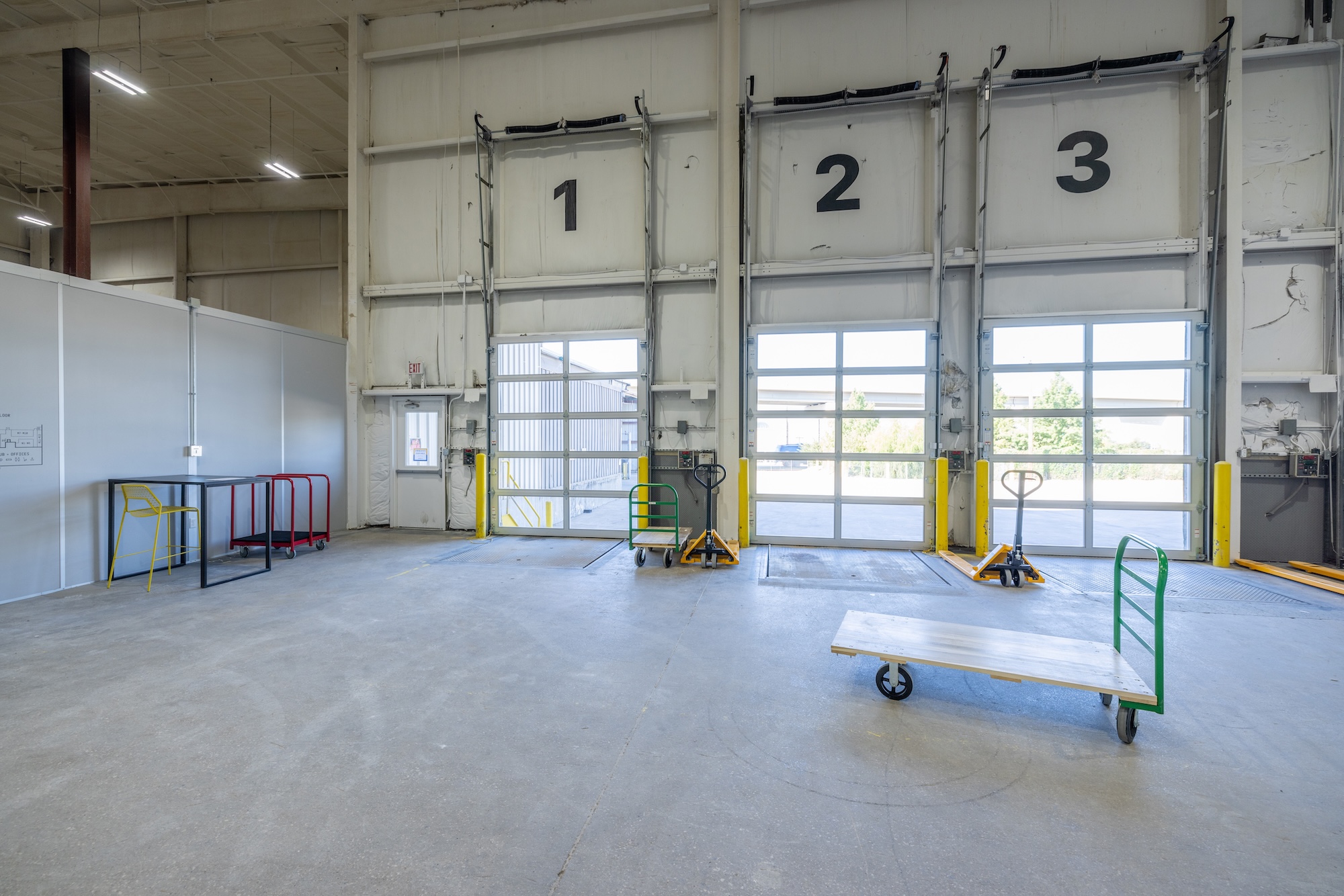
Loading docks are not a luxury for product businesses. They are a basic operational requirement once you are receiving palletized freight or shipping in volume. Without dock-height access, you are limited to liftgate deliveries, which cost $75 to $150 more per shipment, or you are manually unloading from ground level, which is slow and increases damage risk.
The more important question is carrier pickup infrastructure. Your warehouse location should offer daily pickups from major carriers: UPS, FedEx, USPS, and regional options. The pickup schedule determines your daily cutoff time, which directly controls how late in the day you can process orders and still hit next-day transit. A location with a 5:00 PM carrier pickup gives you three to four more hours of productive fulfillment time compared to a location where the last truck leaves at 1:00 PM.
Geographic positioning matters, too. Shipping from a centrally located facility can reduce average transit times by one to two days compared to shipping from a coast. A package sent from Dallas to New York, for example, typically arrives in two to three days via ground, while the same package from Los Angeles takes four to five. If you are choosing between markets, proximity to your customer base should weigh heavily in the decision.
Saltbox builds carrier pickup infrastructure into every one of its 11 locations, with daily pickups from all major carriers included as a standard feature. That means you do not need to negotiate carrier contracts or schedule your own pickups, which removes a significant operational burden for founders managing everything themselves.
On-site shipping and fulfillment infrastructure
Beyond the dock and the carrier schedule, the interior of your space needs to support efficient fulfillment workflows. This means dedicated areas for receiving, storage, picking, packing, and staging outbound shipments. In a poorly designed space, these zones overlap, and the result is congestion, errors, and wasted time.
Key infrastructure to evaluate in any warehouse option:
- Shelving and racking systems appropriate for your SKU size and weight
- A clean, well-lit packing area with access to enterprise-grade equipment like thermal label printers and scales
- Adequate power and internet connectivity for your shipping software and inventory management system
- Climate control if your products are sensitive to temperature or humidity
If you are investing in a premium unboxing experience, your packing environment matters more than most founders realize. Consistent, high-quality packaging requires a stable workstation, not a folding table in a dusty corner. Consider posting a "perfect pack" photo at your packing station so that every order matches your brand standard, whether you pack it yourself or a team member handles it.
Some facilities also offer content creation spaces, which is a genuine advantage for ecommerce brands that rely on product photography and social media. Having a studio on-site eliminates the need to transport inventory to a separate location for shoots.
Evaluating the benefits of flexible warehouse memberships
The gap between a rigid industrial lease and a cramped home operation has created demand for a different model entirely. Flexible warehouse memberships offer dedicated space, professional infrastructure, and month-to-month terms that align with how small ecommerce businesses actually grow.
Scalable space without long-term commitments
Growth in ecommerce is rarely linear. You might double your order volume during Q4, then settle back to a baseline in January. A new product launch could spike your inventory needs for six weeks. A viral social media moment might require you to scale fulfillment capacity overnight. None of these patterns fit neatly into a three-year lease.
Flexible memberships solve this by letting you scale your space up or down as your business changes. You start with a suite that fits your current inventory, and if you need more room, you expand within the same facility. If business contracts, you downsize without penalty. This model turns warehouse space from a fixed cost into a variable one, which is healthier for your unit economics and your cash flow.
The financial comparison is stark. A traditional 5,000-square-foot warehouse lease in a market like Atlanta or Denver might run $4,000 to $7,000 per month before build-out, utilities, and insurance. A flexible membership for a comparable dedicated suite typically starts lower and includes infrastructure that would otherwise require separate capital expenditure. Saltbox, for example, prices warehouse memberships on a custom basis and includes loading dock access, carrier pickups, and on-site staff support in the membership, meaning there are fewer surprise line items on your monthly operating statement.
The real value, though, is optionality. A month-to-month commitment means you can relocate to a different market if your customer data shows a geographic shift, or you can exit entirely if you pivot the business. That flexibility has measurable financial value, especially in the first two to three years of operation when your trajectory is least predictable.
Integrating office and meeting space under one roof
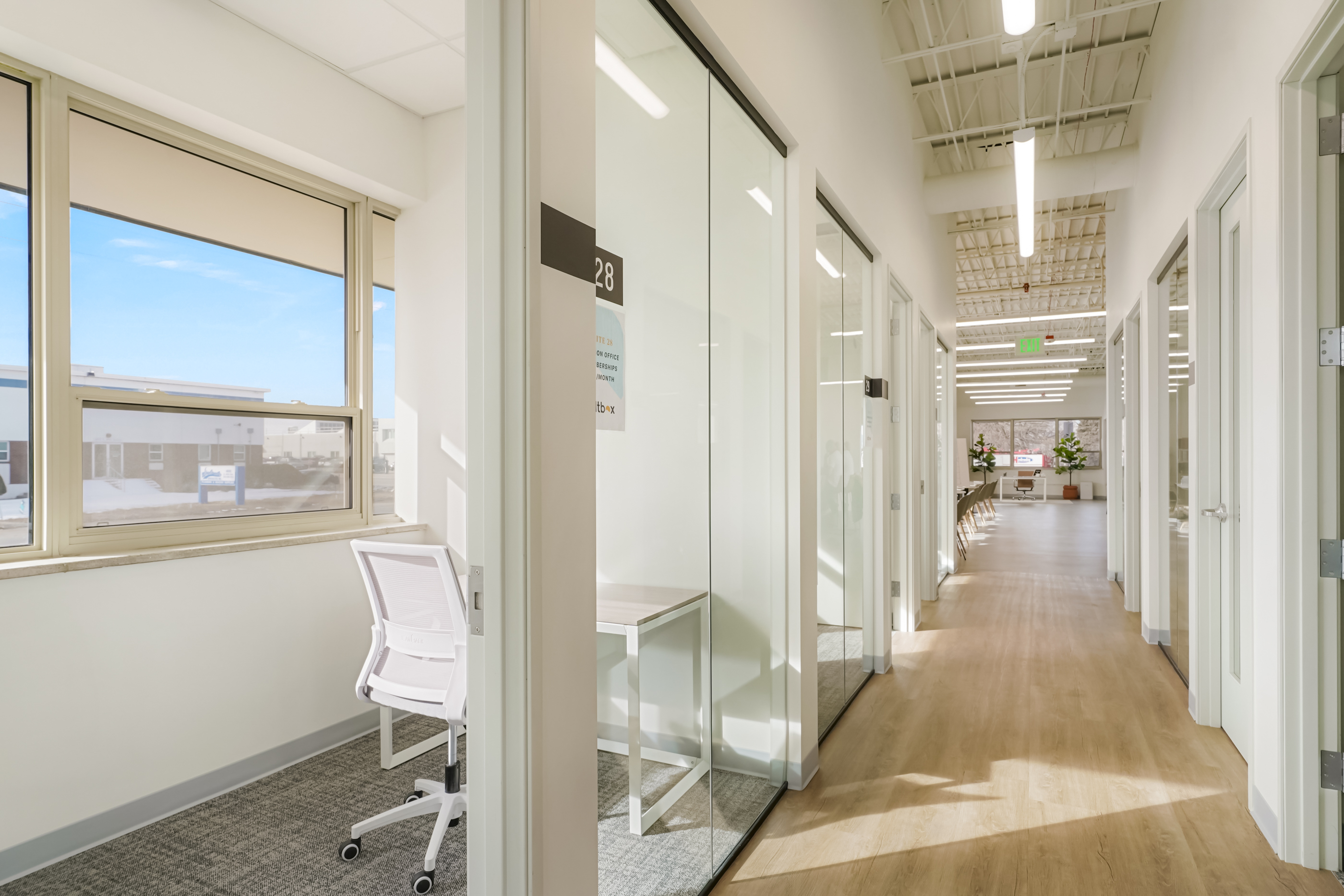
One underappreciated cost of a standalone warehouse is the need for separate office space. You still need somewhere to take calls, meet with suppliers, interview hires, and do focused work that does not involve packing tape. Renting a coworking desk or a small office on top of your warehouse lease fragments your operations and adds another monthly bill.
Facilities that combine warehouse suites with professional workspace eliminate this problem. You walk from your inventory to your desk to a conference room without leaving the building. That consolidation saves time, reduces commuting between locations, and creates a more professional environment for your team.
Look for locations that include amenities like private meeting rooms, high-speed internet, printing, and mail handling. Some facilities also offer content studios for product photography and video, which is particularly valuable for DTC brands that produce their own marketing assets. The growth of ecommerce fulfillment demand has pushed facility operators to design spaces that reflect how modern product businesses actually work, not just how they store goods.
This all-under-one-roof model is what Saltbox was built around. Each location combines dedicated warehouse suites with coworking amenities, conference rooms, and content studios, so your entire operation runs from a single address. With over 1,000 active members across 11 locations, the model has proven that small ecommerce businesses benefit from consolidation rather than fragmentation.
Operational support and community resources
Space alone does not solve every operational challenge. The best warehouse environment for a small business also provides access to people and knowledge that accelerate your learning curve and reduce costly mistakes.
Leveraging fractional warehousing and staff assistance
Most small ecommerce founders wear every hat: CEO, warehouse manager, picker, packer, and shipping coordinator. That works at low volume, but it does not scale. Once you are processing 50 or more orders per day, the time you spend on fulfillment is time you are not spending on product development, marketing, or strategic partnerships.
Fractional warehousing and on-site staff support offer a middle ground between doing everything yourself and fully outsourcing to a third-party logistics provider. With fractional support, on-site teams can handle receiving shipments, organizing inventory, and even executing pick-and-pack fulfillment on your behalf. You retain control over your brand experience and quality standards while offloading the physical labor.
This model differs from a traditional 3PL in important ways. A 3PL takes full custody of your inventory and manages fulfillment according to their processes, not yours. You typically lose visibility into how orders are packed, and customization costs extra. Fractional support, by contrast, keeps your inventory in your space, under your oversight, with staff available to assist as needed. You set the standard; they help you execute it.
The cost comparison matters for your margins. Traditional 3PL pricing runs $3 to $8 per order for pick and pack, plus storage fees, receiving fees, and various surcharges. Fractional support through a co-warehousing facility is often bundled into your membership or available at a lower per-order cost because the overhead is shared across the facility's member base. For a business shipping 100 orders per day, even a $1 per order savings translates to $36,500 annually.
Track your pick accuracy closely regardless of who handles fulfillment. A target of 99.5% accuracy is the standard worth aiming for. Every mispick costs you the return shipping, the replacement product, and the customer's trust.
Networking with a community of founders and operators
Running a product business can be isolating, especially if you have transitioned from a corporate environment or are building solo. The operational questions you face, from negotiating carrier rates to choosing an inventory management system, are ones that hundreds of other founders have already answered through trial and error.
Co-warehousing facilities that cultivate a founder community create opportunities to shortcut that learning curve. Peer conversations in a shared break room or a structured networking event can surface insights that would otherwise take months of research. A fellow member who has already tested three different poly mailer suppliers can save you weeks of sampling and wasted spend.
Some facilities formalize this through programming. Saltbox, for instance, runs what it calls the Upstream community, which includes webinars, playbooks, and peer networking designed specifically for ecommerce operators. That kind of structured support is increasingly recognized as valuable for small business growth, particularly when founders are making decisions about technology, logistics partnerships, and market expansion.
The community dimension is easy to overlook when you are evaluating warehouse options on a spreadsheet. But access to a network of operators who understand your challenges, and who are willing to share what works, compounds in value over time. It is one of the reasons co-warehousing has grown rapidly since 2019, when models like Saltbox first emerged.
Budgeting for your first dedicated warehouse location
Your first warehouse is a significant financial commitment, and getting the budget right requires looking beyond the monthly rent number. A complete budget should account for the following categories:
- Base space cost: rent or membership fee for your square footage
- Build-out and equipment: racking, packing stations, label printers, and any modifications to the space
- Utilities and insurance: often bundled in flexible memberships but separate in traditional leases
- Carrier and shipping costs: negotiated rates, pickup fees, and packaging materials
- Labor: your own time, part-time help, or fractional fulfillment staff
- Technology: shipping software, inventory management, and barcode scanning hardware
For a business doing $50,000 to $150,000 per month in revenue, total warehouse and fulfillment costs should ideally stay below 15% of gross revenue. If you are exceeding that threshold, either your space is too large for your current volume or your fulfillment process has inefficiencies worth addressing.
One common mistake is over-committing to space based on optimistic growth projections. It is better to start with a smaller suite and expand than to sign a lease for 3,000 square feet when you currently need 800. The cost of unused space is pure waste, and it compounds every month.
Build a simple monthly model that tracks your cost per order across all warehouse-related expenses. This single metric tells you whether your operation is becoming more efficient as you grow or whether costs are scaling faster than revenue. Healthy ecommerce businesses see cost per order decline as volume increases, because fixed costs like rent and equipment are spread across more shipments.
If you are evaluating multiple options, request a full cost breakdown from each provider. Traditional landlords will quote a per-square-foot rate but may not disclose CAM charges, tax pass-throughs, or required insurance minimums upfront. Flexible membership providers should be transparent about what is included and what costs extra. The small business lending environment remains competitive, so if you need financing for your move, prepare a clear projection of how dedicated space will improve your throughput and margins.
The right warehouse for your small business is one that matches your current volume, supports your fulfillment standards, and gives you room to grow without locking you into commitments you cannot afford. Prioritize flexibility, infrastructure, and operational support over raw square footage. A smaller, well-equipped space with carrier access and staff support will outperform a larger, empty box every time.
If you are ready to see what a purpose-built ecommerce warehouse looks like in practice, book a tour at one of Saltbox's 11 locations across nine major U.S. markets. Walking through a facility in person is the fastest way to understand whether the space, the infrastructure, and the community fit your business.
Frequently asked questions
Once you are processing more than 20 to 30 orders per day from a residential setup, the math stops working. Pick accuracy drops, throughput plateaus, and the time you spend organizing inventory across closets and storage units cuts directly into product development and marketing. Add the credibility friction with suppliers, the unreliability of residential carrier pickups, and the unboxing inconsistency a cramped garage produces, and the case for dedicated space becomes operational, not aspirational.
Industrial leases require three to five-year commitments with personal guarantees and triple-net structures that pass property taxes, insurance, and CAM charges to you. Build-out costs typically run $50,000 to $150,000. For a brand doing $500K to $2M in revenue, those fixed costs can consume 15% to 25% of gross margins before you ship a single order. Breaking the lease early triggers penalties equal to the remaining lease value.
Loading docks at minimum, since liftgate-only deliveries cost $75 to $150 more per shipment. Daily carrier pickups from UPS, FedEx, USPS, and regional carriers, with later afternoon pickup times extending your daily fulfillment cutoff. Geographic positioning that reduces average transit time to your customer base. Climate control if your products require it. Adequate power and connectivity for shipping software, plus dedicated zones for receiving, picking, packing, and outbound staging.
Fractional warehousing keeps your inventory in your private suite under your oversight while on-site staff are available to handle receiving, organizing, or executing pick-and-pack on demand. A traditional 3PL takes full custody of your inventory and fulfills according to their standard process, where you typically lose visibility into how orders are packed and pay extra for customization. Fractional pricing is often bundled into membership or runs lower than 3PL per-order rates of $3 to $8 plus storage and surcharges.
Total warehouse and fulfillment costs should ideally stay below 15% of gross revenue. Build the budget across six categories: base space cost, build-out and equipment, utilities and insurance, carrier and shipping costs, labor (your time, part-time help, or fractional support), and technology. Track cost per order monthly. In a healthy operation, that number declines as volume grows because fixed costs spread across more shipments.
Current volume, with room to expand within the same facility. Over-committing to space based on optimistic growth projections is one of the most common founder mistakes. Unused space is pure waste that compounds every month. Start with a smaller suite that fits your inventory today, and confirm during the tour that the facility can accommodate your growth. A flexible membership lets you upgrade when you actually need it instead of paying for capacity you have not grown into.
For Her
For Him
For Pets
For Anyone



Related posts
Learn from businesses improving their operational efficiency. Explore how Saltbox’s expert support and flexible spaces drive their growth.


2026 peak season shipping surcharges: what FedEx, UPS, USPS, and Amazon are charging
Additional handling went up about 6%. The fee on every single order went up 25%. Here’s the full 2026 surcharge picture, and what it costs you per order.
10 best 3PL companies in Atlanta, GA (2026)
Ten Atlanta 3PL providers compared on buildings and certifications, plus the case for keeping fulfillment in a suite you control.
10 best 3PL companies in Tempe, AZ (2026)
Ten 3PL providers serving Tempe, what each one is built to handle, and the case for keeping your pallets somewhere you can walk in.
Related terms
Learn from businesses improving their operational efficiency. Explore how Saltbox’s expert support and flexible spaces drive their growth.