.webp)


Key takeaways
- The garage isn't failing. It just has a ceiling. Missed carrier pickups, scattered inventory, and a residential address quietly cap your credibility and your speed. Moving into purpose-built infrastructure at this stage isn't a comfort upgrade. It's a supply chain decision that protects your margin through the next two to three years of growth.
- Fragmented operations drain margin in ways that never show up on a P&L. A storage unit here, a coworking desk there, afternoon runs to the post office. That's hours of lost productivity and multiple vendor relationships to juggle every week. Consolidating receiving, storage, packing, shipping, and meetings under one roof removes the operational tax that nobody sees until it's already costing you.
- Industrial leases lock you in before you're ready. Three to five years of fixed cost, plus $15,000 to $30,000 in build-out before you ship your first order. A flexible warehouse membership lets you scale square footage to actual demand, recover 15 to 25 percent of warehousing cost annually, and ride seasonal swings without bleeding cash on space you don't need. For brands at this stage, it's the stepping stone: past the garage, before a full warehouse commitment, with none of the capital risk.
- Saltbox is built for exactly this moment. Month-to-month warehouse suites, loading docks, daily carrier pickups, and on-site operations support, all under one roof. It's the full circle: receive on the dock, store in your suite, pick and pack, back to the dock. Repeat. That single-roof model gives growth-stage brands the infrastructure of a much larger company, backed by a community of 1,000+ members nationwide, without the lease or the capital outlay.
Your business deserves better than your garage.
That feeling resonates with thousands of ecommerce founders who started their businesses at home, only to find their living rooms buried under inventory and their dining tables doubling as packing stations.
The shift from scrappy startup to professional operation is one of the most consequential moves a product-based business will make, and the supply chain decisions you make during this period determine whether you scale profitably or bleed cash.
The U.S. ecommerce logistics market is projected to reach $163.35 billion in 2026, driven by investments in automated micro-fulfillment and faster delivery expectations. That growth creates both opportunity and pressure for founders. Getting your supply chain right means more than finding a place to store boxes. It means building an infrastructure that handles receiving, storage, packing, shipping, and returns without fragmenting your operations across multiple vendors and locations. For growing ecommerce brands, the right supply chain setup is the difference between healthy margins and a cash flow crisis. Read on to learn the right steps to take.
Step 1: Move beyond the garage to professional supply chain infrastructure
I've watched founders hit this wall at 20 orders a day. For others it arrives at 50 or 100. The specific number varies, but the symptoms are universal: missed carrier pickups, inventory scattered across spare bedrooms and rented storage units, and a growing sense that your home life and your business have become uncomfortably entangled. Moving past this stage requires honest assessment and a willingness to invest in infrastructure that matches your ambitions.
Identifying the limits of home-based operations
The garage phase serves a purpose. It keeps overhead low, lets you test product-market fit, and gives you direct control over every package that leaves your hands.
But those advantages erode quickly once order volume climbs. If you're packing 30 orders a day in a spare bedroom, you're spending three to four hours on fulfillment alone, time that could go toward sourcing, marketing, or product development.
There's also the professional credibility issue. Suppliers and retail buyers take you more seriously when you operate from a commercial address. Some wholesale accounts won't even consider a vendor shipping from a residential location. Your customers may not know where their orders originate, but your supply chain partners absolutely do.
The emotional toll is real too. Blurred boundaries between work and personal life lead to burnout. When your living room smells like packing tape and your family is stepping over inventory, the cost compounds daily. Recognizing these limits isn't a sign of failure. It's a signal that your business is ready for its next stage.
The benefits of flexible workspace over long-term industrial leases
The traditional path out of the garage leads to an industrial lease, and that path is lined with hidden costs.
A standard commercial warehouse lease runs three to five years, often with triple-net structures that pass property taxes, insurance, and common area maintenance charges directly to you. Before you ship a single order from your new space, you may spend $15,000 to $30,000 on racking, climate control, and build-out.
For a business doing 50 to 200 orders per day, that level of commitment is risky. Seasonal fluctuations can leave you paying for 3,000 square feet of space you only need for four months of the year. A slow Q1 after a strong holiday season can turn that lease into a financial anchor.
Flexible workspace solves this. Month-to-month warehouse memberships let you scale up before peak season and scale down when demand softens. You avoid the capital expenditure of a build-out because the space comes ready. For growth-stage brands, Saltbox is that stepping stone: past the garage, before a full warehouse commitment, with none of the capital risk. Month-to-month warehouse suites across locations in major U.S. markets give you professional infrastructure without the long-term exposure. That flexibility isn't a luxury. It's a financial necessity.
Step 2: Optimize ecommerce fulfillment with all-in-one infrastructure
Fragmentation is the silent killer of ecommerce margins. A storage unit here, a coworking desk there, afternoon drives between locations to pack orders.
Each fragment adds time, cost, and cognitive load. The most effective supply chain optimization for growing ecommerce brands starts with consolidating operations under one roof.
Streamline shipping with carrier pickups and loading dock access
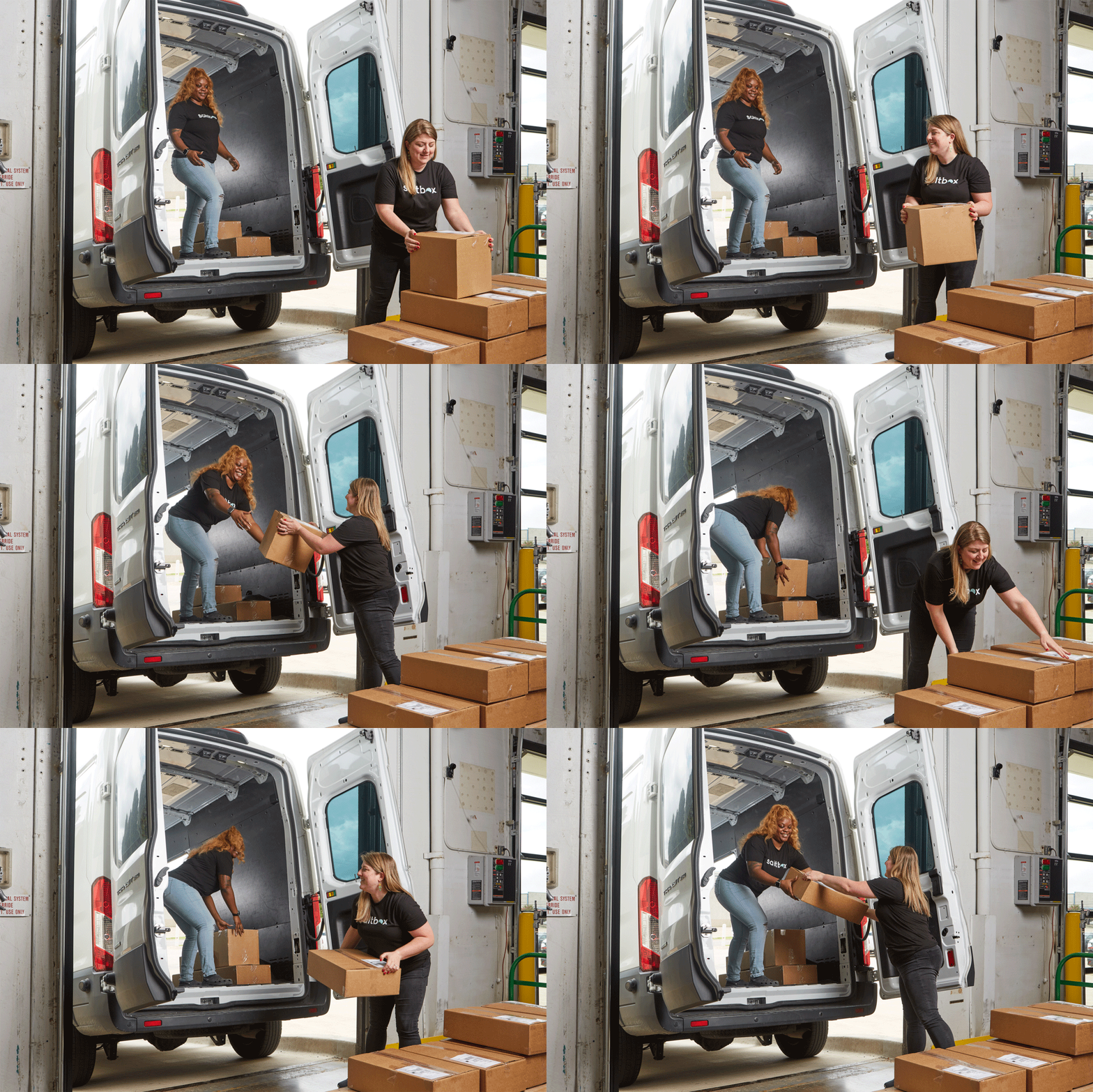
Carrier infrastructure is one of the most overlooked factors in warehouse selection. If you're driving packages to the post office or a UPS Store every afternoon, you're burning one to two hours daily on a task that should happen automatically. Daily carrier pickups from all major carriers, built into your facility, eliminate that friction entirely.
Loading dock access matters just as much, especially as your business grows into pallet-scale receiving. Without a dock, you're paying liftgate fees of $75 to $150 per delivery, and those fees add up fast when you're receiving weekly shipments from manufacturers. A single liftgate fee on a monthly freight delivery can cost you $1,800 per year, money that goes straight to your bottom line when eliminated.
Pickup cutoff times also affect your competitiveness. If your carrier's last pickup is at 5:00 PM instead of 2:00 PM, you gain three extra hours of processing time each day. That means orders placed in the early afternoon still ship same-day, which directly impacts your delivery promise and customer satisfaction. Fulfillment speed is increasingly tied to customer retention, and your physical infrastructure determines how fast you can actually move.
Integrate office space and fractional warehousing
The all-under-one-roof model eliminates the operational fragmentation that drains growing brands. Instead of maintaining separate locations for storage, packing, office work, and content creation, you operate from a single facility that handles all of it.
Fractional warehousing is the key concept here. Rather than leasing an entire warehouse, you rent a dedicated suite sized to your current inventory needs. As those needs change, your space changes with you. This model gives you the control of having your own warehouse without the overhead of a 5,000-square-foot industrial space you won't fill for another two years.
The office integration piece matters too. Growth-stage founders still need meeting rooms for supplier calls, high-speed internet for managing their Shopify or Amazon dashboards, and content studios for product photography. When your entire operation, from inventory receiving to product photo shoots to order fulfillment, runs in one place, you save both money and the mental energy of managing multiple locations.
Step 3: Scale inventory management without losing control
Growth introduces complexity. More SKUs, more suppliers, more customer expectations. The temptation to hand everything off to a 3PL is strong, but doing so too early, or with the wrong partner, costs you something money can't easily buy back: control over your own product.
Maintain brand quality through in-house operations
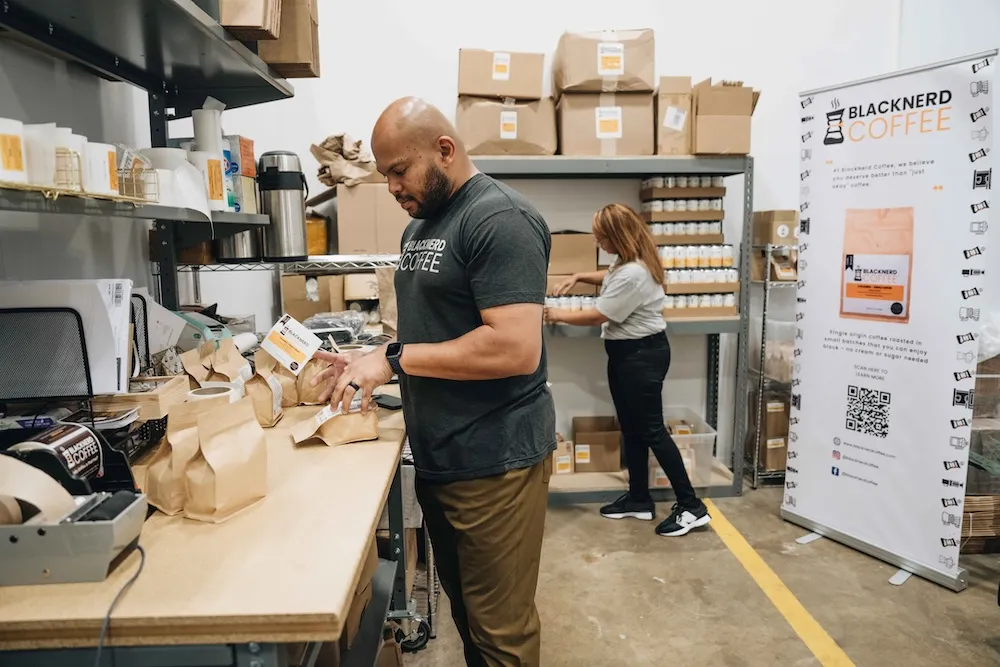
When someone else packs your orders, you lose visibility into the unboxing experience, which is one of the few physical touchpoints your brand has with customers. A 3PL handling thousands of clients won't replicate that care. Their incentive is speed and volume, not your brand's personality.
Keeping fulfillment in-house during this stage means maintaining direct oversight while your brand identity is still solidifying. Set a pick accuracy target of 99.5% and post visual aids like "perfect pack" photos at your packing stations so every team member knows exactly what a finished order should look like. That level of quality control drives repeat purchase rates and lower return rates, both of which directly improve your unit economics.
The difference between Saltbox and a 3PL isn't price. It's that you stay close to your product. You're on site. You can visit your inventory, adjust your packing process same-day, and talk directly to the operations team, not a customer service queue. That visibility is what you're protecting.
Leverage month-to-month memberships for seasonal growth
Ecommerce is inherently seasonal. Even brands outside obvious gift categories see demand fluctuations tied to marketing campaigns, product launches, and platform-specific events like Amazon Prime Day. Your warehouse footprint should flex with these cycles, not lock you into paying for peak capacity year-round.
Month-to-month memberships solve this cleanly. Before Q4, you scale into a larger suite or add temporary storage. After the holiday rush, you scale back down. Founders who match their space to actual demand rather than worst-case projections typically recover 15 to 25 percent of warehousing cost annually.
This flexibility also reduces the pressure of inventory planning. You don't need to forecast with perfect accuracy twelve months out because your space commitment adjusts as your reality changes. For a founder managing cash flow carefully, that breathing room is the difference between confident growth and constant anxiety about overhead.
Reduce operational friction in your growth stage
Friction compounds. Every extra step in your daily operations, every workaround, every manual process that could be eliminated, costs you time and margin. Growth-stage brands need to audit their workflows and remove anything that doesn't directly contribute to getting orders out the door or improving the customer experience.
One of the most practical advantages of operating from a purpose-built ecommerce facility is access to equipment and staff you'd otherwise need to purchase or hire yourself. Enterprise-grade printers, pallet jacks, shrink-wrap stations, and industrial scales represent thousands of dollars in capital expenditure for a solo operator. In a shared facility, these tools are simply there.
On-site operations staff add another layer of efficiency. Having trained people who can receive inbound freight, check shipments against purchase orders, and organize inventory into your suite means you're not spending your mornings unloading pallets. The time savings are measurable: a founder who reclaims two hours a day on receiving and warehouse organization gets back 40 hours a month. Redirect that toward supplier negotiations or marketing, and the return compounds quickly.
Build a resilient supply chain through community and networking

Supply chain resilience isn't just about redundant suppliers and safety stock. It's also about having access to people who have solved the problems you're facing right now. Peer networks among ecommerce operators create real operational advantages: shared carrier rate negotiations, supplier recommendations, and honest feedback on fulfillment software.
Operating in isolation, whether from a home garage or a standalone warehouse, cuts you off from those advantages. A community of fellow founders who ship physical products daily becomes an informal advisory board. You learn which freight forwarders are reliable, which packaging suppliers offer the best price-to-quality ratio, and which mistakes to avoid during your first container import.
Saltbox members get access to exactly this kind of network. More than 1,000+ members nationwide across U.S. markets, all building product-based businesses. The value of a single conversation that prevents a $5,000 inventory mistake or surfaces a better shipping rate far outweighs any membership cost. Ecommerce brands that build strong operational networks consistently outperform those that figure everything out alone.
Future-proofing your ecommerce business for scale
The decisions you make about your supply chain today set the trajectory for the next two to three years of your business.
The right infrastructure gives you optionality. Month-to-month flexibility means you can test new markets, expand into wholesale, or launch new product lines without renegotiating a lease. Integrated warehouse and office space means you're not scrambling for a meeting room when a retail buyer wants to visit. Daily carrier pickups and loading dock access mean you can handle increased volume without adding delivery runs to your daily routine.
Think of your supply chain as the operating system of your business. Every other function, from marketing to customer service to product development, runs on top of it. A fragmented, improvised supply chain creates bottlenecks that limit how fast you can grow. A consolidated, flexible one gives you the foundation to scale confidently.
If your current setup is holding you back, the most productive next step is seeing what purpose-built ecommerce infrastructure actually looks like. Book a tour at a Saltbox location near you and walk the space with your specific operation in mind. The gap between where you are and where you need to be is often smaller than you think, and closing it starts with a single visit.
Frequently asked questions
Most brands hit the wall between 20 and 50 orders a day. Missed carrier pickups, inventory creeping into living spaces, and the emotional cost of blurred work-life boundaries are the leading signals. The financial case is also clear: a founder packing 30 orders a day spends three to four hours on fulfillment alone, which pulls directly from sourcing, marketing, and product work. A residential address also limits wholesale and supplier conversations. Moving to professional infrastructure protects credibility, reclaims time, and creates the operational base that growth runs on.
The base rent is rarely the full bill. Triple-net structures pass property taxes, insurance, and common area maintenance charges to you. Build-out costs for racking, climate control, lighting, and basic infrastructure typically run $15,000 to $30,000 before you ship a single order. Add personal guarantees, three to five-year terms, and the inflexibility of paying for 3,000 square feet during slow months when you only need 1,000. For a brand doing 50 to 200 orders a day, those fixed costs can drain cash that should fund inventory and marketing.
Fragmentation is the silent killer of growth-stage margins. A storage unit, a coworking desk, an afternoon at the post office, and meeting rooms borrowed from a friend create hours of unproductive movement and a stack of vendor invoices. Pulling receiving, storage, packing, shipping, content production, and meetings into a single facility eliminates drive time, simplifies cash flow, and removes the cognitive cost of managing five locations. Founders typically reclaim 30 to 40 hours a month, which redirects directly into product development, supplier negotiations, and customer-facing work.
Carrier infrastructure is one of the most overlooked levers in fulfillment. Driving packages to a UPS Store every afternoon burns one to two hours of productive time daily. A facility with built-in daily pickups from UPS, FedEx, USPS, and DHL eliminates that loss entirely. Late cutoffs of 5 PM or 7 PM unlock extra processing hours, which means more orders ship same-day. A loading dock removes liftgate fees of $75 to $150 per pallet. Combined, these factors quietly decide your shipping cost, delivery speed, and ability to honor next-day promises.
Most product brands see 40 to 60 percent of annual revenue in Q4, with secondary spikes around Valentine's Day and Mother's Day. A fixed lease forces you to pay for peak capacity year-round, which wastes cash during slow months. Month-to-month memberships let you expand your suite before peak season and scale back after. The financial impact is significant: brands that match space to actual demand typically reduce warehousing costs by 15 to 25 percent annually. Pre-season planning starts 8 to 12 weeks ahead, with safety stock and reorder points adjusted upward by 20 to 30 percent.
Saltbox runs dedicated warehouse suites across 11 locations in 9 major US markets on month-to-month terms. Each location pairs the suite with loading docks, daily carrier pickups from every major carrier, enterprise-grade equipment, on-site logistics teams, professional meeting rooms, and content studios. Members also tap the Upstream community, with webinars, playbooks, and a peer network of over 1,000 active ecommerce operators. The combined infrastructure gives growth-stage brands the operational base of a much larger company, without the capital outlay or multi-year lease commitment.