
.png)


Key takeaways
- User-generated content for ecommerce is any photo, video, review, or social post created by a shopper instead of by your brand.
- UGC posts drove 10.38X higher conversion rates than non-UGC posts across tens of thousands of brands in Q3 2025, according to Emplifi.
- 78% of shoppers say a product photo from another shopper is the most valuable image on a product page. Only 17% pick professional brand photography, and just 5% pick influencer photos.
- As AI reshapes product discovery, human proof is the tiebreaker. 62% of shoppers said reviews and photos from verified buyers would make them trust an AI recommendation, compared to 9% who said brand-provided information.
- Your bottleneck is production, not strategy. Fix where and how you shoot before you buy another tool.
Your product photos are losing to a shaky iPhone video, and it has nothing to do with quality. It has to do with who’s holding the camera.
That is the whole case for user-generated content (UGC) for ecommerce. Shoppers have gotten very good at spotting an ad, and very good at ignoring one. Content made by other shoppers slips past that filter because it never looks like a pitch.
In this post, I’ll show you what the current data says about UGC and conversions, which platforms are worth paying for, how to build a content engine that keeps running when you get busy, and the production problem almost nobody talks about.
At Saltbox, we run the operations behind 1,000+ members nationwide, so we watch this play out in real time: the brands that win with UGC aren’t the ones with the best creative strategy. They’re the ones who solved where and how to shoot it.
What is user-generated content for ecommerce?
User-generated content for ecommerce is any content created by shoppers rather than by your brand: photos, videos, reviews, unboxings, TikToks, and social posts featuring your product.
The line that matters is who made it and why. A creator you paid to post is influencer content. A shopper who filmed her unboxing because she loved the packaging is UGC. Both have a place, but they do different jobs. Influencer content borrows an audience. UGC borrows credibility.
Three formats do most of the heavy lifting:
- Visual reviews. Photo and video reviews attached to a product page. The highest-intent moment you have.
- Social proof posts. Organic tags, stories, and hashtag posts from shoppers.
- Commissioned UGC. Content you brief and pay for, but shot in the style of a real shopper, licensed for use in your ads and on your site.
Why does user-generated content outperform brand content?
User-generated content outperforms brand content because shoppers trust each other more than they trust you, and the gap is not close.
When PowerReviews asked 15,870 U.S. consumers which product image they value most, 78% chose a photo supplied by another shopper. Professional brand or retailer photography got 17%. Influencer photos got 5%. That same research found 91% of consumers are more likely to buy a product with photo or video reviews attached, up from 72% in 2016. The trend line is going in one direction.
Bazaarvoice found the same behavior at a global level: 65% of shoppers rely on UGC when making a purchase, and 86% engage with creator content before deciding to buy. Among Gen Z, 80% call UGC crucial to the decision.
The mechanism is simple. Your product page tells a shopper what the product is supposed to do. A UGC video shows them what it would actually look like if they owned the product.
Does user-generated content increase conversions?
Yes, user-generated content increases conversions, and the lift is larger than most brands expect.
- 10.38X higher conversion rates. Emplifi measured UGC posts against non-UGC posts across tens of thousands of global brands in Q3 2025. UGC posts also drove 3.84X more website visits and a 1.06X increase in average order value.
- 163.6% conversion lift on product pages. PowerReviews found that when shoppers interact with user-generated imagery or video on a product page, conversion jumps by 163.6%.
- 292.6% lift with depth. Product pages displaying 5,000 or more reviews converted 292.6% better than pages without that volume.
Read those numbers as a sequencing instruction, not a headline. The biggest returns come from putting UGC where the purchase decision happens, on the product page, not just on your social feed.

Your content is only as good as where you shoot it
Every Saltbox location has a content studio in the same building as your inventory and your dock. See one in person.
Book a tourWhich UGC platforms should ecommerce brands use?
Two platforms cover most growing brands: soona for sourcing content at volume, and GRIN for managing creator relationships as your program scales.
One note before you go shopping. If you’ve used Trend before, it's winding down and moving to soona. Existing Trend campaigns keep running, but new ones should start on soona.
Pick based on what is actually broken. If you need content and don’t have it, start with soona. If you have creators and cannot keep track of them, start with GRIN.
soona
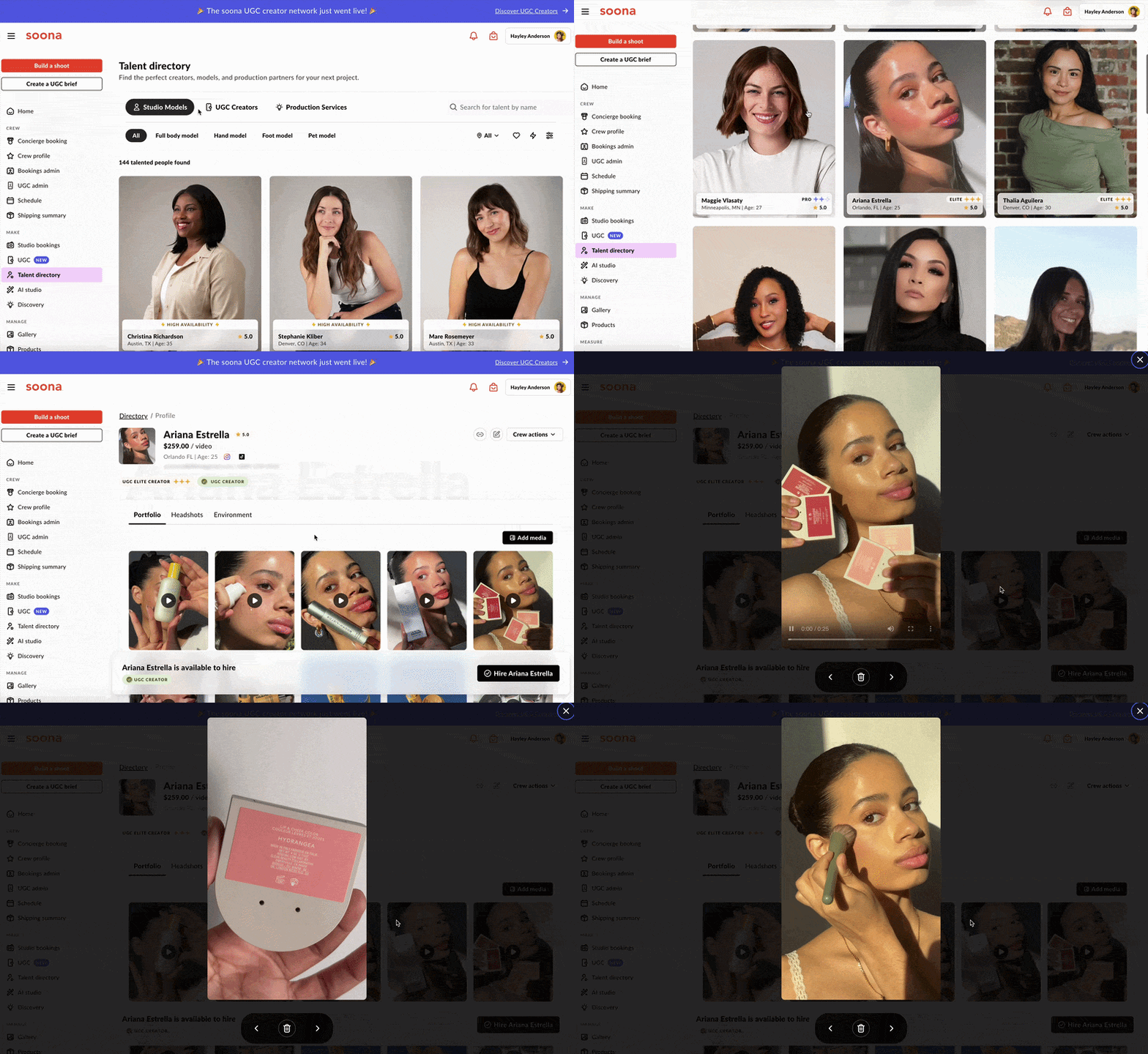
Soona connects brands with creators who produce photo and video content at scale, and it runs studio shoots when you want someone else behind the camera. You brief a campaign, creators apply, you ship product, and you get licensed content back.
What it’s good for:
- Finding creators who match your audience without running a recruiting process
- Turning a content brief into a batch of assets on a predictable timeline
- Licensing the output for both paid and organic use
- Adding studio photography or video when a shopper-style shoot isn’t the right fit
GRIN
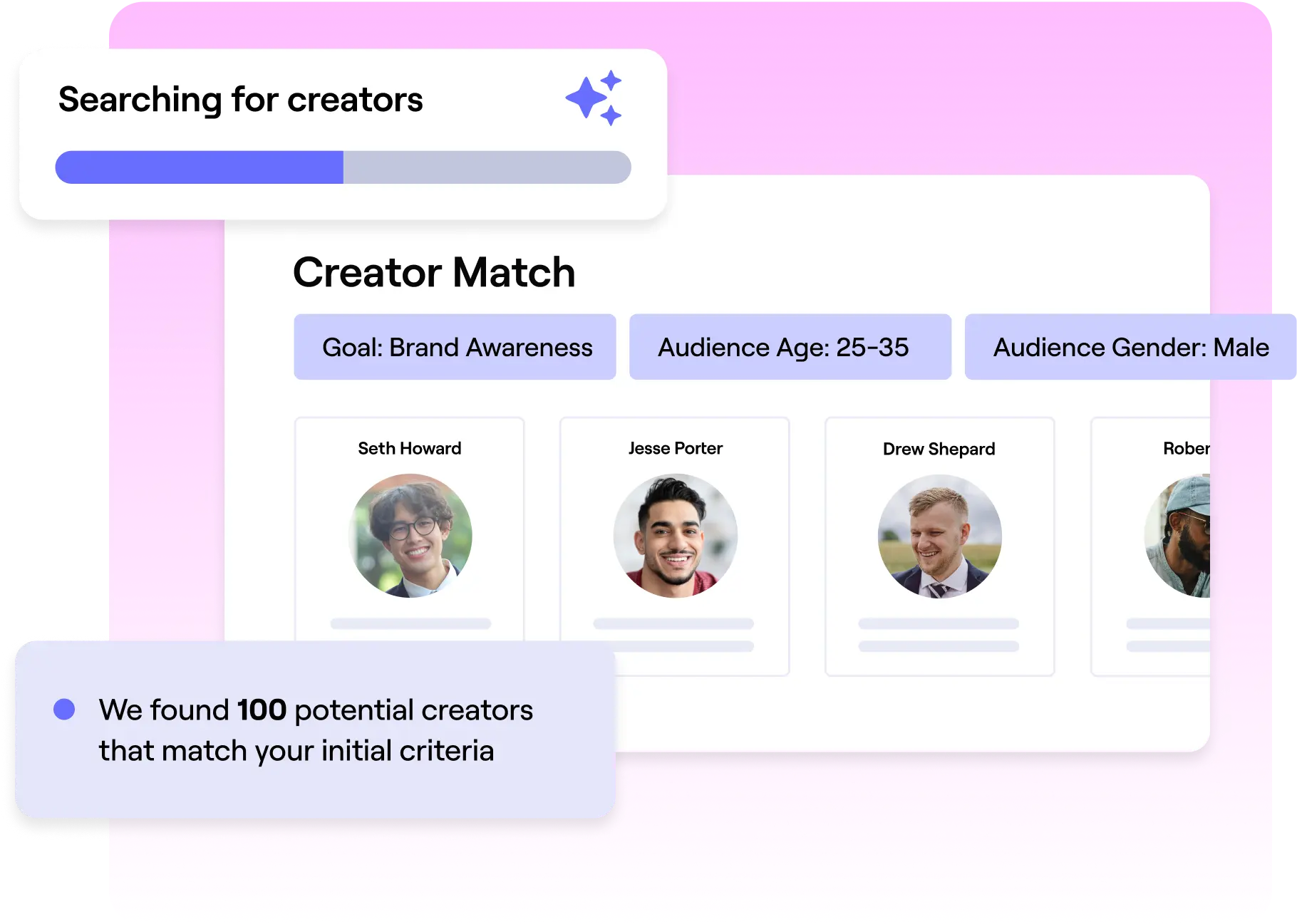
GRIN is a creator management platform built for brands running an ongoing program rather than one-off campaigns. It handles discovery, contracts, product seeding, payments, and attribution in one place.
What it’s good for:
- Creator discovery: finding people who already fit your brand instead of cold outreach
- Campaign management: tracking content, payments, and performance without a spreadsheet
- Integrations: connecting to your ecommerce platform and social channels so you can tie UGC to revenue, not just engagement
How much does user-generated content cost?
Commissioned UGC averaged $177.68 per collaboration in 2024 as the cost for user-generated content, based on Collabstr’s analysis of more than 15,000 collaborations on its marketplace.
Treat that as a marketplace rate, not an industry average, because it reflects what buyers paid on one platform. It’s still a useful anchor. Compared with the cost of a single studio day, a batch of ten UGC assets is usually the cheaper line item and yields more variations to test.
The cost most brands miss isn’t the creator fee. It’s the time your team spends coordinating product shipments, reshoots, and revisions. Budget for the coordination, not just the content.
How do you build a UGC engine that runs without you?
You build a UGC engine that runs without you by making content collection a step in your existing operations, not a separate project. Five moves, in order of impact:
- Ask at the moment of delight, not the moment of purchase. Trigger your review request when the product arrives and gets used, not when the order ships. Ask for a photo specifically, because photo reviews are the ones that move conversion.
- Put a card in the box. A printed insert asking for a tagged post costs cents and reaches every single buyer. It outperforms most email flows for photo submissions.
- Run one branded hashtag, not four. One hashtag, on your packaging, your bio, and your post-purchase email. Consistency builds a searchable library you can pull from for years.
- Commission a baseline, then supplement organically. Use soona or GRIN to guarantee a floor of usable assets each month so your ad testing never stalls waiting on organic submissions.
- Publish it where the money is. Product pages first, paid social second, organic third. Most brands do this in reverse and wonder why the numbers don’t move.
If you are still building the brand voice these assets have to fit inside, our guide on how to create a brand identity on TikTok is the right place to start. And if you’re trying to stand out in a crowded category, carving your online niche pairs well with everything here.
Where should you actually shoot user-generated content?
You should shoot user-generated content where your product already is.
This is the part of UGC nobody writes about, and it’s the part that kills most programs. You committed to twelve pieces of content a month. Your inventory is in a storage unit across town, your lighting is a window in your apartment, and every shoot means loading product into your car. Three months in, the program quietly dies.
Every Saltbox location includes a content studio, and it sits in the same building as your inventory and your loading dock. That changes the math. Product gets received on the dock, shot in the studio, packed in your suite, and shipped from the loading dock it arrived on. The full circle happens under one roof, which is why our members can commit to a content calendar and keep it.
You can go get space anywhere. What you can’t get everywhere is an operations team, a loading dock, and a content studio in the same building.

Not sure what your operations are costing you?
Talk through your setup with someone who runs this every day, from receiving to shipping to where the camera goes.
Speak to an expertWhat has Saltbox learned from running UGC?
From personally running UGC, my team has found that the content people actually engage with is the content we did not art-direct.
We have leaned on creators and members who tour our locations and share what they see, in their own words, in their own edit. Those posts consistently outperform the polished versions we produce in-house, and they cost us less to make. When we show a founder unpacking a pallet in their suite, the response is different from when we show an empty, beautiful warehouse.
It also changed how we think about our own community. The authentic connections our members build with each other turn out to be the same thing that makes their customer-facing content work. People can tell the difference between a brand talking and a person talking, and no filter closes that gap.
What is changing about user-generated content in 2026?
What’s changing about user-generated content in 2026 is that AI now sits between shoppers and your product page, and human proof is what shoppers use to decide whether to believe it.
Bazaarvoice and EMARKETER surveyed more than 5,600 shoppers in late 2025 and found that 62% chose reviews and photos from real, verified purchasers as the thing that would make them trust an AI product recommendation. Only 9% chose brand-provided information. That is close to a 7X gap on exactly the axis you would expect brands to want to win.
Two more numbers from that research are worth pinning to your wall:
- 42% of shoppers have decided not to buy a product specifically because of a poor or vague AI answer.
- 81% of shoppers need to see at least six reviews before they will buy.
The takeaway is not that AI is coming for your traffic. It’s that as more discovery gets mediated by machines, the content those machines quote back is the content your shoppers wrote. If you want to understand how that connects to your broader search strategy, our SEO for beginners recap covers the fundamentals, and local business collaborations covers the partnership side of getting other people to talk about you.
Where can you ask the questions this post didn’t cover?
These conversations usually start in our Marketing Mondays sessions: a monthly workshop where Saltbox members bring their real marketing questions and get real answers.
One person wants to know how to get their first ten photo reviews. Someone else wants a second opinion on where their creator budget is going. We work through it out loud, with people running the same playbook you are.
The sessions are exclusive to Saltbox members. Book a tour at a location near you to see the dock, the content studio, and how to join the community.
Frequently asked questions
Any content about your product made by someone who is not your brand: photo and video reviews, unboxing videos, social posts, tagged stories, and testimonials. Paid creator content shot in a shopper’s style counts as commissioned UGC.
They solve different problems. Influencer content buys reach. UGC buys credibility. If you need more people to know you exist, use influencers. If you need the people who already found you to convert, use UGC. Most brands over-invest in the first and under-invest in the second.
Start with enough to fill your top five product pages with photo or video reviews. PowerReviews found the conversion lift begins as soon as shoppers interact with user-generated imagery, and Bazaarvoice found 81% of shoppers want at least six reviews before buying. Six per hero product is a realistic first target.
Yes. A tag is not a license. Ask in writing before you use someone’s photo in an ad or on your product page, and keep a record of the approval. Platforms like soona and GRIN handle licensing as part of the workflow, which is a real part of their value.
Every Saltbox location includes a content studio in the same building as your inventory and loading dock, so you can shoot without moving product across town. Book a tour.
It does. Reviews and shopper photos add fresh, unique text and images to product pages that would otherwise be static, and they generate the long-tail language real shoppers search with. That freshness signal is also what AI answer engines pull from.
For Her
For Him
For Pets
For Anyone




Related posts
Learn from businesses improving their operational efficiency. Explore how Saltbox’s expert support and flexible spaces drive their growth.


2026 peak season shipping surcharges: what FedEx, UPS, USPS, and Amazon are charging
Additional handling went up about 6%. The fee on every single order went up 25%. Here’s the full 2026 surcharge picture, and what it costs you per order.
10 best 3PL companies in Atlanta, GA (2026)
Ten Atlanta 3PL providers compared on buildings and certifications, plus the case for keeping fulfillment in a suite you control.
10 best 3PL companies in Tempe, AZ (2026)
Ten 3PL providers serving Tempe, what each one is built to handle, and the case for keeping your pallets somewhere you can walk in.
Related terms
Learn from businesses improving their operational efficiency. Explore how Saltbox’s expert support and flexible spaces drive their growth.