.webp)


Key takeaways
- Your shipping box is the only marketing asset a paying customer is guaranteed to hold
- Custom packaging is a math problem. The question isn't what a box costs, it's how small a sales lift covers the difference
- Right-sizing your box changes your dimensional weight, and that line moves more money than the printing does
- Skip it if your margins are thin, your SKU sizes vary widely, or your product is still changing every quarter
I've watched dozens of ecommerce business owners rule out custom boxes. They pull a quote, compare it to the plain kraft mailers they buy now, see a bigger number per unit, and close the tab.
That's half an equation. The other half is what the box does after it leaves your dock, and almost nobody runs it.
So let’s run it. Here's what custom packaging for ecommerce actually does for a brand, how to calculate the sales lift you'd need to break even, the shipping cost line most people miss, and the four situations where the honest answer is don’t bother.
What does custom packaging actually do for a brand?
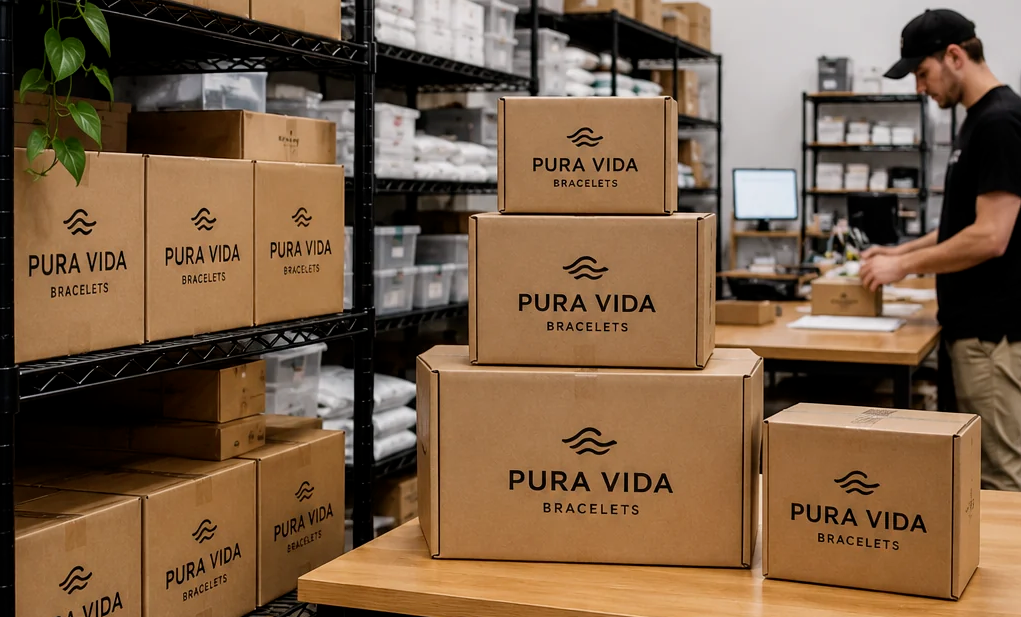
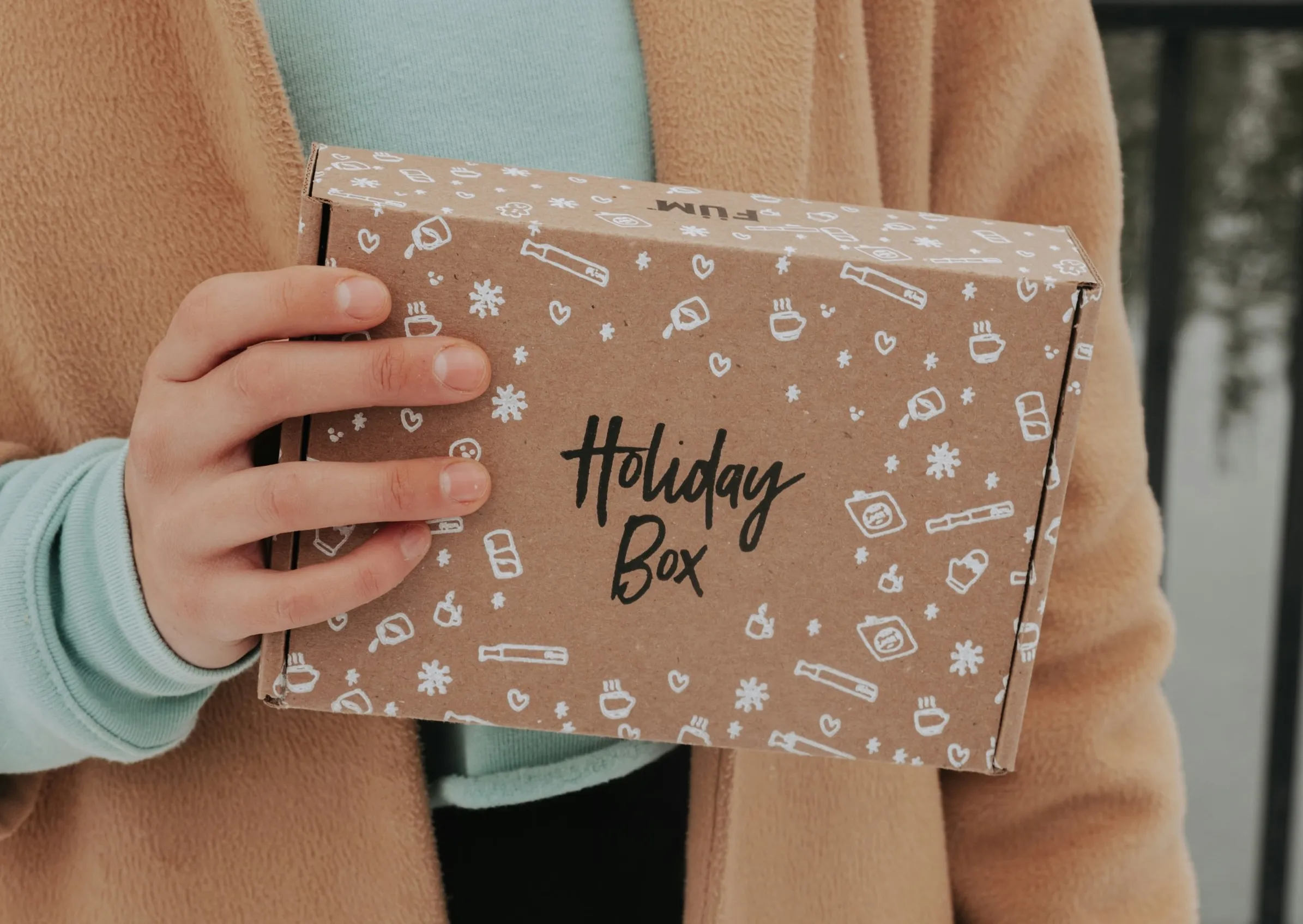
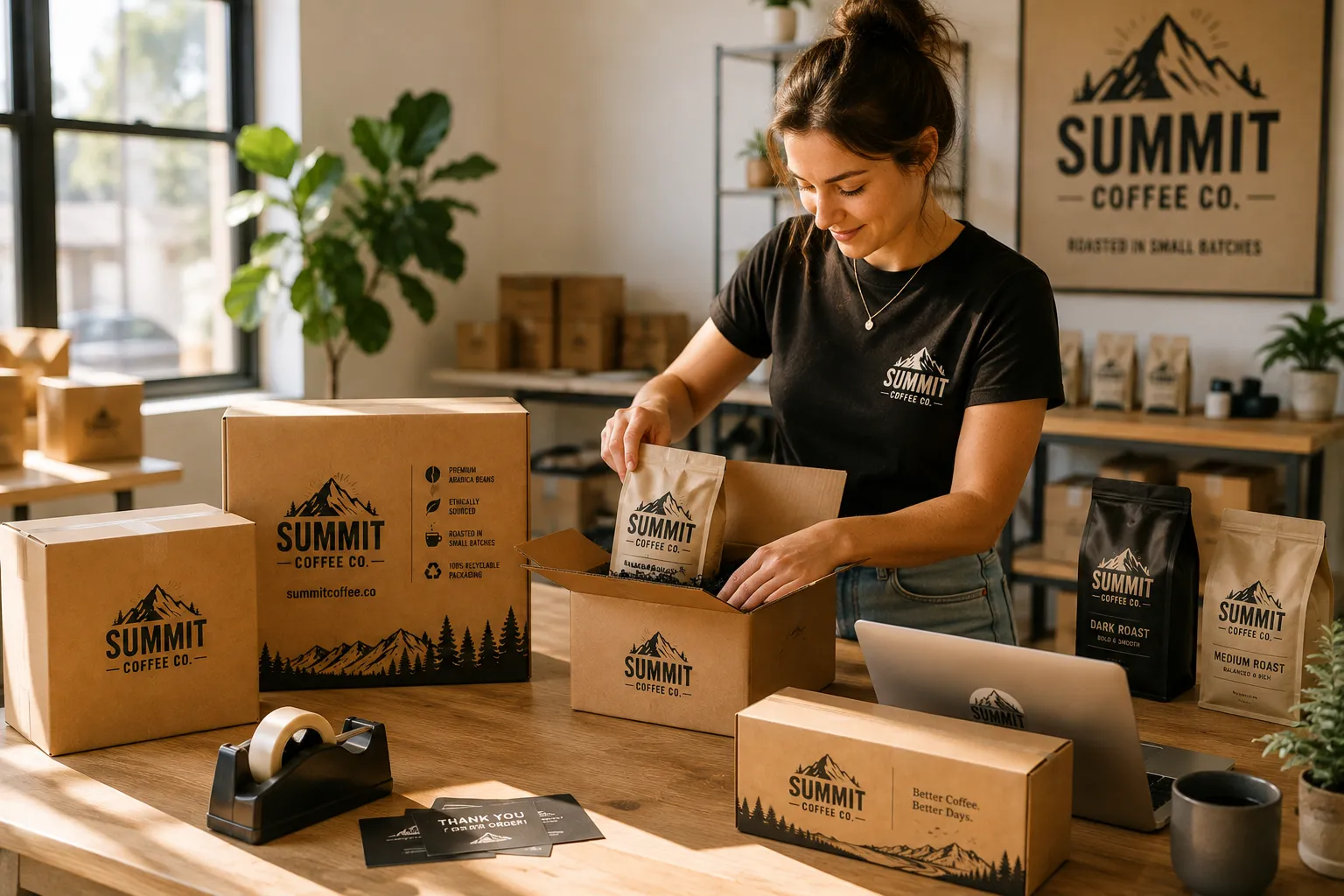
Custom packaging is any shipping container built to your specifications instead of pulled off a shelf: your dimensions, your print, your insert, your opening sequence. It runs from a stock box with a printed logo all the way to a mailer engineered around a single product.
Here's what makes it different from every other channel you buy. Email reaches a fraction of your list. Paid social is rented attention that disappears the day you stop paying. The box arrives at the door of somebody who already gave you money, and it gets opened every time.
A box does three jobs at once:
- It protects the product, which is table stakes
- It confirms the purchase at the exact moment your customer is deciding whether they made a good call
- It creates the thing they photograph
That third job is why the math works out more often than founders expect. It only works if you run the numbers, so let’s do that.
The retention case, and why it's a math problem
Acquiring a new customer is the most expensive thing your business does. Getting a second order out of somebody you already paid to acquire is the cheapest revenue available to you.
Packaging is one of the few places you can act on that without buying more traffic. A box can carry:
- A QR code that goes straight to a reorder page
- A care card that keeps the product in service longer
- A referral insert with a code tied to that specific order
- A sizing or exchange instruction that prevents a support ticket before it gets written
I'm not going to hand you a universal retention percentage. The lift moves with your repeat cycle, and anybody quoting one number for every brand is guessing. What I will give you is the mechanism and the math so you can size it against your own repeat rate. The insert costs cents, it reaches a buyer who already trusts you, and it works while you sleep.
How to calculate whether custom packaging pays for itself
Here's the whole calculation.
Start with the extra cost per box, not the total cost. If you pay $0.55 for a generic mailer and $0.95 for a custom one, your incremental cost is $0.40. Multiply that by your annual order volume, and you have what the decision costs you for a year. Divide that by your annual revenue, and you have the sales lift the box needs to produce to pay for itself.
Incremental cost per box, multiplied by annual orders, divided by annual revenue, equals your breakeven lift.
Let’s take a look at three different brands, all paying the same $0.40 premium:
Look at what moves the number and what doesn't. Quadrupling your order volume doesn’t change the breakeven point at all, because both sides of the ratio scale together. Raising your average order value nearly halves it, from 0.89% to 0.47%. If you sell a $20 product, custom packaging is a harder case than if you sell an $85 one, and no amount of volume fixes that.
Under one percent is a low bar. It isn't zero, and you should hold yourself to measuring it, but it's a much lower bar than the sticker shock suggests.
Custom Boxes, a Saltbox partner, runs this same analysis against their own pricing and publishes a calculator you can put your numbers into. Those figures are theirs, not ours, and per-box pricing moves with run size and box construction, so get a real quote before you decide either way.

Calculate the cost of branded packaging for your brand
Custom Boxes offers three calculators to estimate advertising value, breakeven performance, and side-by-side price comparisons on their standard sizes. Built for practical packaging decisions, not guesswork.
Try the calculatorsThe cost most brands forget: dimensional weight
This one has nothing to do with branding, and it's worth reading even if you decide against custom boxes entirely.
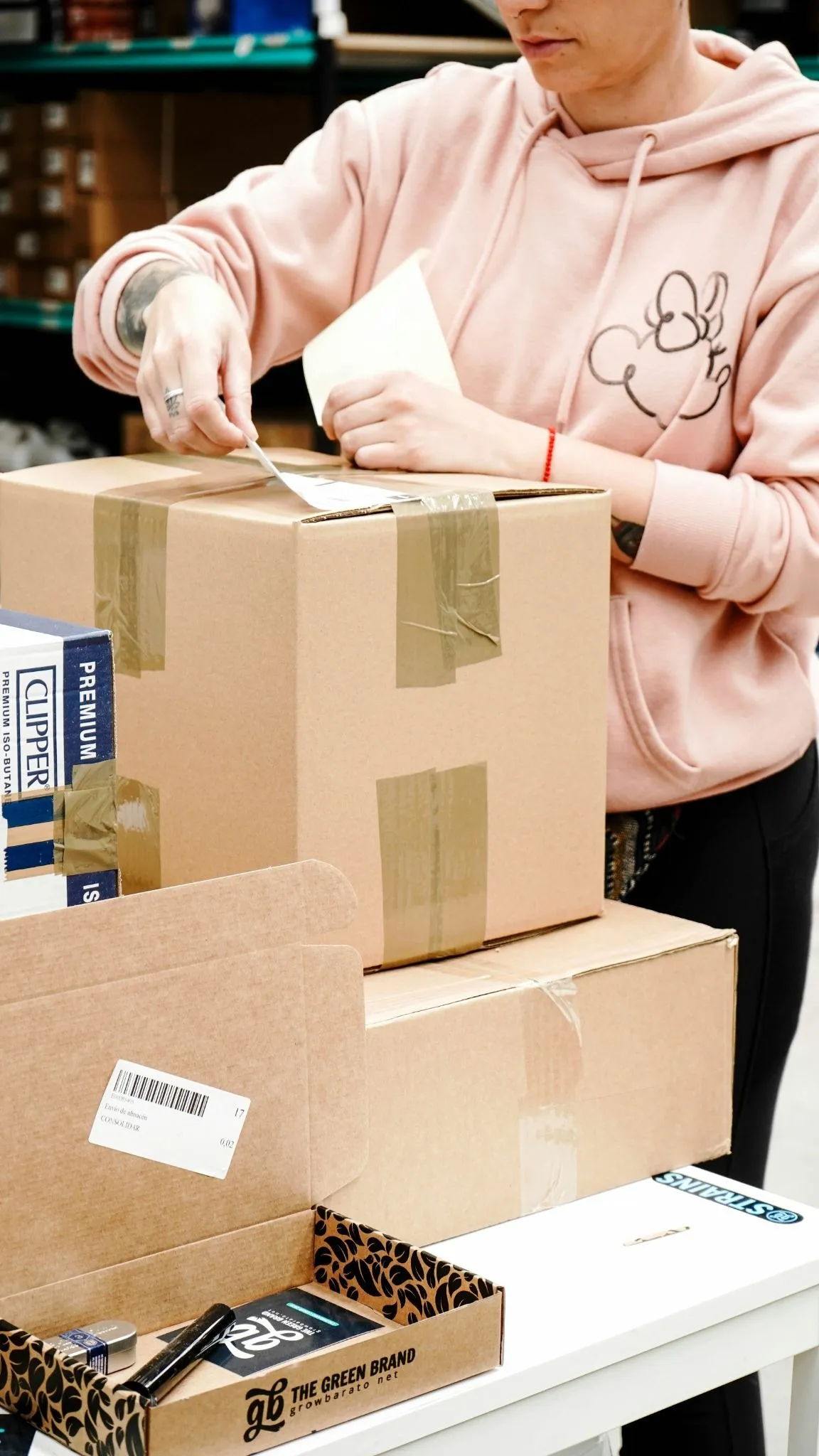
Carriers don't only bill you for what a package weighs. They bill on dimensional weight, a figure calculated from the size of the box. When your box is bigger than your product needs, you're paying to ship air on every order.
How much that costs you depends on how big your boxes are and how many you send. Three hundred small parcels a month is pocket change. Three thousand oversized ones is a line item.
Here's the part that surprises people: a smaller box doesn't automatically cost less to ship. Carriers price in tiers. If your new dimensions don't cross a billable-weight or surcharge threshold, you can shave half an inch off every box and pay exactly what you paid before. Check before you spend anything.
The 15-minute version:
- Pull your last 30 shipping labels
- Compare billed weight to actual weight on each one
- Where billed is higher, that gap is dimensional weight you're paying for
- Price your proposed box against your actual carrier agreement and confirm the rate changes
- Multiply any real savings by your annual order volume
If step 4 comes back flat, stop. There's nothing to recover here, and a smaller box won't create it.
If there is a real saving, there are two ways to capture it, and they cost very different amounts.
The cheap fix is a better standard size. Stock boxes come in more sizes than most brands shop. Moving from the box you grabbed to the one that actually fits captures much of the available savings with low minimums and no tooling.
The expensive fix is a custom dimension. A box built to your measurements carries setup costs and a much larger minimum order, and that's where the economics turn. Custom Boxes ran the math on a brand shipping 2,000 orders a year: the optimized box saved $0.55 a shipment, but required $2,000 upfront and a 15,000-box minimum, which is 7.5 years of inventory. Simple breakeven arrived around 3,636 shipments, near $56,000 in annual parcel spend, and once inventory carrying costs were applied, most of the advantage disappeared. Their practical threshold sits closer to $75,000.
Below roughly $50,000 in annual parcel spend, a right-sized standard box with a low minimum is usually the better answer. Above it, run your own numbers against your own carrier agreement.
One clarification on the math earlier in this post: that breakeven assumes your logo on a stock size. Custom dimensions are a different calculation with tooling and years of inventory on top.
When custom packaging might be the wrong call
I'd rather you skip this than regret it. Four situations where the answer is no:
- Your margin per order is thin. If you clear a few dollars per order, $0.40 a unit is a real share of it. Fix pricing or product cost first.
- Your SKU dimensions are all over the place. This works when a few box sizes cover most of your catalog. Need six sizes, and you're buying six minimums.
- Your product is still changing. Iterate quarterly and you'll eat a run every time something shifts. Wait until it settles.
- One minimum order would last you a year. That isn't a purchase; it's pre-paying for packaging and locking in a design you may outgrow. Branded tape and a printed insert get you most of the effect until volume catches up.
Where a pallet of boxes actually goes
Here's the objection nobody writes about, and it's the one that kills the decision more often than the math does.
Ask a founder why they're still shipping in plain boxes and you'll usually hear that the minimums are too high. That used to be the whole story. Custom packaging meant quote-driven orders and minimums measured in thousands, and a thousand boxes is a pallet, and a pallet is a problem when you work out of a garage.
That has changed more than most people realize. Some suppliers now start around 100 boxes, which is a few cartons you can stack in a corner. If the minimum is what stopped you, get a current quote before you assume the answer is still no.
What hasn't changed is the economics underneath. Per-unit price still drops as the run gets bigger, and the drop is steep enough to matter. So the storage question doesn't disappear, it moves. It stops being "can I afford to start" and becomes "how much cheaper could I be buying if I had somewhere to put the boxes."
That second question is the one worth solving, because it compounds on every order you ship.
What you need to buy at the better price tier:
- A dock, or somewhere a pallet can be received without a liftgate fee
- Space to store the run without losing your pick area
- Somewhere to shoot the product once the new packaging lands
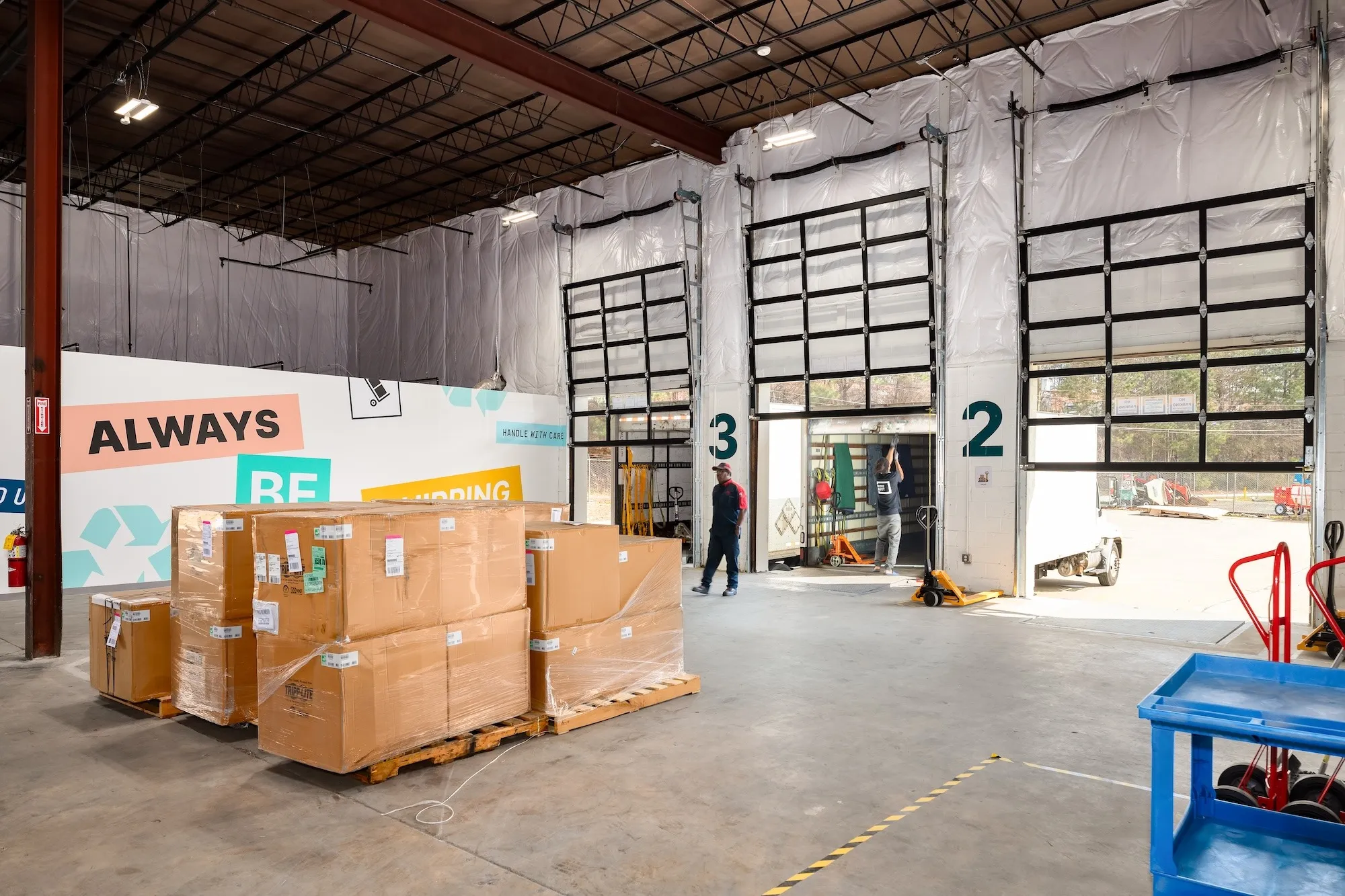
That's the version Saltbox members hand off. Packaging gets received on the dock, the run lives in your suite, and the content studio is on site when you want new photography of it. If you'd rather not touch it at all, Saltbox Fulfillment Projects covers kitting and inserts, and Saltbox Operations Support (SOS) is an on-demand team for the week the pallet lands.
Most brands I talk to didn't stay on generic boxes because they ran the math and it failed. They stayed because they never re-ran it after the minimums came down. That's worth ten minutes before you decide custom packaging isn't for you.

Looking for a place to store your custom packaging?
Saltbox offers the space you need to run your business: store, ship, and inbound under one roof.
Book a call to learn moreFrequently asked questions
Custom packaging is a shipping container built to your own dimensions and design instead of bought off the shelf. It ranges from a stock box with your logo printed on it to a mailer engineered around a single product.
Pricing depends on size, construction, print method, and run quantity, so the only number that matters is a real quote at your volume. Compare the difference between that quote and what you pay for generic boxes today, not the total.
Multiply your incremental cost per box by your annual order volume, then divide by annual revenue. The result is the sales lift custom packaging has to produce to break even. At a $45 average order value and a $0.40 premium, it lands at 0.89%.
Minimums vary by supplier, and the per-unit price drops as the run gets larger. Sort out where the pallet will live before you chase the lower per-unit price.
Branded tape, a printed insert, a branded sticker, and a right-sized stock box. Together they get you most of the effect with no minimum order quantity.
You need somewhere a pallet can be received and stored without eating into your pick area. Saltbox members receive packaging on the dock and store the run in their suite.